Oxalis stricta

Yellow Woodsorrel Identification & Control

Yellow Woodsorrel, botanically classified as Oxalis stricta, is a highly persistent, low-growing herbaceous perennial weed in the oxalis family. Native to North America, it commonly invades damp, shaded home lawns, ornamental gardens, and greenhouses. Famous for its bright clover-like leaf leaflets that fold closed at night and its small, bright yellow 5-petaled flowers, it contains high levels of oxalic acid and spreads vigorously via explosive seed capsules.


Sunlight Icon
Sunlight Partial Shade to Full Sun
Watering Icon
Watering Tolerance Moderate
Soil Mix Icon
Soil Adaptability Moist / Rich / Loam
Temperature Icon
Growth Temp 8°C - 35°C
Toxicity Danger Icon
Danger / Toxicity Pet Toxic / High Oxalic Acid
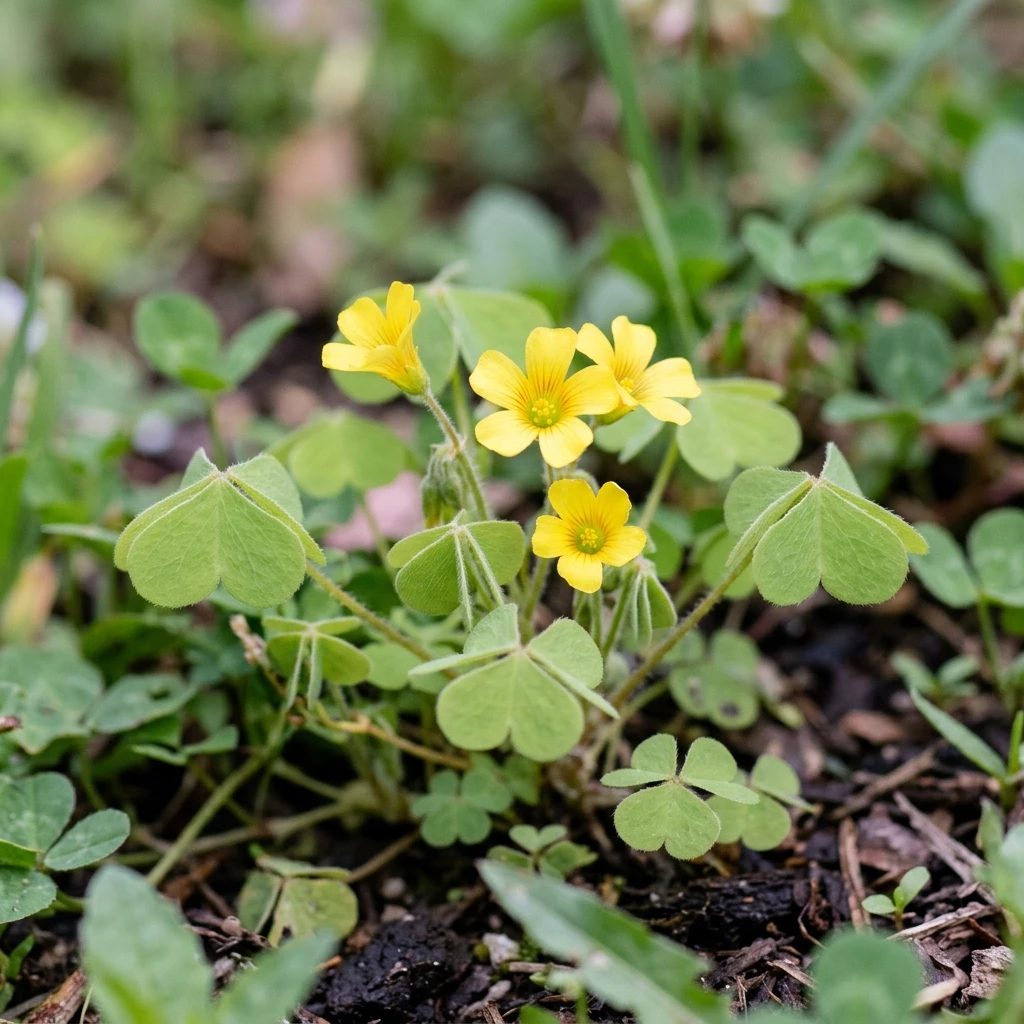
Botanical macro photography of Yellow Woodsorrel (Oxalis stricta) - Plant AI care and control database

How to Identify Yellow Woodsorrel

A low-growing, delicate clover-like rosette with light-green heart-shaped leaflets, small 5-petaled yellow flowers, and erect, pointed seedpods.

  • Heart-Shaped Clover Leaves: The leaf is divided into three highly distinct, deeply notched, heart-shaped leaflets (unlike the rounded leaflets of clover).
  • Small Yellow Flowers: Small, bright yellow, 5-petaled cup-shaped flowers blooming in small clusters from spring to autumn.
  • Explosive Seed Capsules: Pointed, erect seed capsules (resembling miniature okra pods) that burst open violently when touched to fling seeds.
💡 Plant AI Tip: Yellow Woodsorrel leaves exhibit 'sleep movements' (nyctinasty). The three heart-shaped leaflets fold downward flat against the stem at night or during dark overcast weather, opening up in morning sun.

Complete Care & Management Guide

Access highly technical, scientific management directives to control or cultivate Yellow Woodsorrel effectively.

Prefers moist, damp soils but is highly adaptable. It grows vigorously in early spring rain, dominating damp garden margins and greenhouse floors.
Resistant to mowing. Stems grow flat to the ground and are extremely fibrous, often bending under mower blades without being cut.
Thrives in nutrient-rich, highly fertile soils. Improving turf grass density through balanced fertilization is highly effective in choking out emerging winter seedlings.
Highly shade-tolerant. It easily colonizes damp, shaded lawn areas beneath trees where competitive turf grasses like Kentucky Bluegrass struggle and thin out.
Prefers moist, rich, organic loam and nitrogen-rich damp soils. It struggles heavily in dry, barren, sandy soils with low organic matter.
Reproduces strictly by seeds. The seed pods explode when dry, flinging seeds up to 10 feet horizontally. A single plant can produce thousands of seeds.
Extremely cold-hardy perennial. Leaves die back under freezing winter temperatures, but the woody taproot crown survives easily, sprouting in early spring.
Features an exceptionally deep, thick vertical taproot anchored to a massive woody root crown. Complete manual extraction requires a sturdy spade.
Occasionally targeted by aphids, but pests rarely cause significant damage to this highly robust annual grass.
Subject to **Browning Rust** and **Leaf Spots** in damp autumns, though diseases rarely kill the weed before it successfully sets seed.
To control Yellow Woodsorrel organically, hand-pull young rosettes in spring before they flower, use a hoe to scrape seedlings, and mulch garden beds heavily to block seed light.

Are your shaded lawn corners showing clover-like rosettes with yellow flowers?

Hand-pull the woody taproot crown easily in spring, watch for explosive seedpods, and avoid over-watering.

Diagnose Weed Instantly

Common Diseases & Treatment

Browning Rust

Symptoms: Symptoms: Small, dusty orange-brown spots appearing on the heart-shaped waxy yellow-green leaves.

Action: Action: Hand-pull and discard infected patches. Avoid overhead irrigation to keep foliage dry, and apply organic copper fungicide.

Explosive Seed podting

Symptoms: Symptoms: Stiff, pointed seed capsules burst violently upon light touch, flinging seeds up to 10 feet.

Action: Action: Place a clear plastic bag over the seeded stems before cutting to catch the flying seeds, and dispose in trash bags.

Frequently Asked Questions

How is Oxalis different from White Clover?

Oxalis leaflets are strictly heart-shaped with a deep notch at the tip, and they fold down at night. White Clover leaflets are rounded or oval with smooth margins and have a pale V-mark. Also, Oxalis has yellow flowers, while clover has round white flowers.

Is Yellow Woodsorrel toxic to dogs?

Yes, Oxalis contains high concentrations of soluble calcium oxalates, which give it a sour taste (sour grass). If eaten in large quantities by dogs or cats, it can cause salivation, tremors, vomiting, and potential kidney damage.

Why is it called the 'Compass Plant'?

It is named the Compass Plant because its upper leaves twist vertically to align north-and-south. This allows the broad leaf surfaces to capture maximum sunlight in the cool morning and evening, while presenting only the thin leaf edge to the hot, direct midday sun, conserving moisture.

What is the best way to get rid of it?

Because it has a shallow fibrous root system, it is very easy to pull out by hand. Manual weeding or close mowing in mid-summer before the flower stalks open is the most effective organic control method.

No more dying plants. Grow healthy greens today!

Get Started for Free