Yellow Foxtail Identification & Control
Yellow Foxtail, also known as Pigeon Grass or Golden Foxtail, is an exceptionally common, highly aggressive summer annual grass weed in the Poaceae family. Globally distributed, it is a major headache for lawns, crop fields, and cattle pastures. Growing in dense clumps up to 3 feet tall, it features flat green leaf blades showing unique, long white hairs at the collar. It is famed for its bristly, cylindrical, bottle-brush seed spikes covered in dense, golden-yellow bristles with sharp, backward-pointing awns that easily cling to animal fur and cause severe ear and throat injuries to pets.





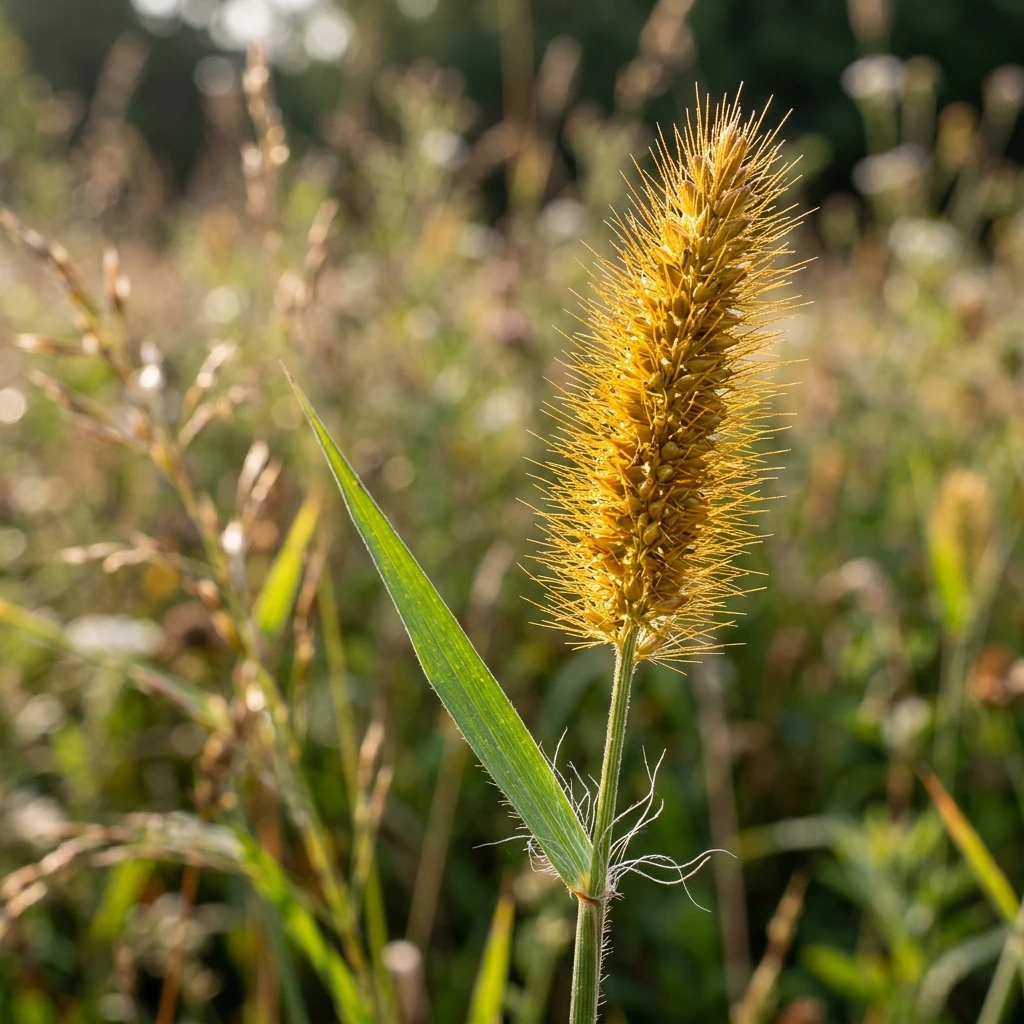
How to Identify Yellow Foxtail
An upright annual grass forming green clumps, with flat leaves showing long white hairs at the base, and bristly golden-yellow bottle-brush seed heads.
-
✔
Golden-Yellow Bristly Spike: Erect, dense, cylindrical bottle-brush seed heads (3 to 10 cm long) packed with bright yellow-orange bristles.
-
✔
Long White Collar Hairs: The base of the flat green leaf blade, where it wraps the stem (sheath collar), features highly distinct, long, twisting white hairs.
-
✔
Flat Green Culms: Upright culm stems are flattened at the base, smooth, branched, and frequently showing a purple tint near ground level.
Complete Care & Management Guide
Access highly technical, scientific management directives to control or cultivate Yellow Foxtail effectively.
Common Diseases & Treatment
Foxtail Awn Puncture
Symptoms: Symptoms: The barbed golden bristles lodge deep in your dog's ears, eyes, nose, or between toes, causing swelling and pain.
Barbed Seed Spread
Symptoms: Symptoms: Cylindrical yellow bottle-brush spikes dry out and shatter, dropping thousands of barbed seeds into sandy lawns.
Frequently Asked Questions
Why is it called 'Yellow Foxtail'?
It is named Yellow Foxtail because its seed spike looks like a bushy, cylindrical tail of a small fox, and the dense, stiff bristles covering the seeds turn a highly distinct, brilliant golden-yellow at maturity.
Why are foxtails so dangerous for dogs?
The seed awns are shaped like arrows with tiny backward barbs. Once they enter a dog's ear canal, nose, or paw skin, they can only move forward, drilling deep into the animal's flesh, causing severe internal infections and requiring surgery.
How do you distinguish Yellow Foxtail from Green Foxtail?
Yellow Foxtail (Setaria pumila) has seed head bristles that turn a bright golden-yellow, and features long, prominent white hairs at the leaf blade base. Green Foxtail (Setaria viridis) has solid green bristles and completely hairless leaf bases.
What is the best way to get rid of it?
Because it has a shallow fibrous root system, it is very easy to pull out by hand before it flowers. Mow high (3+ inches) to keep your lawn grass dense, which shades out emerging summer seedlings.