Yarrow Identification & Control
Yarrow, botanically known as Achillea millefolium, is an exceptionally common, highly persistent perennial broadleaf weed in the Asteraceae family. Native to the Northern Hemisphere, it is a frequent nuisance in dry home lawns, pastures, and garden beds. Growing up to 3 feet tall, it is easily recognized by its highly distinct, finely divided, feathery fern-like green leaves, and produces flat-topped clusters of tiny, daisy-like white-to-pink flowers. It spreads aggressively via a tough network of underground rhizomes. While highly valued in herbal medicine, Yarrow contains volatile oils and alkaloid compounds that are toxic to dogs and cats, causing vomiting, diarrhea, and skin photosensitivity.





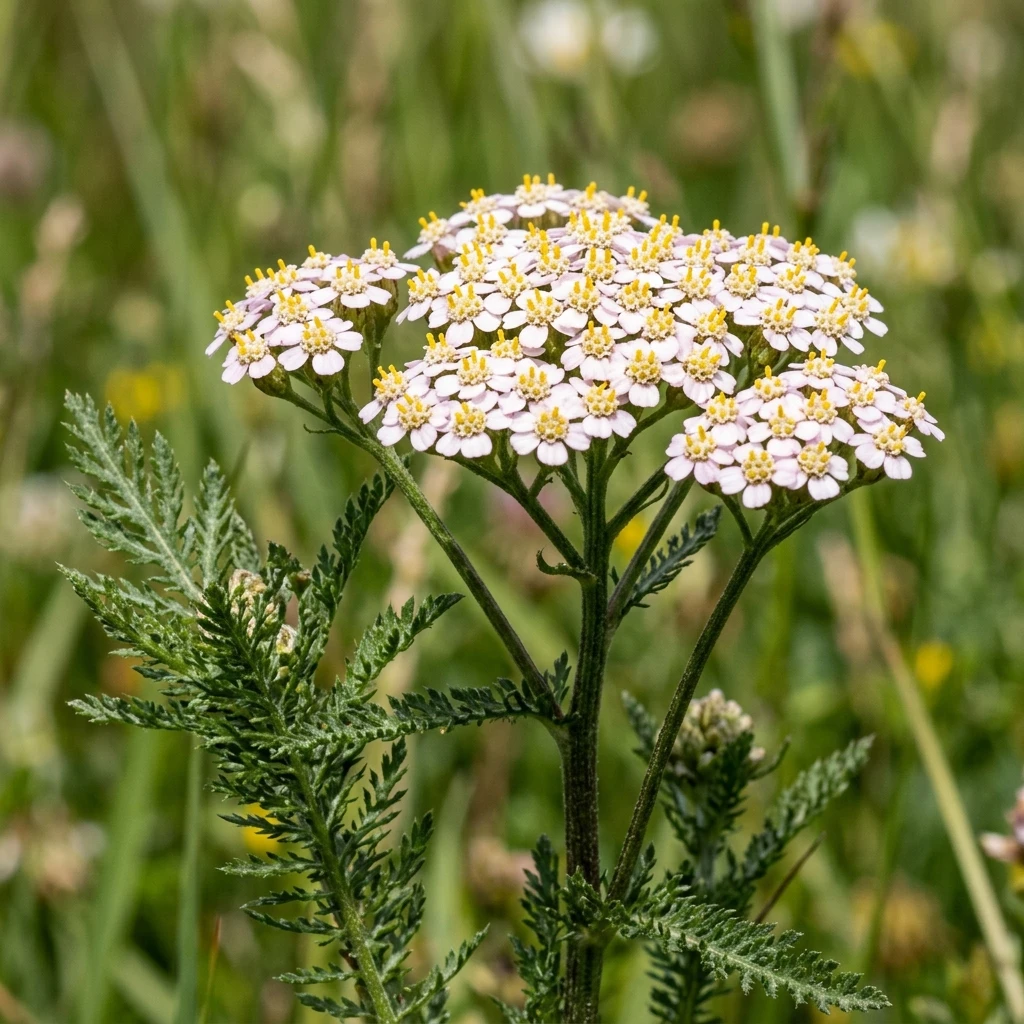
How to Identify Yarrow
An upright perennial with finely divided feathery green leaves, flat-topped clusters of tiny white-pink daisy flowers, and a strong aromatic scent.
-
✔
Feathery Fern-Like Leaves: Alternate green leaves are deeply divided into hundreds of narrow, needle-like segments, showing a highly distinct feathery or fern-like appearance.
-
✔
Flat-Topped Flower Clusters: Large, flat-topped, umbrella-like clusters (corymbs) composed of hundreds of tiny, 5-petaled white-to-light-pink flowers.
-
✔
Strong Aromatic Scent: Crushing the feathery foliage releases a highly pungent, sweet, medicinal, and spicy aromatic scent.
Complete Care & Management Guide
Access highly technical, scientific management directives to control or cultivate Yarrow effectively.
Common Diseases & Treatment
Pet Yarrow Dermatitis
Symptoms: Symptoms: Dogs chew on yarrow leaves, leading to severe drooling, vomiting, diarrhea, and localized skin photosensitivity/redness.
Lawn Feather Choke
Symptoms: Symptoms: Cool-season grass is replaced by dense, velvety green mats of feathery yarrow leaves that resist mowing.
Frequently Asked Questions
Is Yarrow toxic to pets like dogs and cats?
Yes. Yarrow contains volatile oils, monoterpenes, and alkaloids (such as achilleine) which are toxic to dogs, cats, and horses. Ingestion causes vomiting, diarrhea, hyper-salivation, and skin photosensitivity.
How does Yarrow survive frequent lawn mowing?
While mowing cuts down its upright flower spikes, its soft, feathery basal leaves grow in a flat rosette extremely close to the soil surface. This prostrate growth habit allows it to escape lawn mower blades completely.
What is the best way to get rid of Yarrow in a lawn organically?
You can manually rake the lawn with a thatch rake to lift the creeping stems, then dig out the shallow white rhizome chains completely. Additionally, raising your lawn mower height to 3 inches and applying high-nitrogen fertilizer will help the turf grass crowd it out.
Can Yarrow be used as a ground cover?
Yes, in dedicated native gardens where it is allowed to spread, it acts as an outstanding drought-tolerant lawn alternative. However, its aggressive rhizomes and self-seeding nature make it difficult to contain.