Wild Radish Identification & Control
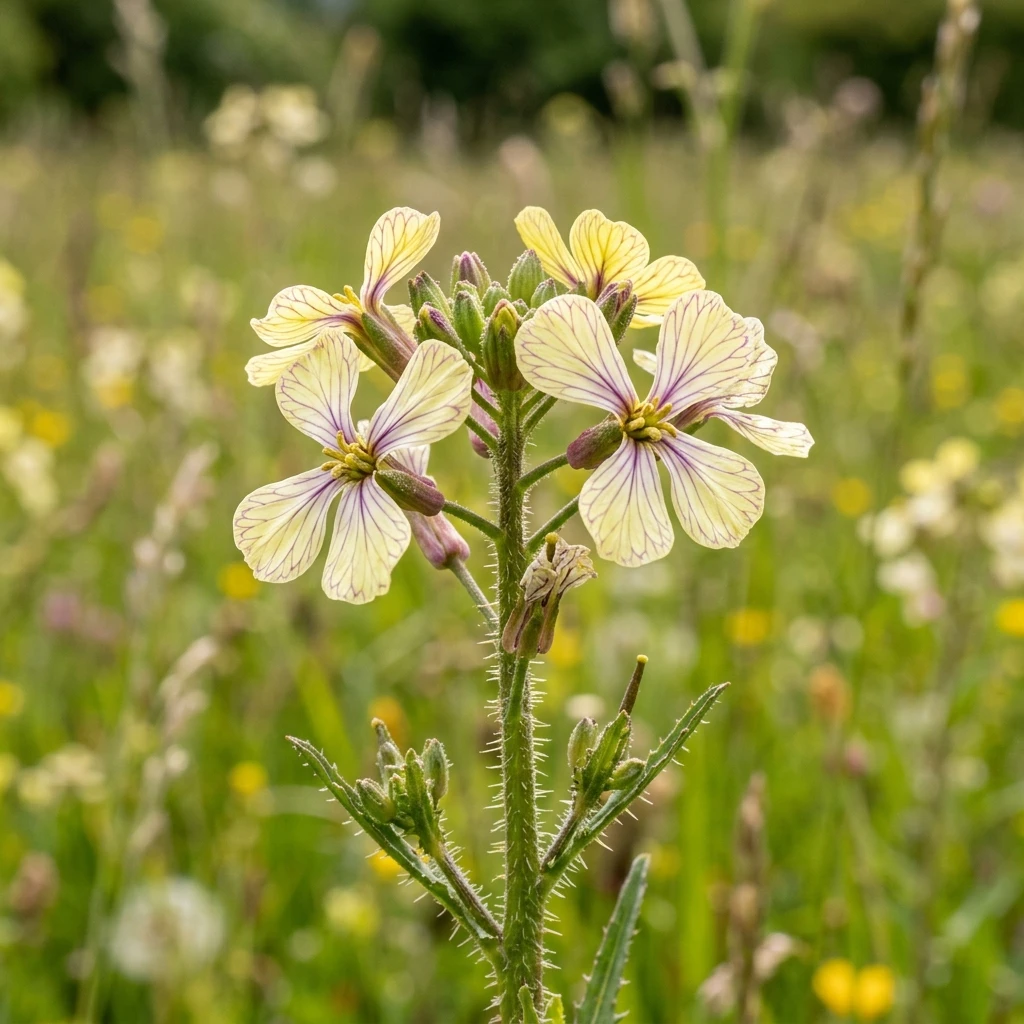
Wild Radish, botanically known as Raphanus raphanistrum, is an exceptionally common, highly aggressive summer annual broadleaf weed in the Brassicaceae family. Globally naturalized, it is a severe threat to grain crop yields and pastures. It features upright, highly branched stems covered in stiff, downward-pointing bristly hairs, and deeply lobed leaves. It produces showy clusters of yellow-to-white 4-petaled flowers marked with distinct purple veins. The seeds contain high levels of mustard oil glycosides, which cause severe mucosal inflammation and gastroenteritis in grazing livestock.



How to Identify Wild Radish
An upright annual with downward-pointing bristly hairs on stems, deeply lobed leaves, and 4-petaled flowers with purple veins.
-
✔
Four-Petaled Purple-Veined Flowers: Showy, 4-petaled yellow, white, or pink flowers showing highly distinct, prominent dark-purple veins.
-
✔
Jointed Pods (Siliques): Narrow seed pods are distinctly jointed (resembling a string of beads) that break into single-seeded segments.
-
✔
Bristly Lower Stems: Stems are erect, highly branched, and covered in stiff, rough, downward-pointing bristly hairs.
Complete Care & Management Guide
Access highly technical, scientific management directives to control or cultivate Wild Radish effectively.
Common Diseases & Treatment
Mustard Oil Gastroenteritis
Symptoms: Symptoms: Cattle consume fresh radish seeds, leading to severe abdominal pain, drooling, diarrhea, and mucosal irritation.
Jointed Seed Contamination
Symptoms: Symptoms: Jointed seed pods break into small segments, mixing with harvested grain and severely reducing crop quality.
Frequently Asked Questions
How can you distinguish Wild Radish from Wild Mustard?
Wild Radish has flowers with distinct, dark-purple or brown veins on the 4 petals, and its seed pods are jointed (bead-like). Wild Mustard has plain yellow petals without purple veins, and smooth, non-jointed seed pods.
Are Wild Radish seeds toxic to livestock?
Yes. The jointed seed pods and seeds contain high levels of mustard oil glycosides (glucosinolates), which release highly irritating allyl isothiocyanates when chewed, causing painful gastroenteritis and colic in animals.
Why is Wild Radish a major problem in grain crops?
Its jointed seed pods break into small, seed-bearing segments during harvesting that are similar in size and weight to wheat, barley, and oat grains. This makes them exceptionally difficult to separate, contaminating the harvest.
How do you control Wild Radish organically?
Manually hand-pull the taproot in early spring before the tough stems turn woody and flower. Cultivating a dense, healthy crop canopy or lawn cover will successfully shade out its light-sensitive seedlings.