Smartweed Identification & Control
Pennsylvania Smartweed is an exceptionally aggressive, upright annual grassy-like broadleaf weed native to North America. Thriving in moist, rich, or poorly drained soils, it is a major threat to agriculture and home gardens. It features swollen, jointed stems that resemble knees, lance-shaped leaves, and dense, nodding spikes of pink-to-white flowers.




How to Identify Smartweed
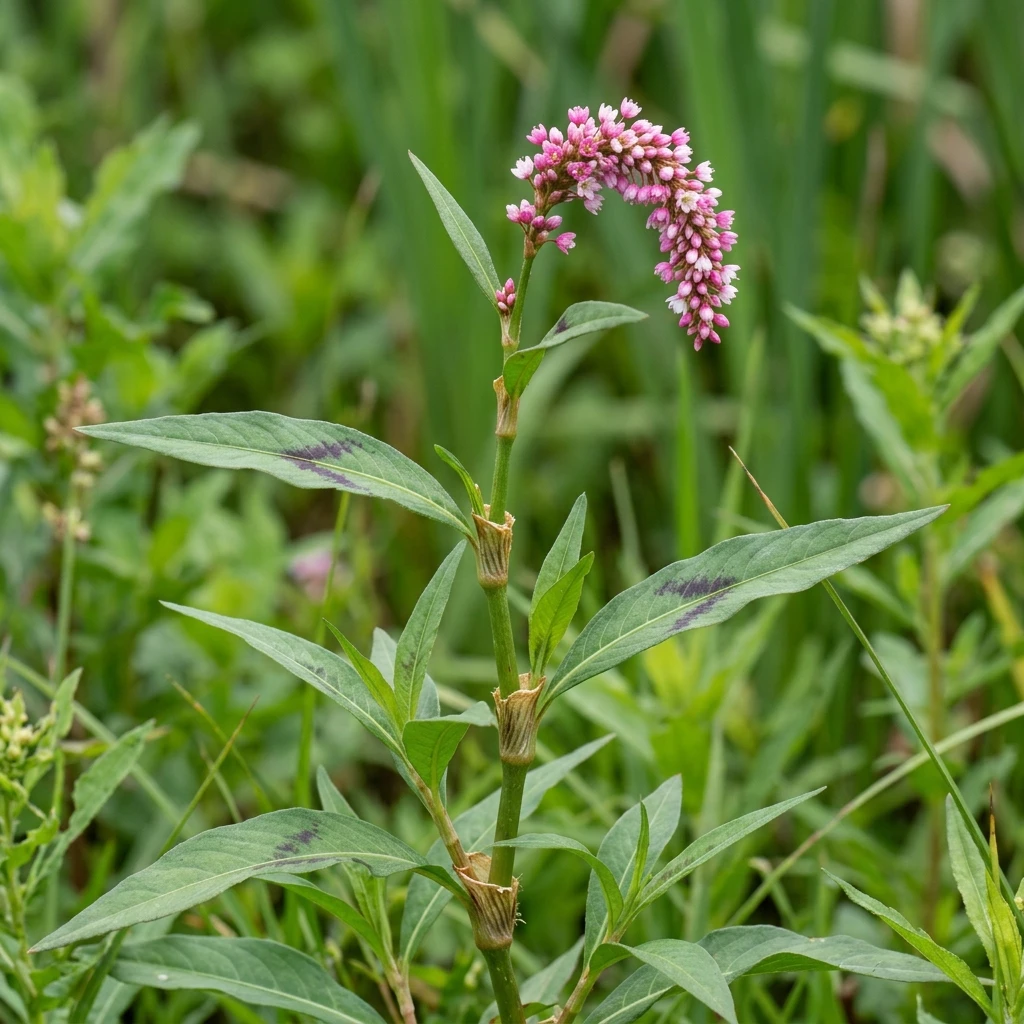
An upright annual with swollen stem joints, lance-shaped green leaves showing a dark V-shaped smudge on top, and spikes of pink flowers.
-
✔
Swollen Stem Joints (Ochreae): Stems have highly distinct, swollen, knee-like joints wrapped in a thin, papery sheath (ochrea).
-
✔
Dark V-Shaped Leaf Smudge: Lance-shaped leaves (5 to 15 cm long) often feature a highly distinct, dark reddish-purple V-shaped smudge near the center.
-
✔
Dense Pink Flower Spikes: Tiny pink or white flowers are clustered in dense, erect, cylindrical spikes at the top of stems.
Complete Care & Management Guide
Access highly technical, scientific management directives to control or cultivate Smartweed effectively.
Common Diseases & Treatment
Leaf Spot
Symptoms: Symptoms: Water-soaked, circular black or dark brown spots with bright yellow halos appearing on the waxy green leaves.
Stem Rot
Symptoms: Symptoms: Swollen stem joints turn brown, soft, and rot during prolonged damp spring rains.
Frequently Asked Questions
Why is it called Smartweed?
It is named Smartweed because its leaves and sap contain highly pungent, peppery chemical compounds (polygodial) that cause a stinging or 'smarting' sensation on your skin or tongue if rubbed or chewed.
Is Smartweed toxic to dogs?
No, it is completely non-toxic to pets. However, the sap can cause mild skin irritation and redness on sensitive pet skin if they run through crushed patches.
How does it spread?
It spreads aggressively by seeds. The seed heads are highly attractive to ducks and wild birds, which eat and spread the hard-shelled seeds across wetlands.
What is the best way to get rid of it?
Because it has a shallow fibrous root system, it is very easy to pull out by hand. Manual weeding or close mowing in mid-summer before the flower stalks open is the most effective organic control method.