Sandbur Identification & Control
Sandbur, botanically known as Cenchrus spinifex, is an exceptionally troublesome, low-growing grassy annual or short-lived perennial weed in the grass family. Highly adapted to parched, sterile sand-dunes, coastal banks, and dry home lawns, it is notorious for producing seedheads packed with extremely sharp, spiny woody burs. The spines are equipped with backward-pointing barbs that easily pierce shoe soles and pet paws, causing immediate pain and infection, making this a highly dreaded summer grass.





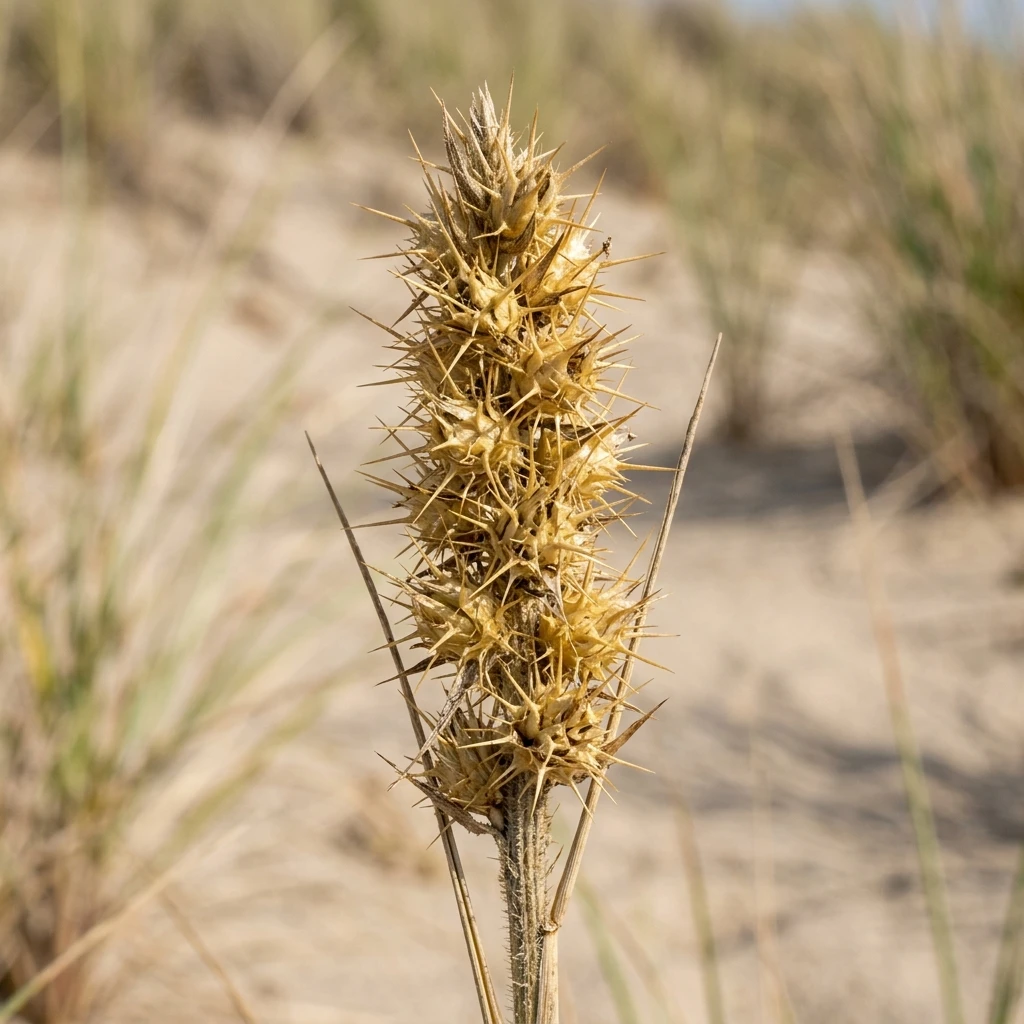
How to Identify Sandbur
A spreading, clump-forming annual grass with flat leaf blades, rough sheaths, and spikes producing clusters of spiny, straw-colored burs.
-
✔
Sharp Spiny Burs: Terminal flower spikes are densely packed with green-to-straw colored burs (5 to 10 mm wide) armed with stiff, vicious spines.
-
✔
Rough Spreading Culms: Stems are flat, branched, and bent at lower joints, spreading horizontally before growing erect up to 2 feet tall.
-
✔
Hairy Collar Sheath: The leaf sheaths are highly flattened and possess a ring of short hairs (ligule) at the collar zone.
Complete Care & Management Guide
Access highly technical, scientific management directives to control or cultivate Sandbur effectively.
Common Diseases & Treatment
Paw Infestation
Symptoms: Symptoms: Spiny woody burs stick tightly to animal paws and coat fur, causing skin irritation, limping, and raw bites.
Low Mowing Escape
Symptoms: Symptoms: Flattened stems continue to flower and drop spiny burs below your mower blade height.
Frequently Asked Questions
Why is Sandbur so painful?
The seed spikes of Sandbur are covered in stiff, woody spines. Each spine is tipped with microscopic, backward-pointing barbs. Once they puncture the skin, they lock in place, making pulling them out extremely painful and prone to leaving tiny tips behind.
Does Sandbur indicate a soil problem?
Yes. The presence of Sandbur is a classic indicator of dry, sterile, sandy, and nutrient-poor soils. It thrives where lawn grass thins out due to lack of nitrogen and water.
Is Sandbur toxic to pets?
It is not chemically toxic, but it causes severe physical trauma. If swallowed by a dog, the sharp spines can puncture the mouth, esophagus, and stomach lining, requiring emergency veterinary surgery.
What is the best way to get rid of Sandbur?
Because it is an annual, prevention is key. Dig out young grass clumps in spring before the burs form. Bag all debris. In autumn, overseed the lawn heavily to create a thick turf that blocks sandbur germination.