Salsola tragus

Russian Thistle Identification & Control

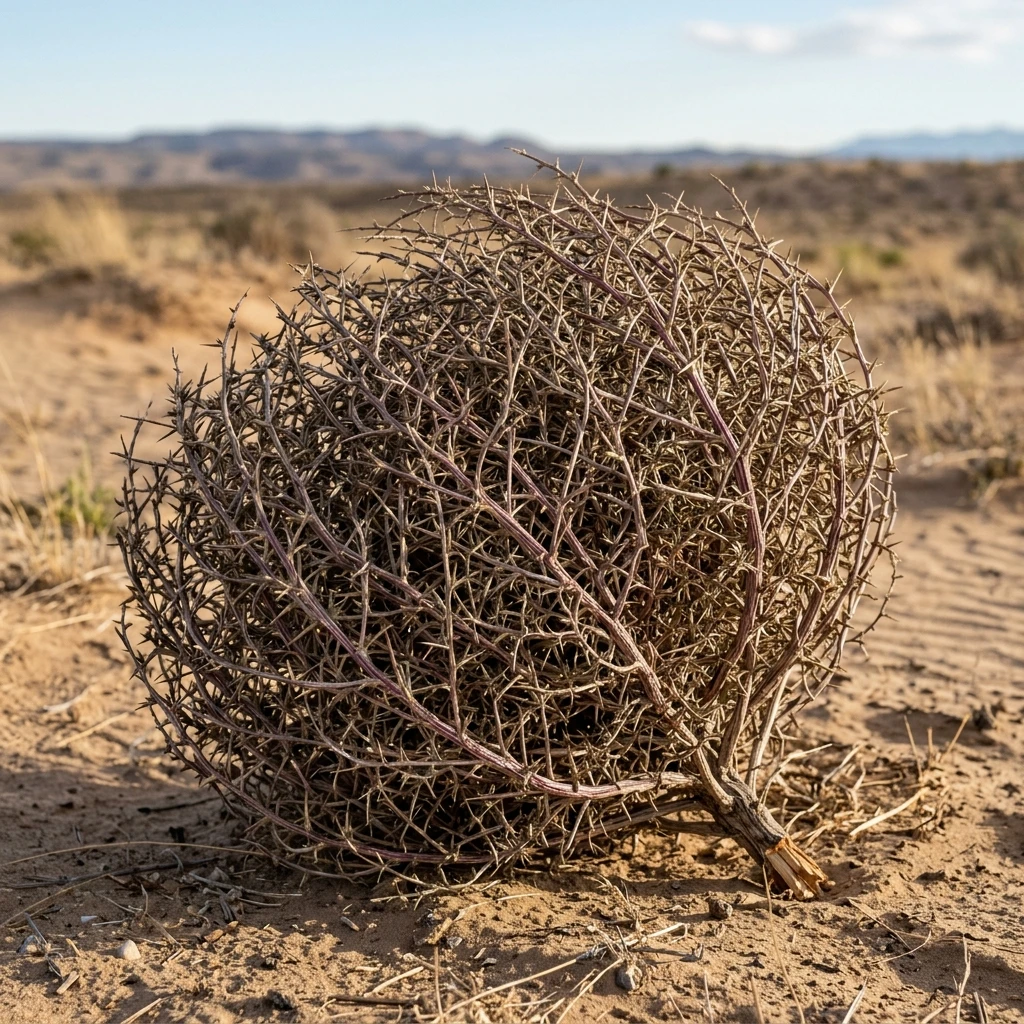
Russian Thistle, classically celebrated as the iconic Tumbleweed of the American West, is an exceptionally aggressive, tough summer annual broadleaf weed in the Amaranthaceae family. Native to Eurasia but thoroughly naturalized, it is a massive threat to arid agricultural fields and dry lawns. Growing into a dense, rounded, spiny green bush up to 4 feet tall, the plant dries out in autumn, breaks off at the soil surface, and is blown by wind across the landscape as a rolling 'tumbleweed', scattering up to 250,000 seeds along its path.


Sunlight Icon
Sunlight Full Sun
Watering Icon
Watering Tolerance Very Low
Soil Mix Icon
Soil Adaptability Arid Sandy / Alkaline / Poor Dry Soil
Temperature Icon
Growth Temp 10°C - 45°C
Toxicity Danger Icon
Danger / Toxicity Spiny Tumbleweed / Fire Hazard
Botanical macro photography of Russian Thistle (Salsola tragus) - Plant AI care and control database

How to Identify Russian Thistle

An upright, heavily branched, rounded annual bush with stiff spine-tipped leaves, purple-striped stems, and rolling tumbleweed habit in autumn.

  • Spine-Tipped Needle Leaves: Young leaves are soft and fleshy, but mature leaves turn short, exceptionally stiff, needle-like, and tipped with a sharp spine.
  • Purple-Striped Woody Stems: Stems are highly branched, stiff, woody at maturity, and frequently show bright reddish-purple longitudinal stripes.
  • Wind-Blown Tumbleweed Habit: The dry, brown, spiny spherical bush snaps at the base in autumn, rolling with the wind across open land.
💡 Tumbleweed Fact: Russian Thistle is a massive fire hazard! The dry, airy rolling bushes trap dry grass, accumulate along fences, and act as highly flammable 'tinderballs' that can carry wildfires across open roads.

Complete Care & Management Guide

Access highly technical, scientific management directives to control or cultivate Russian Thistle effectively.

Extremely drought-tolerant once established. It thrives in desert-like sand baking where competitive turf grasses like Bermuda struggle. Reducing irrigation is a great way to let dense turf choke it out.
Resistant to mowing. Although upright stems are clipped, the flat-growing lateral branches escape the blades easily, continuing to sprout spiny burs close to the ground.
Thrives in nutrient-starved soils. Improving soil fertility by adding organic compost and nitrogen lawn fertilizers helps desirable grass outcompete russian thistle.
Requires Full Sun. It cannot tolerate shade and will fail to grow under trees or beneath thick shrub shading. Overseeding shaded areas is highly effective.
Highly adapted to dry sandy soil, gravelly driveways, and nutrient-deficient clay. It struggles in soggy, wet organic loam.
Reproduces strictly by seeds. The seed pods explode when dry, flinging seeds up to 10 feet horizontally. A single plant can produce thousands of seeds.
Extremely heat-tolerant. Thrives in baking summer temperatures up to 120°F (48°C). Dies back completely with winter frosts, leaving hard burs behind.
Features an exceptionally deep, thick, branched woody yellow taproot that drills 4-5 feet deep. Manual removal requires deep excavation with a garden spade.
Virtually immune to pests due to its high silica and toxic chemical composition, which acts as a powerful natural pest deterrent.
Rarely suffers from diseases due to its desert adaptation, maintaining highly aggressive growth in sterile substrates.
To control Russian Thistle organically, manually dig out the central root crown using a sharp weeding knife before the spiny burs harden, and sweep up loose burs.

Are your dry yard margins showing spiny purple-striped bushes or rolling tumbleweeds?

Dig out the central taproot using a sharp spade in spring, wear thick leather gloves, and clear fence line accumulations.

Diagnose Weed Instantly

Common Diseases & Treatment

Fire Tinder Hazard

Symptoms: Symptoms: Dry spherical tumbleweed bushes pile up along fences and porches, dry, brittle, and highly flammable.

Action: Action: Clear all dry tumbleweeds immediately using a pitchfork. Dispose in trash or bury them; never let them accumulate near structures.

Spine Puncture Dermatitis

Symptoms: Symptoms: Stiff, woody needle-like leaf spines puncture the skin during handling, causing immediate stinging and redness.

Action: Action: Always wear heavy-duty leather gloves and long sleeves when clearing dry thistle. Disinfect any spine scratches.

Frequently Asked Questions

How does Russian Thistle roll?

In autumn, when the seeds are mature, a specialized layer of cells at the base of the stem turns brittle and snaps easily under wind. The lightweight, spherical, spiny bush is caught by the wind and rolls across fields, scattering seeds as it bounces.

Is Russian Thistle native to America?

No. Despite being the classic symbol of the American Wild West, Russian Thistle was accidentally imported to South Dakota in 1873 by Russian immigrants in flax seed. By 1890, it had spread across the entire western USA.

Is Russian Thistle toxic to livestock?

Young, tender green thistle sprouts are actually nutritious and eaten by cattle. However, mature plants are extremely toxic due to exceptionally high levels of chemical nitrates and soluble oxalates, which cause kidney failure in sheep.

What is the best way to get rid of it?

Use a sharp garden spade to slice the thick vertical taproot 3 inches below the soil surface in spring when the plant is still soft and green. Bag and destroy them before the woody spines and seeds form in late summer.

No more dying plants. Grow healthy greens today!

Get Started for Free