Pokeweed Identification & Control
American Pokeweed, botanically known as Phytolacca americana, is an exceptionally colossal, highly toxic perennial broadleaf weed in the pokeweed family. Native to North America, it is a severe nuisance in home lawns, orchard margins, and fence lines. Growing up to an astonishing 8 feet tall, it features smooth, thick, bright magenta-pink stems, massive green leaves, and hanging clusters of white flowers that mature into highly attractive, glossy, deep purple-black berries packed with lethal doses of phytolaccatoxin.




How to Identify Pokeweed
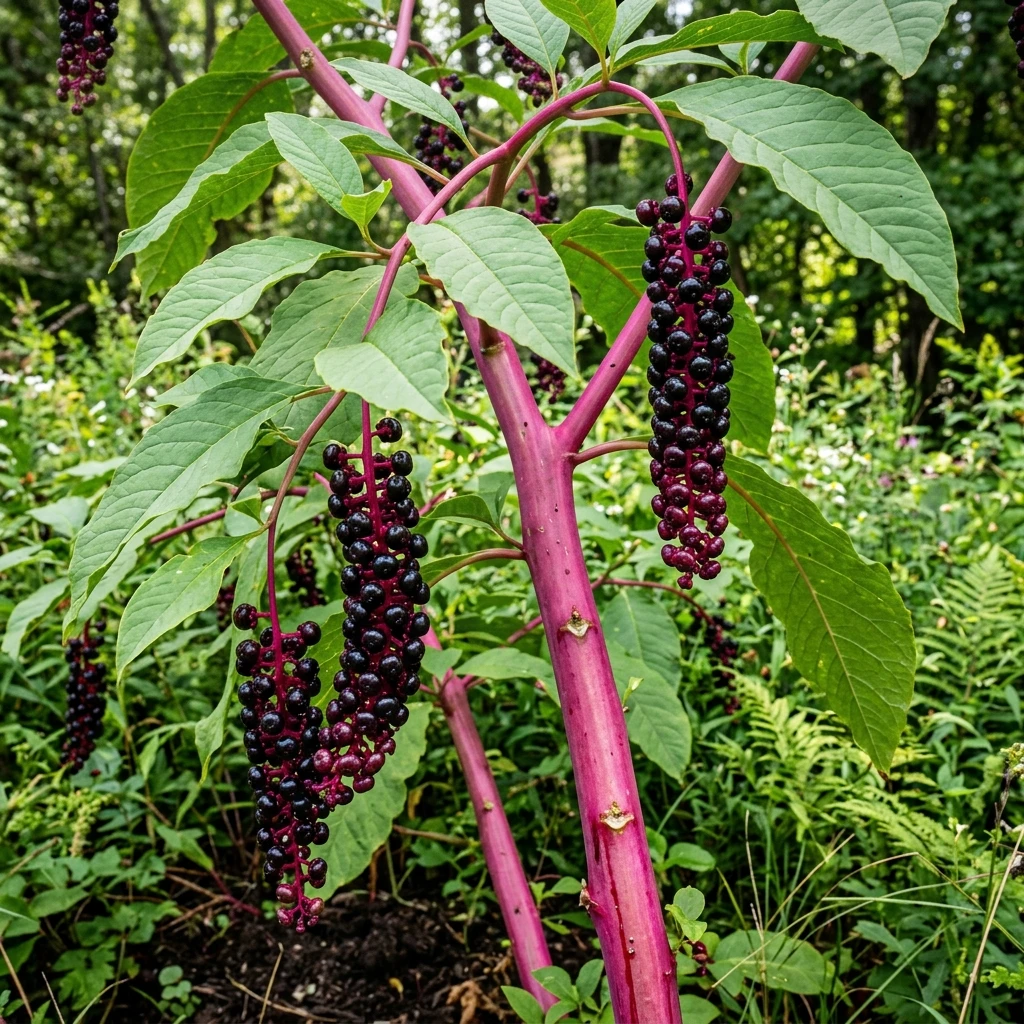
A colossal perennial up to 8 feet tall with thick, fleshy bright-magenta stems, massive alternate leaves, and hanging spikes of purple-black berries.
-
✔
Bright Magenta-Pink Stems: Smooth, hollow, exceptionally thick succulent stems that turn a highly dramatic, brilliant magenta-pink to red at maturity.
-
✔
Deep Purple-Black Berry Spikes: Hanging cylindrical spikes (up to 20 cm long) packed with glossy, deep purple-black berries bleeding rich red juice.
-
✔
Colossal Basal Taproot: Features an exceptionally massive, white, fleshy vertical taproot that grows as large as a bowling ball.
Complete Care & Management Guide
Access highly technical, scientific management directives to control or cultivate Pokeweed effectively.
Common Diseases & Treatment
Phytolaccatoxin Poisoning
Symptoms: Symptoms: Ingestion of leaves or berries by pets leads to severe frothing, violent vomiting, muscle spasms, and respiratory arrest.
Berry Sap Staining
Symptoms: Symptoms: Deep purple-black berries burst easily, bleeding an exceptionally rich, dark red-purple juice that stains skin and clothing.
Frequently Asked Questions
Why is it called 'Pokeweed'?
The name Pokeweed comes from the Native American Powhatan word 'pocan', which refers to plants that produce red dye. Historically, the rich red-purple juice of the berries was used as ink, dye, and to color cheap whiskey.
Are the berries toxic to birds?
No. Interestingly, wild songbirds (such as catbirds, mockingbirds, and robins) are completely immune to phytolaccatoxin. They eat the berries greedily and deposit the hard seeds along fences and powerlines, causing rapid spread.
What is 'Poke Sallet'?
Poke Sallet is a traditional Southern American dish made from young spring pokeweed leaves. *CRITICAL WARNING*: Raw pokeweed is deadly toxic! To make it edible, the young leaves must be boiled, drained, and re-boiled at least 3 separate times in fresh water to dissolve and remove the toxins.
What is the best way to eradicate it?
Use a sharp garden spade to dig a circle around the base of the colossal magenta stem. Dig deep and lift the massive fleshy white taproot crown completely out intact. Mow the area regularly to prevent seed production.