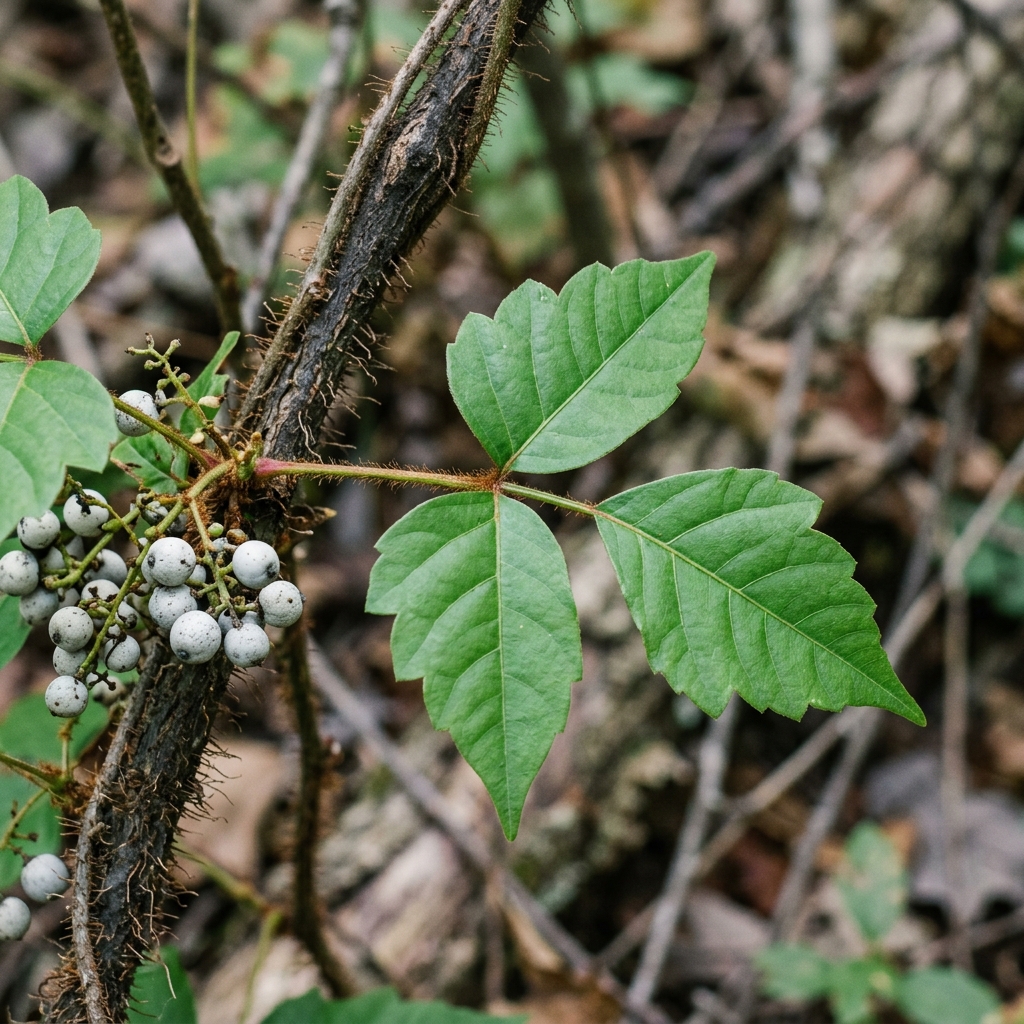
Toxicodendron diversilobum

Poison Oak Identification & Control

Poison Oak (specifically Western Poison Oak) is an exceptionally hazardous, woody perennial weed famed for its ability to cause severe, painful skin rashes and blistering upon contact. Native to western North America, it grows as a dense, upright shrub or a climbing woody vine in oak woodlands, home gardens, and valley margins. Like Poison Ivy, the entire plant is saturated with **urushiol**—a highly potent, toxic oil that binds rapidly to human skin, making it a major safety hazard in residential landscaping.


Sunlight Icon
Sunlight Full Sun to Shade
Watering Icon
Watering Tolerance Low to Moderate
Soil Mix Icon
Soil Adaptability Any Soil / Loam / Dry Clay
Temperature Icon
Growth Temp 5°C - 38°C
Toxicity Danger Icon
Danger / Toxicity Highly Toxic / Severe Rash
Botanical macro photography of Poison Oak (Toxicodendron diversilobum) - Plant AI care and control database

How to Identify Poison Oak

A woody shrub or twining vine with compound leaves in groups of three, with rounded lobes resembling white oak leaves, and waxy white berries.

  • Oak-Like Leaflets of Three: Leaves are divided into three leaflets with distinctly rounded lobes and scalloped margins, mimicking the shape of miniature white oak leaves.
  • Glossy Surface & Hairs: Leaflets are soft, waxy-glossy on top, frequently covered in fine fuzzy hairs underneath, and lack aerial roots on climbing stems.
  • Orange-Red Autumn Foliage: Leaves display beautiful, bright orange-red colors in autumn, dropping in winter to leave bare, toxic upright woody stems.
⚠️ Urushiol Alert: Poison Oak is NOT a true oak! It belongs to the sumac family (Anacardiaceae). The name comes strictly from its oak-like leaves, but its chemistry is highly toxic and identical to Poison Ivy.

Complete Care & Management Guide

Access highly technical, scientific management directives to control or cultivate Poison Oak effectively.

Extremely drought-tolerant. It thrives in dry, sunny chaparral slopes and arid backyard edges, surviving summer droughts easily due to its deep taproots.
Extremely dangerous. Cutting poison oak flings toxic urushiol sap onto tools and clothing. Manual hand-pulling requires strict safety gear and specialized tool cleaning.
Highly adaptable to sterile soils. It aggressively invades pastures, orchards, and gardens, choking out native shrubs and competing for light.
Highly versatile. Thrives in Full Sun (where it grows as a dense upright shrub) but exhibits high shade tolerance (where it grows as a climbing vine in forest shade).
Adapts to sandy loam, dry rocky slopes, heavy clay, and rich garden soils. It prefers dry-to-moist well-drained substrates.
Spreads via seeds and creeping underground root sprouts. Birds eat the small grey-white waxy berries and deposit the hard seeds along fences.
A woody perennial. Foliage drops in winter, but the bare, upright, woody stems remain highly loaded with toxic urushiol oil all winter, ready to cause rashes.
Features an extensive underground root network with a deep woody crown and creeping rhizomes. Complete extraction requires wearing heavy-duty chemical-resistant gloves.
Rarely targeted by insect pests due to its toxic chemistry, which acts as a powerful natural pest deterrent.
Highly disease-resistant. It suffers virtually zero structural damage from natural plant diseases, maintaining highly aggressive growth.
To control Poison Oak organically, wear thick long sleeves, long pants, and heavy chemical-resistant gloves. Carefully dig out the root crown, put all parts in a trash bag, and wash all clothing and tools with specialized urushiol-removing soap (like Tecnu).

Are your yard margins showing oak-like leaves of three or white waxy berries?

Wear heavy chemical-resistant gloves, dig out the woody root crown, and NEVER burn the plant.

Diagnose Weed Instantly

Common Diseases & Treatment

Urushiol Contact

Symptoms: Symptoms: Touching the oak-like leaves triggers severe skin itching, followed by red streaks, swelling, and oozing fluid blisters.

Action: Action: Wash the skin immediately (within 10-30 minutes) with dish soap and cold water, or specialized urushiol-remover Tecnu. Apply hydrocortisone cream.

Shrub Encroachment

Symptoms: Symptoms: Poison oak grows into a dense, sprawling 6-foot woody shrub block along your garden fences, loaded with grey-white waxy berries.

Action: Action: Wear complete protective gear. Use long-handled loppers to cut stems at the base, and dig up the woody root crowns completely.

Frequently Asked Questions

How do you distinguish Poison Oak from Poison Ivy?

Poison Oak has rounded lobes on its leaflets, strongly resembling miniature oak leaves, and the leaves are often fuzzy on the underside. Poison Ivy has pointed leaflets that are more triangular or lance-shaped with smooth or notched margins.

Are the berries toxic to birds?

No. Many species of wild birds feed heavily on poison oak berries in autumn, digesting the pulp and spreading the hard seeds across landscapes without suffering any toxic effects.

Can I get a rash from touching a dead Poison Oak plant in winter?

Yes! Urushiol is a highly stable oil that does not evaporate. It can remain active and highly toxic on dead bare branches and roots for up to 5 years, ready to trigger rashes on contact.

What is the best way to wash urushiol oil off my tools?

Wipe your gardening tools thoroughly with rubbing alcohol or mineral spirits, then wash them with hot soapy water. Urushiol is highly insoluble in water alone and must be dissolved with alcohol or degreasing soap.

No more dying plants. Grow healthy greens today!

Get Started for Free