Poison Ivy Identification & Control
Poison Ivy is an exceptionally notorious, hazardous perennial woody weed famed for its ability to cause severe, agonizing skin rashes and blisters. Native to North America, it thrives abundantly in forest margins, home gardens, and climbing up trees. Spreading aggressively as a ground cover or a climbing woody vine, the entire plant is saturated with **urushiol**—a highly potent, sticky, and invisible oil that remains active on dead vines, clothing, and pet fur for years, posing a constant danger.





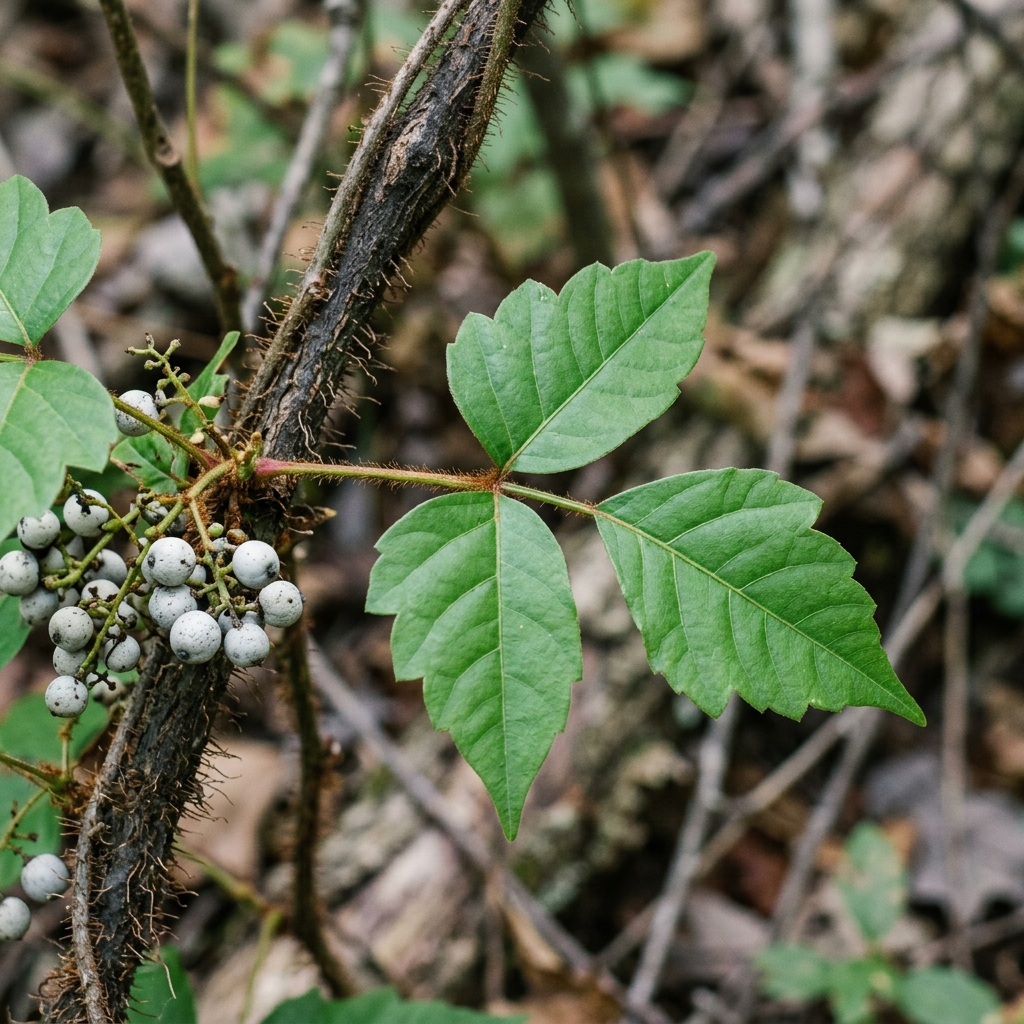
How to Identify Poison Ivy
A woody vine or shrub with compound leaves grouped in threes ('leaves of three, let it be'), smooth or notched margins, and hairy climbing stems.
-
✔
Leaves of Three, Let It Be: Leaves are compound, divided into exactly three distinct leaflets. The central leaflet has a longer stalk than the two side leaflets.
-
✔
Hairy Climbing Vines: Climbing vines are covered in dense, dark-brown, hair-like aerial roots that anchor the woody stem tightly to tree bark.
-
✔
Waxy White Berries: Sprouts small, waxy, grey-white berries in late summer, which are highly sought after by birds but toxic to humans.
Complete Care & Management Guide
Access highly technical, scientific management directives to control or cultivate Poison Ivy effectively.
Common Diseases & Treatment
Urushiol Contact
Symptoms: Symptoms: Touching the glossy leaves triggers severe skin itching, followed by red streaks, swelling, and oozing fluid blisters.
Hairy Vine Choking
Symptoms: Symptoms: Dark, hairy woody vines climb up your backyard trees, covered in grey-white waxy berries.
Frequently Asked Questions
What does 'leaves of three, let it be' mean?
It is a classic warning phrase. Poison Ivy always has compound leaves composed of exactly three leaflets. The leaflets can be smooth-edged or notched, but the group of three arrangement is constant.
Is Poison Ivy toxic to dogs and cats?
Dogs and cats are mostly immune to the rash because of their thick fur. However, the toxic urushiol oil will stick to their fur when they run through it. Touching your pet's fur can then transfer the oil to your skin, causing a severe rash.
Can I kill Poison Ivy by spraying it with vinegar?
High-strength horticultural vinegar (20% acetic acid) can burn the green leaves, but it will not kill the deep, woody perennial roots. The plant will quickly sprout new leaves from the root crown.
What is the best way to wash urushiol oil off my tools?
Wipe your gardening tools thoroughly with rubbing alcohol or mineral spirits, then wash them with hot soapy water. Urushiol is highly insoluble in water alone and must be dissolved with alcohol or degreasing soap.