Mugwort Identification & Control
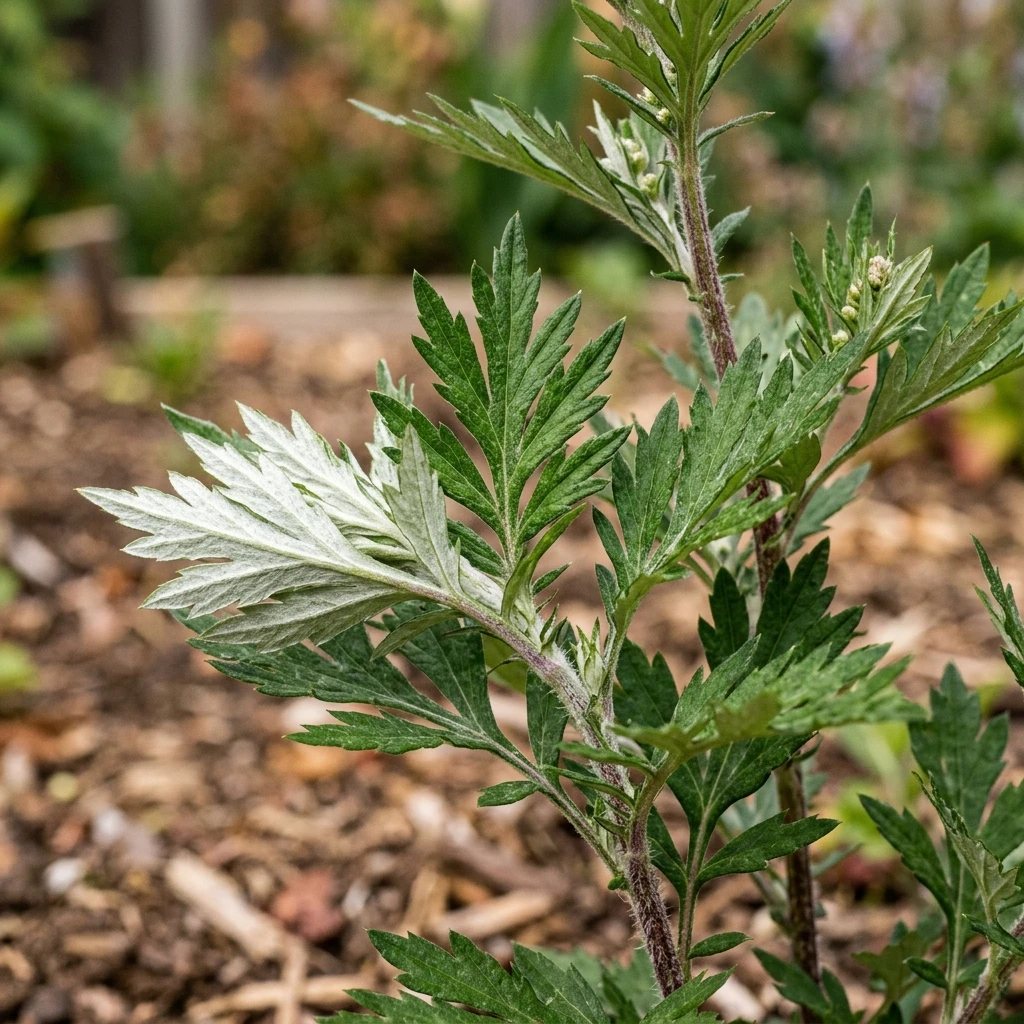
Mugwort, botanically known as Artemisia vulgaris, is an exceptionally aggressive, highly persistent perennial broadleaf weed in the aster family. Native to Europe but globally naturalized, it is a major headache in home lawns, vegetable gardens, and crop fields. It features upright, woody green-purple stems and deeply-lobed leaves that are dark green on top and covered in dense, silvery white woolly hairs underneath. When crushed, the leaves emit a highly pungent, aromatic sage-like scent. It spreads aggressively via a massive network of underground rhizomes, releasing allelopathic chemicals that suppress neighboring garden plants.





How to Identify Mugwort
An upright perennial with woody green-purple stems, deeply-lobed leaves showing fuzzy silver-white undersides, and a highly aromatic spicy scent.
-
✔
Silvery Woolly Leaf Undersides: Deeply-lobed, chrysanthemum-like leaves are smooth dark-green on top, but covered in dense, white woolly hairs underneath.
-
✔
Highly Aromatic Spicy Scent: Crushing the leaves or stems releases a highly pungent, medicinal, spicy sage-like or chrysanthemum scent.
-
✔
Upright Purplish Woody Stems: Stems are erect, highly branched, grooved, and turn woody and purplish-brown at maturity, growing up to 5 feet tall.
Complete Care & Management Guide
Access highly technical, scientific management directives to control or cultivate Mugwort effectively.
Common Diseases & Treatment
Allelopathic Soil Suffocation
Symptoms: Symptoms: Surrounding garden vegetables and flowers grow stunted, yellow, and wither due to root chemical suppression.
Creeping Rhizome Mat
Symptoms: Symptoms: Mugwort quickly forms a dense, interconnected monoculture that is highly resistant to standard hand-pulling.
Frequently Asked Questions
How is Mugwort different from Chrysanthemum?
Mugwort leaves are deeply-lobed and look very similar to Chrysanthemum. However, Mugwort leaves are covered in highly distinct, dense, silvery-white woolly hairs on the undersides, and emit a spicy sage-like scent when crushed, whereas chrysanthemum undersides are green.
Is Mugwort toxic to pets?
It is generally non-toxic to dogs and cats in small quantities. However, it contains volatile oils (thujone) which can cause mild digestive upset, salivation, or vomiting if ingested in large raw quantities by cats.
Why does it have a long history in herbalism?
Mugwort has been highly valued for centuries. In traditional European and Asian cultures, it was used to ward off evil spirits, promote vivid dreams, and in 'moxibustion' (burning mugwort cones near acupuncture points in Chinese medicine) to stimulate blood circulation.
What is the best way to get rid of it?
Because it has an extensive underground rhizome network, hand-pulling must be done slowly to ensure no root nodes are left behind. Cardboard sheets overlaid with 4 inches of wood mulch for a year is highly effective in garden beds.