Milkweed Identification & Control
Common Milkweed, botanically classified as Asclepias syriaca, is an exceptionally common, resilient perennial broadleaf weed in the dogbane family. Native to North America, it thrives abundantly in agricultural fields, parched pasture lands, and sunny garden borders. It features stout upright stems that bleed a thick, sticky milky latex sap when broken, filled with toxic cardenolides (cardiac glycosides) that pose a severe threat to livestock and domestic pets. Paradoxically, it is the absolute sole host plant for the spectacular Monarch butterfly larvae, creating a classic ecological paradox.





How to Identify Milkweed
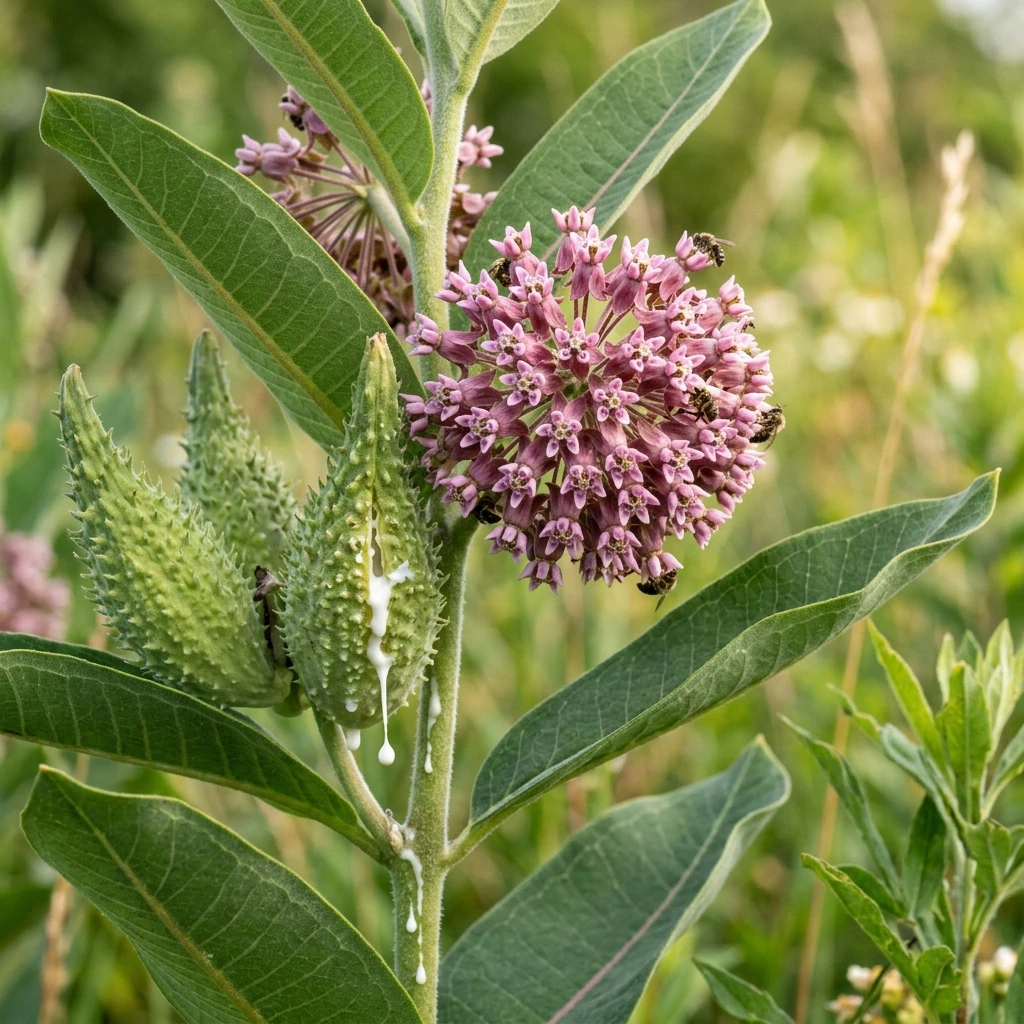
An erect perennial with thick unbranched stems, large opposite oblong leaves, rounded clusters of pink-purple flowers, and warty seed pods bleeding milky sap.
-
✔
Thick Sticky Milky Sap: Breaking any stem or leaf immediately bleeds a dense, sticky, latex sap packed with toxic cardenolides.
-
✔
Warty Seed Pods with Floss: Large, teardrop-shaped warty green seed capsules that split open in autumn to release brown seeds with silky white hairs (floss).
-
✔
Fragrant Pink-Purple Clusters: Large, rounded, globe-like clusters of highly fragrant, star-shaped pinkish-purple flowers blooming in mid-summer.
Complete Care & Management Guide
Access highly technical, scientific management directives to control or cultivate Milkweed effectively.
Common Diseases & Treatment
Cardenolide Cardiotoxicity
Symptoms: Symptoms: Grazing pets consume raw leaves, leading to severe drooling, vomiting, dilated pupils, heart arrhythmia, and seizures.
Orange Leaf Aphids
Symptoms: Symptoms: Stems and flower joints are completely coated by dense clusters of tiny, bright yellow-orange sap-sucking insects.
Frequently Asked Questions
Why is Milkweed toxic to animals?
Milkweed contains cardenolides (cardiac glycosides). These highly toxic chemical compounds directly inhibit the cellular sodium-potassium pump in cardiac muscle cells, causing severe gastrointestinal distress, heart arrhythmias, seizures, and potential death if ingested.
Why is it called the 'Monarch Butterfly' plant?
Monarch butterfly butterflies lay their eggs exclusively on milkweed leaves. The hatching caterpillars eat the leaves, incorporating the cardenolide toxins into their own tissues. This chemical defense makes both the caterpillars and adult butterflies highly toxic to birds, protecting them from predators.
Can the silky white seed floss be used?
Yes! The seed floss (floss) is highly water-repellent and has outstanding thermal insulation properties. During World War II, American school children collected milkweed pods to harvest the floss to fill military life jackets.
What is the best way to eradicate Milkweed?
Because it spreads via underground rhizomes, hand-pulling must be done repeatedly to exhaust the root. Dig deep using a spade to extract the central root crown, and mow the area close to the ground before the warty pods can open.