Euphorbia esula

Leafy Spurge Identification & Control

Leafy Spurge, botanically known as Euphorbia esula, is an exceptionally aggressive, highly noxious perennial broadleaf weed in the Euphorbiaceae family. Native to Eurasia but thoroughly naturalized globally, it is an ecological disaster in pasture lands and nature reserves. Growing up to 3 feet tall, it features smooth, narrow leaves, and showy, heart-shaped yellowish-green bracts that surround tiny, inconspicuous flowers. Every part of the plant is packed with a thick, sticky, milky latex sap that contains highly toxic diterpene esters. This sap causes severe skin blistering, mouth ulcers, and blindness in grazing cattle and horses. Furthermore, it possesses an explosive seed dispersal mechanism that shoots seeds up to 15 feet away.


Sunlight Icon
Sunlight Full Sun to Partial Shade
Watering Icon
Watering Tolerance Low to Moderate
Soil Mix Icon
Soil Adaptability Dry Sandy / Loam / Poor Clay / Poor Soil
Temperature Icon
Growth Temp 8°C - 38°C
Toxicity Danger Icon
Danger / Toxicity Highly Toxic (Blistering Milky Sap) / Explosive Spreader
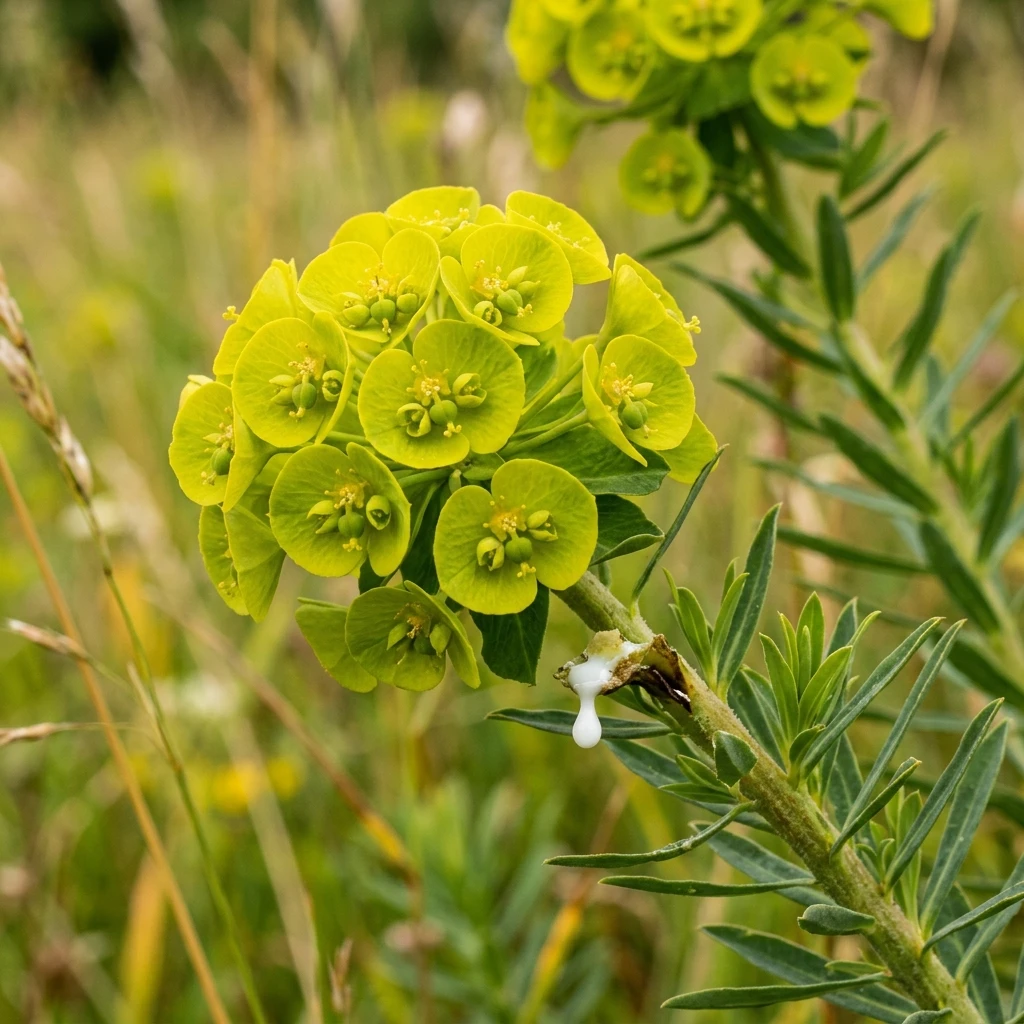
Botanical macro photography of Leafy Spurge (Euphorbia esula) - Plant AI care and control database

How to Identify Leafy Spurge

An upright perennial with narrow green leaves, and showy heart-shaped yellowish-green bracts bleeding thick, sticky milky sap when broken.

  • Yellowish-Green Heart Bracts: Showy, flat, heart-shaped yellowish-green leaf bracts (arranged in clusters) resemble petals surrounding tiny green flowers.
  • Sticky Blistering Milky Sap: Breaking any stem or leaf immediately bleeds a dense, sticky, latex sap that is highly corrosive and irritating.
  • Sprawling Deep Root Network: Features a massive, woody root system that drills up to 15 feet deep, and is packed with thousands of vegetative buds.
💡 Ballistic Seeds: Leafy Spurge is a physical ballistics expert! In late summer, the seed capsules dry, build up high internal tension, and **explode physically**, shooting seeds up to 15 feet away from the parent plant.

Complete Care & Management Guide

Access highly technical, scientific management directives to control or cultivate Leafy Spurge effectively.

Extremely drought-resistant due to its massive rhizome network. It grows vigorously in spring rains but easily survives scorching summer heat by drawing water from deep sub-soils.
Resistant to mowing. Regular cutting will stop seedhead formation, but the plant quickly shoots up new stalks from its creeping rhizomes, and mowed regrowth is highly toxic!
Highly aggressive. It actively steals high levels of nitrogen and soil nutrients, severely stunting neighboring garden crops and turf grasses.
Requires Full Sun. It cannot tolerate shade and will fail to grow under trees, beneath thick garden shrubs, or in dense, shaded lawns.
Adapts to dry sandy loam, compacted poor clay, roadsides, and disturbed fields. It struggles in wet, saturated organic bogs.
Reproduces strictly by seeds. A single plant can produce up to 80,000 seeds that are carried by the wind using a fluffy white pappus.
Extremely heat-tolerant perennial. Stems die back and turn completely straw-brown with winter frost, but the deep black rhizomes sprout fresh shoots in spring.
Features an exceptionally deep, sprawling network of creeping horizontal white rhizomes. Excavation requires slicing the root crown deep below the soil.
Occasionally targeted by aphids, but pests rarely slow its aggressive colonization.
Subject to **Bacterial Wilt** and **Tobacco Mosaic Virus**, serving as a dangerous disease reservoir for garden tomatoes and peppers.
To control Leafy Spurge organically, manually dig up young rosettes in spring before they flower, use a hoe to scrape seedlings, and mulch garden beds heavily to block seed light.

Are your pastures showing yellowish-green bracts or white blistering sap?

Wear thick gloves and safety goggles, cut bracts before seeds explode, and keep cattle away from the corrosive white sap.

Diagnose Weed Instantly

Common Diseases & Treatment

Sap Corrosive Blistering

Symptoms: Symptoms: Grazing pets chew fresh leafy spurge, leading to severe mouth ulcers, drooling, skin blistering, and eye blindness from sap contact.

Action: Action: Emergency veterinary care immediately! Flush the mouth or eyes with clean water. The sap is highly toxic and corrosive.

Ballistic Seed Dispersal

Symptoms: Symptoms: Dry leafy spurge patches shoot seeds across fence lines, invading previously clean garden beds rapid-fire.

Action: Action: Cut and remove leafy spurge patches in early summer before seed capsules turn brown and dry. Mulch the soil heavily.

Frequently Asked Questions

Why is Leafy Spurge toxic to cattle and horses?

Every part of the plant contains a thick, sticky, milky sap rich in diterpene esters. This sap is highly corrosive, causing severe skin blistering, painful mouth ulcers, and blindness in grazing livestock.

How far can Leafy Spurge shoot its seeds?

The drying seed capsules build high hydrostatic tension, eventually exploding physically (ballistic seed dispersal) to shoot seeds up to 15 feet away.

Why is it so difficult to manually pull?

It has an incredibly sprawling, deep, woody root system that drills up to 15 feet deep and is packed with thousands of dormant vegetative buds. Pulling only snaps the stem, triggering rapid regrowth.

What is the best way to get rid of it?

Releasing spurge-eating flea beetles (Aphthona species) as a biological control agent is highly effective organically, as they devour the massive root system.

No more dying plants. Grow healthy greens today!

Get Started for Free