Horseweed Identification & Control
Horseweed, botanically known as Erigeron canadensis and also known as Marestail, is an exceptionally common, highly aggressive summer annual broadleaf weed in the Asteraceae family. Native to North America but thoroughly naturalized globally, it is an ecological disaster in agricultural crop fields and a major nuisance in home lawns. Growing up to an impressive 6 feet tall, it features a single, erect, bristly-hairy stem crowded with narrow alternate green leaves, culminating in a dense panicle of tiny, inconspicuous white-yellow daisy-like flowers. Crucially, Horseweed is the world's first weed to develop widespread, severe genetic resistance to glyphosate herbicides, making it a dreaded superweed in agriculture.





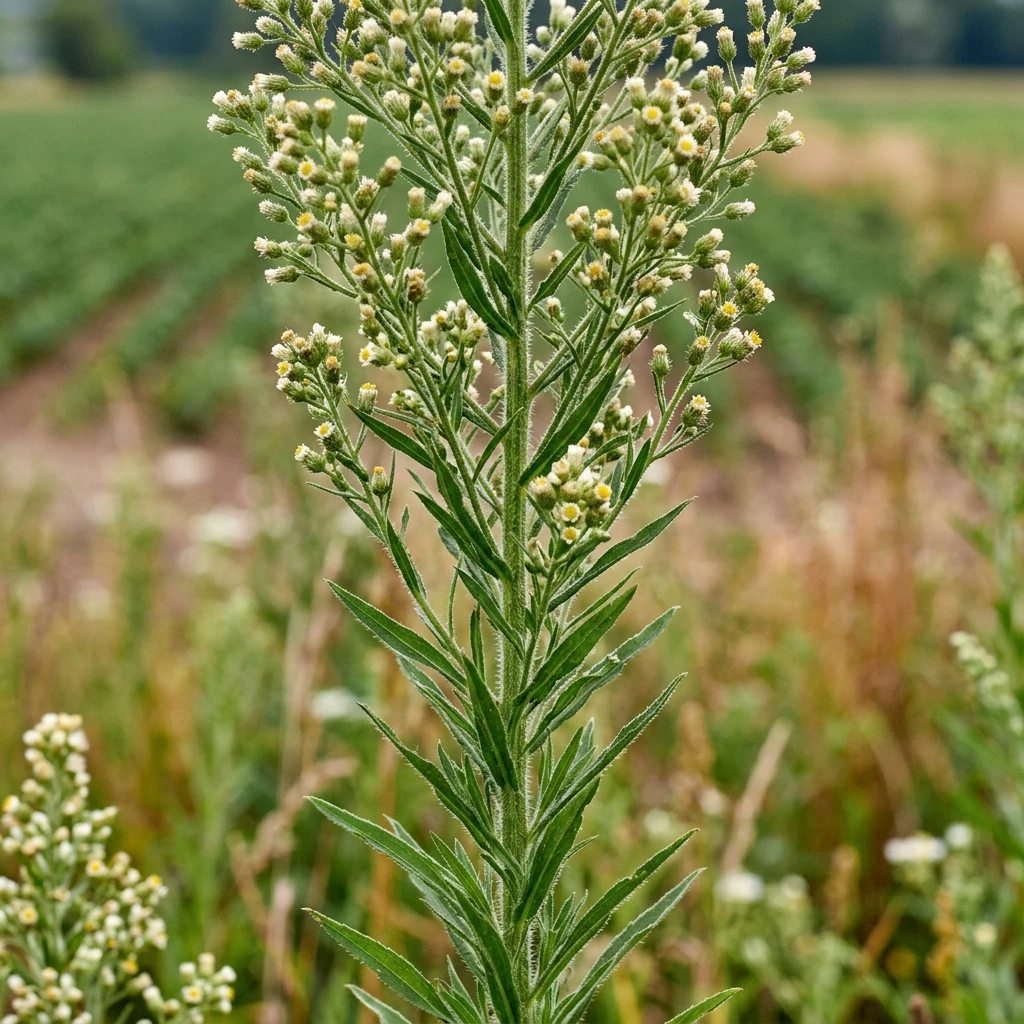
How to Identify Horseweed
A tall, erect annual up to 6 feet tall with a single bristly stem crowded with narrow leaves, and dense spikes of tiny white flowers.
-
✔
Erect Bristly Stems: Stems are solitary, upright, highly bristly-hairy, and grow straight up without branching until the flower head.
-
✔
Narrow Crowded Leaves: Numerous narrow, lance-shaped, pale-green leaves (2 to 10 cm long) grow alternately and densely along the stem.
-
✔
Dense Tiny Flower Spikes: Massive, terminal, branched flower spikes packed with hundreds of tiny, inconspicuous white-yellow flowers.
Complete Care & Management Guide
Access highly technical, scientific management directives to control or cultivate Horseweed effectively.
Common Diseases & Treatment
Glyphosate Resistance
Symptoms: Symptoms: Applied glyphosate herbicides fail to control the weed, with leaves showing zero damage and continuing growth.
Allelopathic Crop Stunting
Symptoms: Symptoms: Surrounding crop vegetables grow stunted, yellow, and wither due to root chemical suppression.
Frequently Asked Questions
Why is Horseweed considered a dangerous agriculture 'superweed'?
Horseweed is the first weed in history to develop widespread genetic resistance to glyphosate (Roundup) in 2000. It has since developed resistance to multiple other herbicide groups, making it extremely difficult for farmers to control.
How far can Horseweed seeds travel?
A single Horseweed plant can produce up to 200,000 tiny seeds. Each seed is equipped with a fluffy white parachute (pappus), allowing them to ride wind currents and travel up to 300 miles away.
Is Horseweed allelopathic?
Yes. Horseweed roots exude specialized allelopathic chemicals into the surrounding soil, which actively suppress and stunt the root development and growth of neighboring crops and plants.
What is the best organic control for Horseweed?
Manually hand-pull the single erect stalks in early spring when the soil is damp, ensuring you extract the root crown. Applying thick wood-chip or straw mulch (at least 3 inches deep) will block sunlight and prevent windblown seeds from germinating.