Solanum carolinense

Horsenettle Identification & Control

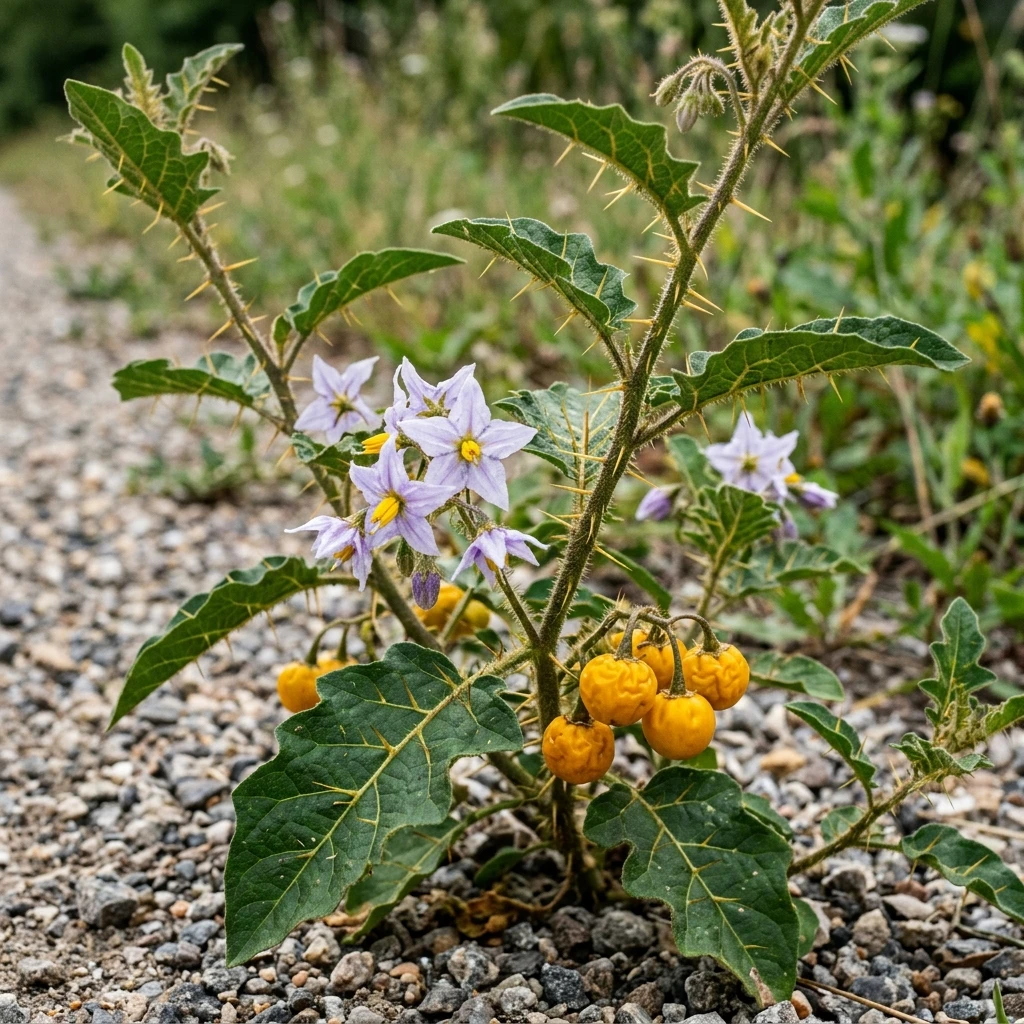
Carolina Horsenettle, botanically known as Solanum carolinense, is an exceptionally aggressive, highly toxic perennial broadleaf weed in the nightshade family. Native to the southeastern United States, it is a dreaded weed in crop fields and pastures globally. The stems and leaf veins are covered in sharp, yellowish spines, and it spreads aggressively via creeping underground rhizomes. It produces star-shaped purple-white flowers and small, tomato-like yellow berries packed with toxic solanine.


Sunlight Icon
Sunlight Full Sun
Watering Icon
Watering Tolerance Low to Moderate
Soil Mix Icon
Soil Adaptability Dry Sandy / Loam / Poor Clay / Poor Soil
Temperature Icon
Growth Temp 12°C - 40°C
Toxicity Danger Icon
Danger / Toxicity Highly Toxic / Spiny Stem / Toxic Berries
Botanical macro photography of Horsenettle (Solanum carolinense) - Plant AI care and control database

How to Identify Horsenettle

An upright perennial with yellow spines along stems and leaf veins, star-shaped purple-white flowers, and yellow tomato-like berries.

  • Sharp Yellow Spines: Upright stems and the undersides of leaf veins are heavily armed with sharp, needle-like, yellowish spines.
  • Tomato-Like Yellow Berries: Small, round berries (1.5 cm wide) that are green with marbled stripes when young, maturing to dry, yellow-orange wrinkly globes.
  • Star-Shaped Purple Flowers: Clusters of 5-petaled white-to-pale-violet flowers with a highly distinct, prominent cone of bright yellow stamens.
⚠️ Fatal Toxin Warning: Horsenettle is highly toxic! Every part of the plant, especially the yellow berries, contains toxic **solanine**. Ingestion by horses, cattle, or dogs causes severe gastrointestinal irritation, neurological depression, and death.

Complete Care & Management Guide

Access highly technical, scientific management directives to control or cultivate Horsenettle effectively.

Extremely drought-tolerant once established due to its extensive, deep vertical taproot and horizontal rhizomes. It thrives during hot, dry summer baking that wilts garden crops.
Resistant to mowing. Regular mowing will clip the tall stems and limit seed formation, but the plant will quickly shoot up new stems from its creeping yellow rhizomes.
Highly aggressive. It actively steals high levels of nitrogen and soil nutrients, severely stunting neighboring garden crops and turf grasses.
Requires Full Sun. It cannot tolerate shade and will fail to grow under trees, beneath thick garden shrubs, or in dense, shaded lawns.
Adapts to dry sandy loam, compacted poor clay, roadsides, and disturbed fields. It struggles in wet, saturated organic bogs.
Spreads aggressively via wind-blown seeds equipped with parachute-like silky floss, and extensively underground via tough, creeping rhizomes.
Extremely cold-hardy perennial. Foliage dies back completely in winter, but the deep underground root network survives easily, sprouting fresh shoots in spring.
Features an exceptionally deep, sprawling network of creeping horizontal white rhizomes. Excavation requires slicing the root crown deep below the soil.
Targeted by potato beetles and flea beetles, though pests rarely slow its aggressive colonization.
Subject to **Bacterial Wilt** and **Tobacco Mosaic Virus**, serving as a dangerous disease reservoir for garden tomatoes and peppers.
To control Horsenettle organically, wear thick leather gloves, dig up the central taproot using a sharp spade, and repeatedly cut shoots to starve the roots.

Are your pastures showing yellow-spined stems or tomato-like yellow berries?

Wear leather gloves, dig out the deep yellow taproot crown, cut off yellow berries, and keep horses away.

Diagnose Weed Instantly

Common Diseases & Treatment

Solanine Toxicity Poisoning

Symptoms: Symptoms: Ingestion of yellow berries by horses or cattle leads to drooling, colic, dilated pupils, paralysis, and liver failure.

Action: Action: Emergency veterinary visit! Immediate gastric lavage, supportive fluid therapy, and administration of activated charcoal are required.

Spiny Stem Puncture

Symptoms: Symptoms: Hand-pulling without gloves causes immediate pain, puncture wounds, and localized skin swelling from the yellow spines.

Action: Action: Do not hand-pull bare-handed. Slice the root crown deep using a hoe, or wear thick heavy-duty leather gloves during weeding.

Frequently Asked Questions

Why is Horsenettle so hard to eradicate?

Horsenettle features an exceptionally deep, thick, vertical taproot anchored to a massive network of creeping horizontal rhizomes. If you pull it and leave even a tiny piece of rhizome in the soil, it will regenerate into a new plant.

Are the yellow berries edible?

Absolutely not! The berries look exactly like small yellow cherry tomatoes (giving it the nickname sand brier), but they are highly toxic, packed with deadly solanine glycoalkaloids. Eating them can be fatal to pets and children.

Does it have any native host value?

Yes. Horsenettle is a host plant for the larvae of the tobacco hornworm (*Manduca sexta*) and the potato beetle. However, in lawns and pastures, it is a highly noxious weed that must be controlled.

What is the best way to get rid of it?

Wear thick leather gloves. Slice the central taproot 3 inches below the soil surface using a sharp spade while the plant is still small in late spring. Repeatedly clip new shoots to starve the deep creeping rhizomes.

No more dying plants. Grow healthy greens today!

Get Started for Free