Eleusine indica

Goosegrass Identification & Control

Goosegrass, also widely known as Crowfoot Grass or Wiregrass, is an exceptionally tough, flat-growing annual grassy weed. Native to the Old World but now a massive pest worldwide, it is highly notorious for its extreme resistance to compaction, heavy foot traffic, and low mowing heights. It commonly dominates compacted sports fields, golf courses, walkways, and high-traffic lawns, growing in a tight, silver-white rosette that acts like a solid concrete anchor.


Sunlight Icon
Sunlight Full Sun
Watering Icon
Watering Tolerance Low to Moderate
Soil Mix Icon
Soil Adaptability Heavy Compacted Clay / Gravel
Temperature Icon
Growth Temp 18°C - 45°C
Toxicity Danger Icon
Danger / Toxicity Pet Safe / Tough Wire Stems
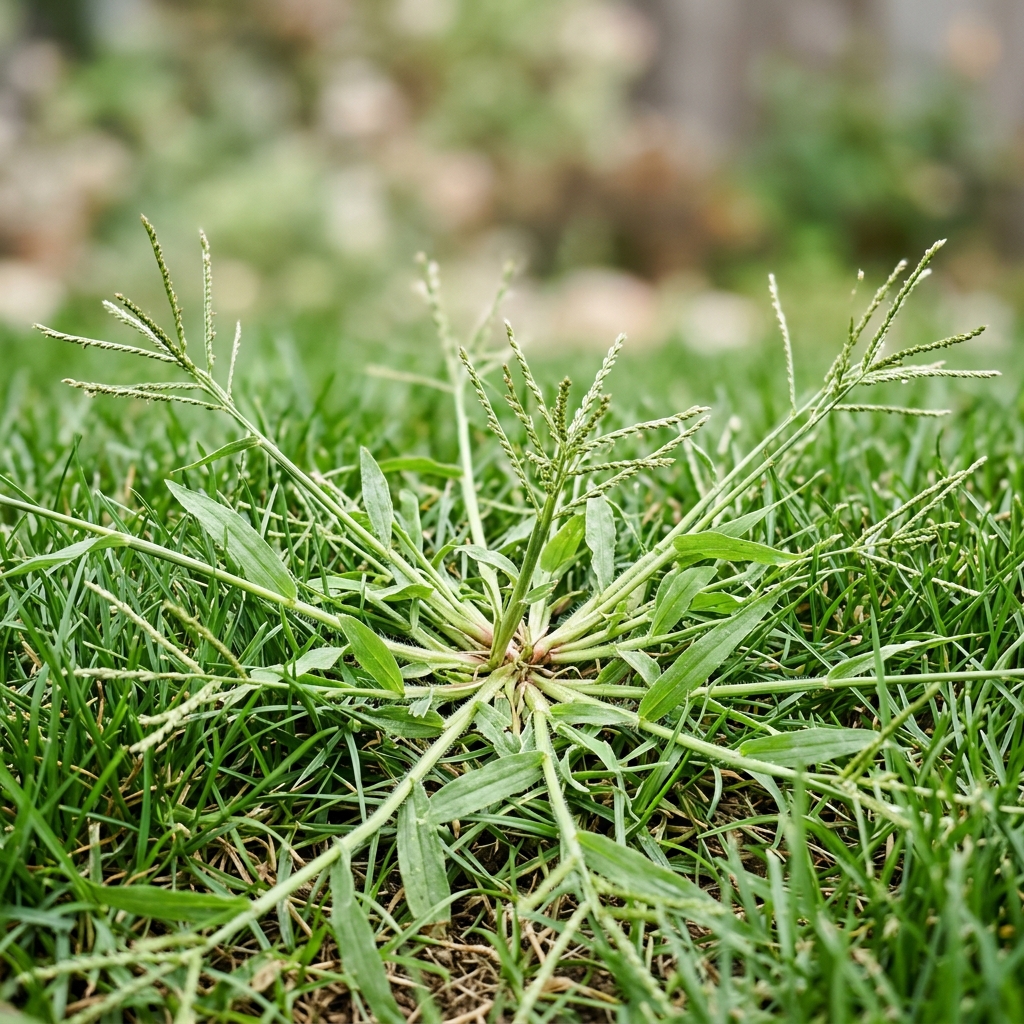
Botanical macro photography of Goosegrass (Eleusine indica) - Plant AI care and control database

How to Identify Goosegrass

A flat, dark-green grassy rosette with a highly distinct silvery-white center, extremely tough wire-like stems, and heavy, zipper-like seed spikes resembling a crow's foot.

  • Silvery-White Center: The base of the stems near the central crown is strongly flattened and displays a highly characteristic pale, silvery-white color.
  • Tough Wiry Stems: Stems are exceptionally tough, fibrous, and flattened, resisting breaking even when stepped on by heavy athletic cleats.
  • Crowfoot Seed Spikes: The seed head features 2 to 6 flat, finger-like spikes clustered at the top of a stiff stem, resembling a bird's footprint.
💡 Management Tip: Goosegrass is a classic indicator of severe soil compaction and high traffic. While turf grass roots suffocate in compacted clay, Goosegrass thrives. Relieving compaction with core aeration is the best long-term control.

Complete Care & Management Guide

Access highly technical, scientific management directives to control or cultivate Goosegrass effectively.

Extremely drought-resistant. It grows well in bone-dry gravel paths and clay seams, but also tolerates soggy, waterlogged compacted areas where lawn grasses rot.
Virtually immune to standard mowing heights. Stems grow flat to the ground and are extremely fibrous, often bending under mower blades without being cut.
Highly adaptable to poor, nutrient-starved soils. Regular turf fertilization and dense turf competition are required to crowd out emerging goosegrass seedlings.
Requires Full Sun. It will not grow under dense shade or a tall, competitive grass canopy. Shading is a highly effective organic control.
Thrives in heavily compacted clay, gravelly driveways, sidewalk cracks, and areas with high foot traffic. It does not require loose, aerated soils.
Spreads entirely by seeds. A single plant can produce up to 50,000 durable seeds that are easily spread by mowing decks, water runoff, and shoe soles.
A summer annual. It germinates in late spring (soil temps above 65°F / 18°C, which is later than crabgrass). It dies completely with the winter frost.
Features an exceptionally deep, dense, and tough fibrous root system that anchors the flat crown into compacted clay, making manual pulling very difficult.
Very resistant to pests. It is rarely affected by insects, which allows it to maintain structural integrity in high-traffic sports fields.
Subject to **Browning Rust** and **Leaf Spots** in damp autumns, though diseases rarely kill the weed before it successfully sets seed.
Manual pulling is best done after heavy rain. Use a sturdy weeding tool to pry the central silver crown out of the clay, as pulling by hand will only snap the tough wiry stems.

Are your high-traffic lawn areas showing silver-centered wire clumps?

Perform core aeration to loosen heavy clay, hand-pry the silver-white centers, and mow high.

Diagnose Weed Instantly

Common Diseases & Treatment

Browning Rust

Symptoms: Symptoms: Small, dusty orange-brown spots appearing on the tough, flattened dark-green leaf blades.

Action: Action: Hand-dig and discard the affected weed clumps. Ensure sports fields are aerated and watered early in the morning to allow quick drying.

Mower Dullness Damage

Symptoms: Symptoms: Goosegrass stems are shredded and frayed rather than cleanly cut, leaving unsightly brown fibrous tips.

Action: Action: Sharpen your lawn mower blades. Goosegrass has wire-like stems that dull blades quickly. Sharp blades prevent turf grass tearing.

Frequently Asked Questions

How is Goosegrass different from Crabgrass?

Goosegrass has extremely flat, tough stems with a highly distinct silvery-white color near the center of the rosette, and its seed heads resemble a crow's foot. Crabgrass has rounder, hairier stems that are pale-green, and lacks the silver-white center.

Why does Goosegrass grow in sports fields and walkways?

Goosegrass is incredibly resistant to compaction and physical crushing. High traffic kills off turf grasses, leaving bare, heavily packed soil where goosegrass seeds germinate and thrive without grass competition.

Can you pull Goosegrass out by hand?

It is very difficult because the stems are wire-like and the fibrous roots anchor deeply into packed clay. Trying to pull it by hand often breaks the stems off the crown, which will quickly regrow. Use a weeding tool to pry it out.

Does Goosegrass die in the winter?

Yes, Goosegrass is a summer annual. It is killed by winter freezes, but the dormant seeds remain in the soil, ready to sprout in late spring when soil temperatures reach 65°F (18°C).

No more dying plants. Grow healthy greens today!

Get Started for Free