Hydrocotyle umbellata

Dollarweed Identification & Control

Dollarweed, also known as Pennywort or Marsh Pennywort, is an exceptionally aggressive, perennial broadleaf weed native to North America. Thriving in wet, swampy, and waterlogged soils, it is a major headache for home lawns and golf courses. It features highly unique, rounded, shield-shaped green leaves that resemble small green dollars, crawling aggressively via creeping rhizomes that form dense, interconnected mats.


Sunlight Icon
Sunlight Full Sun to Shade
Watering Icon
Watering Tolerance High
Soil Mix Icon
Soil Adaptability Wet Saturated / Clay / Poorly Drained
Temperature Icon
Growth Temp 12°C - 38°C
Toxicity Danger Icon
Danger / Toxicity Pet Safe / Water Indicator
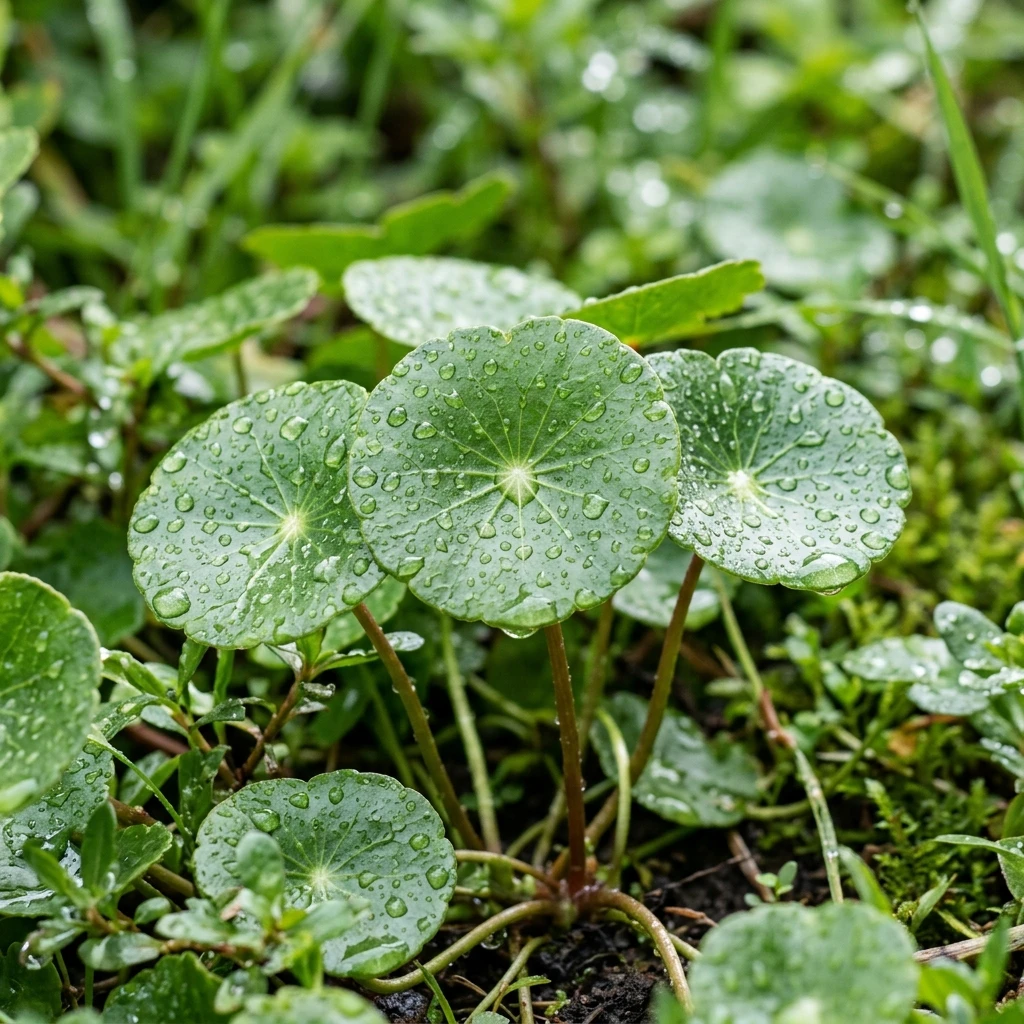
Botanical macro photography of Dollarweed (Hydrocotyle umbellata) - Plant AI care and control database

How to Identify Dollarweed

A creeping perennial with round, scalloped green leaves shaped like coins, with leaf stalks attached in the center of the leaf blade, and small green flowers.

  • Silvery Round Leaves: Leaves are round, scalloped (3 to 5 cm wide), waxy-green, and look exactly like silver dollars.
  • Central Stalk Attachment (Peltate): The leaf stalk is attached directly in the center of the leaf underside, like an umbrella.
  • Creeping Stolon Stems: Slender green stems creep horizontally along the soil, rooting firmly at every leaf node.
💡 Plant AI Tip: Dollarweed is a classic indicator of overwatering! It thrives in soggy, saturated soils. Allowing your lawn to dry out between waterings is the best way to suppress it.

Complete Care & Management Guide

Access highly technical, scientific management directives to control or cultivate Dollarweed effectively.

Requires consistent moisture. It thrives in damp, wet, poorly drained soils, riverbanks, and overwatered garden beds. Allowing the top soil layer to dry out helps slow its spread.
Resistant to mowing. Horizontal stems creep flat along the soil beneath mower height. Mowing actually removes competing turf grass, allowing Dollarweed to expand.
Highly aggressive. It absorbs high levels of nitrogen and potassium, outcompeting pasture grasses and garden flowers. Shifting soil fertility helps grass compete.
Highly versatile. Thrives in Full Sun but exhibits high shade tolerance, allowing it to colonize dense forest understories and dark house alleyways.
Adapts to clay, rich loam, sandy loam, and gravelly forest edges, provided the substrate is well-drained. It struggles in swampy soils.
Spreads via seeds and rooting stolons. The seed pods explode when dry, flinging seeds up to 10 feet horizontally. A single plant can produce thousands of seeds.
Extremely cold-hardy perennial. Leaves die back under freezing winter temperatures, but the woody taproot crown survives easily, sprouting in early spring.
Features a shallow but extremely dense, tough fibrous root network anchored to creeping stolons that root at every node touching the soil.
Occasionally targeted by aphids, but pests rarely cause significant damage to this highly robust annual grass.
Subject to **Browning Rust** and **Leaf Spots** in damp autumns, though diseases rarely kill the weed before it successfully sets seed.
To control Dollarweed organically, manually dig up young rosettes in spring before they flower, use a hoe to scrape seedlings, and mulch garden beds heavily to block seed light.

Are your overwatered lawn areas showing dollar-sized green coins?

Reduce watering to dry the soil, hand-pull the creeping stolons, and core-aerate compacted clay.

Diagnose Weed Instantly

Common Diseases & Treatment

Leaf Spot

Symptoms: Symptoms: Water-soaked, circular black or dark brown spots with bright yellow halos appearing on the waxy green leaves.

Action: Action: Clip and dispose of infected foliage. Avoid overhead watering to keep leaf surfaces dry, and ensure proper air circulation.

Creeping Mat Invasion

Symptoms: Symptoms: The turf grass is completely replaced by dense, flat green mats of three-leaf clover.

Action: Action: Feed your lawn grass with nitrogen. Grass requires soil nitrogen to grow, while clover creates its own. Shifting soil fertility favors grass.

Frequently Asked Questions

Why is it called Dollarweed?

It is named Dollarweed because its leaves are perfectly round, shiny green, and shaped like silver dollar coins, creating a distinct look when it grows in lawns.

How do you distinguish Dollarweed from Dichondra?

Dollarweed leaves are peltate, meaning the leaf stem connects directly to the center of the leaf undersides. Dichondra leaves are heart-shaped or kidney-shaped, and the leaf stem connects to the edge of the leaf margin.

Is Dollarweed toxic to pets?

No, Dollarweed is completely non-toxic and safe for dogs and cats. However, it can harbor ticks and fleas, and its presence indicates severe soil issues that should be addressed.

What is the best way to get rid of Dollarweed organically?

First, fix your lawn's drainage. Dollarweed cannot compete in dry soils. Core-aerate and top-dress with sand to improve infiltration, and hand-pull the creeping stolons.

No more dying plants. Grow healthy greens today!

Get Started for Free