Dalmatian Toadflax Identification & Control
Dalmatian Toadflax, botanically known as Linaria dalmatica, is an exceptionally colossal, highly noxious perennial broadleaf weed in the Plantaginaceae family. Native to the Mediterranean region but highly invasive globally, it is a severe threat to dry pastures and rangelands. Growing up to an impressive 4 feet tall, it features smooth, waxy blue-green stems, broad clasping heart-shaped waxy leaves, and dense spikes of snapdragon-like bright yellow flowers with orange throats. It spreads aggressively via wind-blown seeds and an unstoppable network of deep creeping lateral roots that can drill 10 feet deep, outcompeting all native rangeland vegetation.





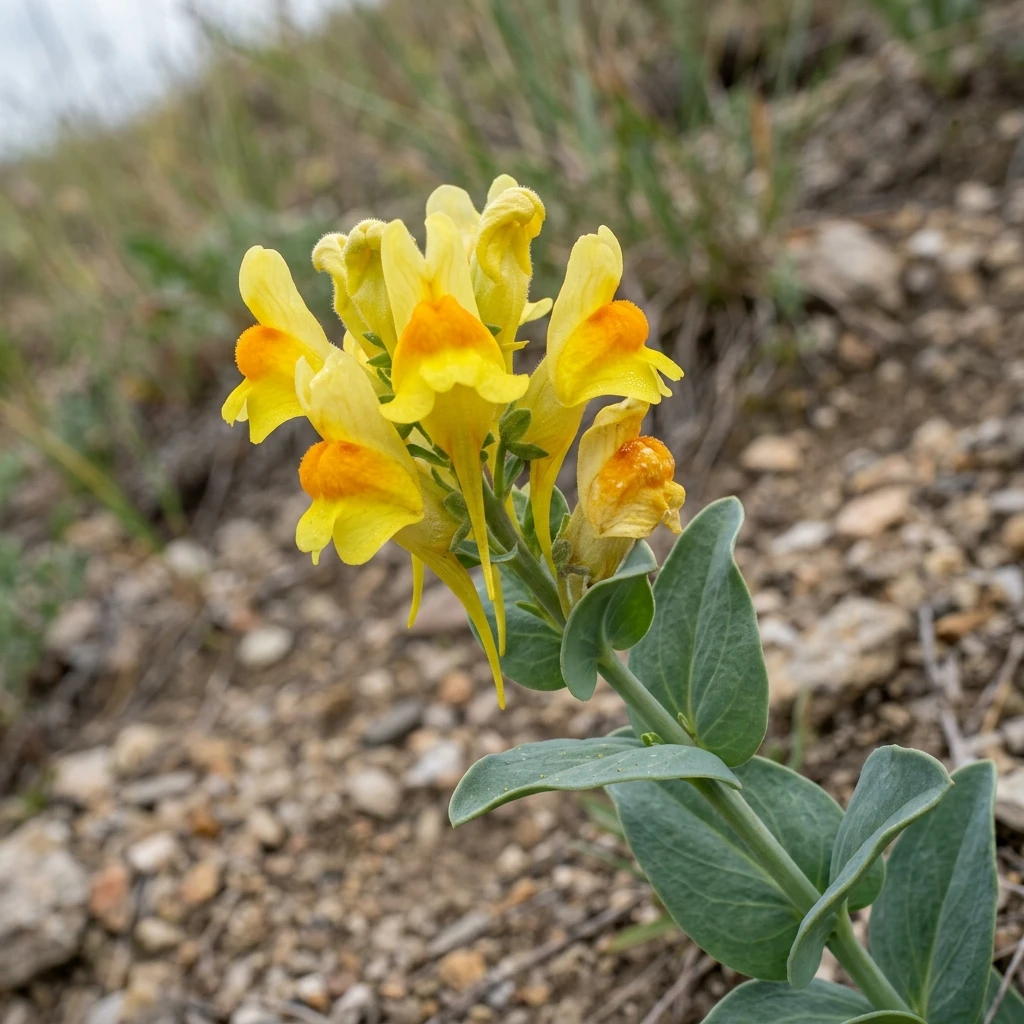
How to Identify Dalmatian Toadflax
A colossal, upright perennial with waxy broad heart-shaped leaves clasping the stem, and dense spikes of snapdragon-like bright yellow flowers.
-
✔
Broad Clasping Leaves: Broad, thick, waxy blue-green, heart-shaped leaves (up to 5 cm wide) clasp the upright stems tightly at the base.
-
✔
Snapdragon-Like Flowers: Spikes of showy yellow flowers (up to 4 cm long) with a prominent orange throat and a long, narrow pointing spur.
-
✔
Deep Lateral Roots: Features a massive, sprawling network of thick creeping roots that can grow up to 10 feet deep.
Complete Care & Management Guide
Access highly technical, scientific management directives to control or cultivate Dalmatian Toadflax effectively.
Common Diseases & Treatment
Waxy Herbicide Resistance
Symptoms: Symptoms: Applied organic herbicides fail to control the weed, with droplets completely sliding off the waxy leaves.
Deep Lateral Matting
Symptoms: Symptoms: Wide rangeland spots are completely overtaken by bright yellow toadflax spikes, choking out grass.
Frequently Asked Questions
How is Dalmatian Toadflax different from Yellow Toadflax?
Dalmatian Toadflax is much taller (up to 4 feet) and has broad, clasping heart-shaped waxy blue-green leaves, whereas Yellow Toadflax has narrow, linear grass-like leaves.
Why does its waxy leaf cuticle pose a challenge?
The broad leaves are covered in a highly distinct waxy blue-green shield that repels water, causing organic contact weed sprays to run completely off without killing the foliage.
How deep do Dalmatian Toadflax roots grow?
It features an exceptionally robust lateral creeping root network that drills up to 10 feet deep and extends 10 feet wide, sprouting new rosettes rapidly from buds.
What is the best way to get rid of it?
Wear thick gloves. Manually dig out root crowns deep in early spring when soil is moist, and utilize stem-boring weevils (Mecinus janthiniformis) for large-scale bio-control.