Chicory Identification & Control
Chicory, botanically known as Cichorium intybus, is an exceptionally common, highly persistent perennial broadleaf weed in the Asteraceae family. Native to Europe but thoroughly naturalized globally, it is a frequent nuisance along roadsides, dry pasture borders, and home lawns. It is famous for its brilliant, sky-blue, dandelion-like flower heads that open only in the morning sun, sitting on tough, grooved, nearly leafless woody stems. Supported by a colossal, fleshy vertical taproot that drills up to 4 feet deep, Chicory actively competes with turf and agricultural crops for deep moisture and nutrients.





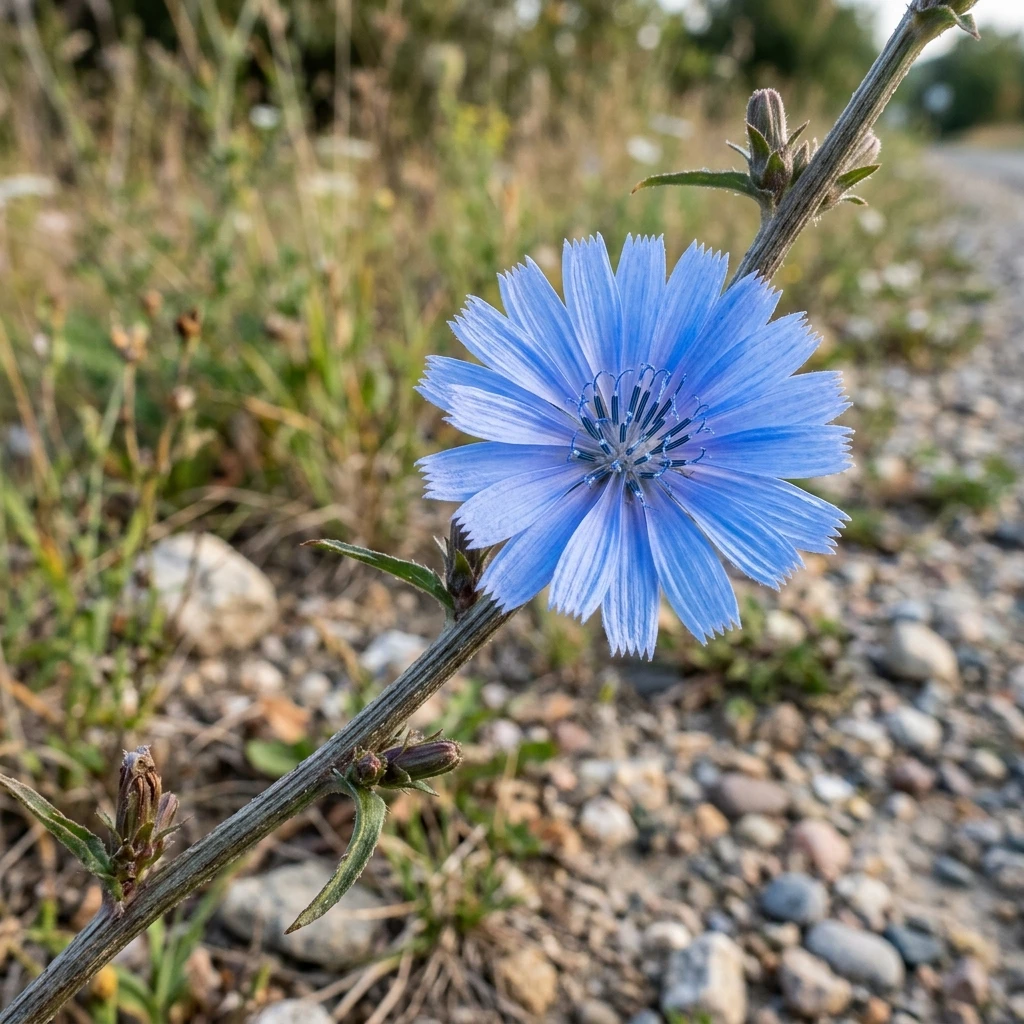
How to Identify Chicory
An upright, branched perennial with tough, grooved nearly leafless stems, a deep taproot, and brilliant sky-blue flowers opening in the morning.
-
✔
Brilliant Sky-Blue Flowers: Daisy-like, fringed, brilliant sky-blue flower heads (3 to 4 cm wide) that open in early morning sun and close by afternoon.
-
✔
Tough Grooved Woody Stems: Stems are erect, highly branched, grooved, hollow, and turn tough and woody at maturity, growing up to 4 feet tall.
-
✔
Deep Fleshy Taproot: Features an exceptionally massive, fleshy, white vertical taproot that drills up to 4 feet deep.
Complete Care & Management Guide
Access highly technical, scientific management directives to control or cultivate Chicory effectively.
Common Diseases & Treatment
Deep Taproot Snapping
Symptoms: Symptoms: The chicory rosette is pulled off, but the taproot snaps, leaving a white-bleeding root tip in the soil.
Pasture Nutrient Depletion
Symptoms: Symptoms: Tall, woody chicory stalks dominate grazing pastures, severely stunting the growth of native forage grass.
Frequently Asked Questions
Why is Chicory so difficult to pull out of the ground?
Chicory develops an exceptionally massive, woody vertical taproot that can drill up to 4 feet deep. If you try to pull it by hand, the stem will easily snap at the soil line, leaving the deep root to sprout new leaves.
Can Chicory root be used as a coffee substitute?
Yes! Chicory roots are rich in inulin. When baked, roasted, and ground, they produce a delicious, caffeine-free beverage that closely mimics the flavor and body of coffee, famous in New Orleans coffee houses.
Are Chicory flowers always blue?
While sky-blue is the standard color, you will occasionally spot plants with light pink or white flowers. The flowers are highly distinct because they only open in the bright morning sun and close by afternoon.
How do you control Chicory organically?
In gardens, use a specialized deep-weed fork or dandelion knife to slice and pull out the taproot at least 3 inches below the soil surface. In pastures, frequent mowing in early summer before flower buds open will starve the root and stop seed rain.