Buttercup Identification & Control
Tall Buttercup, botanically known as Ranunculus acris, is an exceptionally common, highly toxic perennial broadleaf weed in the buttercup family. Native to Europe but thoroughly naturalized globally, it is a major nuisance in cattle pastures, hayfields, and home lawns. Famous for its bright, waxy golden-yellow 5-petaled flowers, every part of the fresh plant is packed with ranunculin, which converts to the highly toxic, blister-causing chemical compound protoanemonin when crushed or chewed, posing a severe hazard to grazing livestock and curious pets.



How to Identify Buttercup
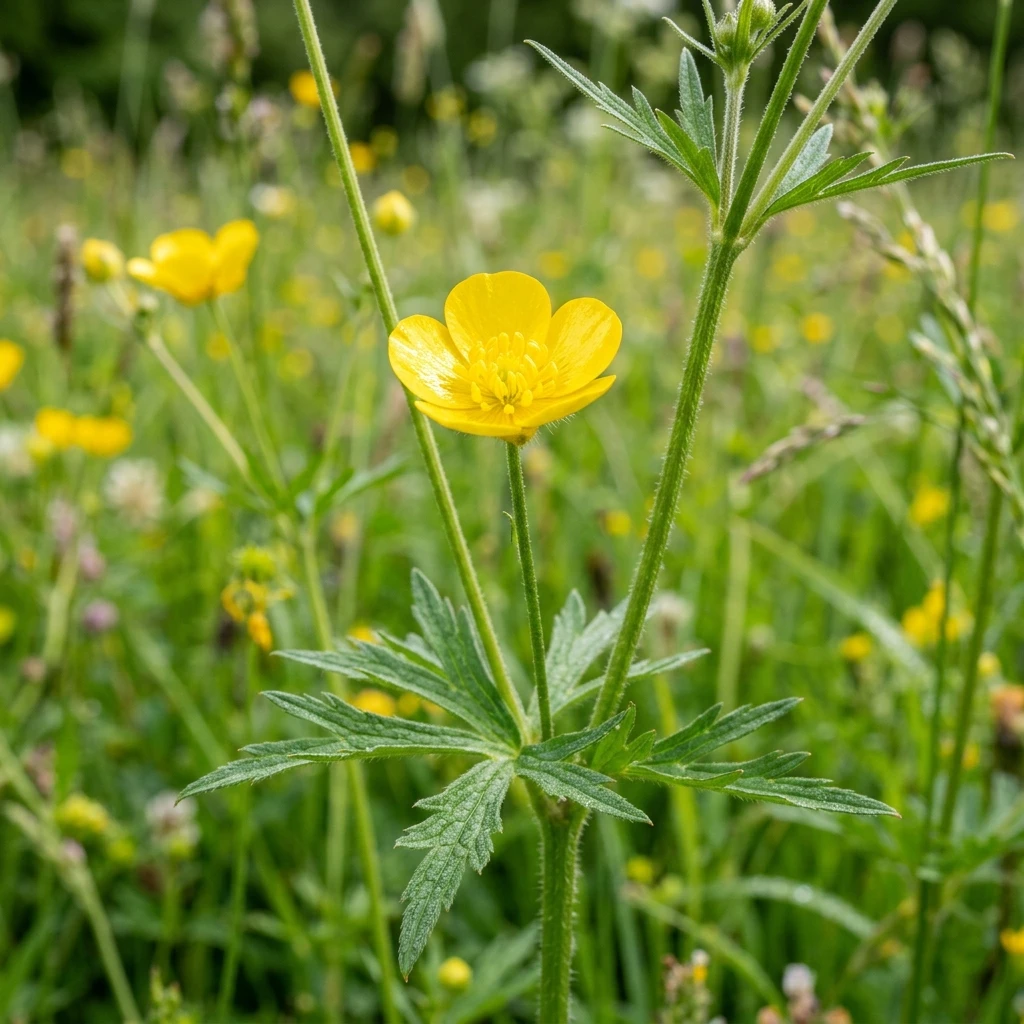
An upright, branched perennial with deeply divided hairy leaves, tall stalks, and brilliant, waxy-golden 5-petaled flowers.
-
✔
Waxy Golden-Yellow Flowers: Bright, glossy, cup-like golden-yellow flowers (2 cm wide) with exactly 5 petals that show a highly distinct waxy sheen.
-
✔
Deeply Divided Hairy Leaves: Palmate green leaves are deeply divided into 3 to 5 narrow, deeply-toothed lobes, covered in rough white hairs.
-
✔
Upright Hollow Stems: Stems are erect, branched, hollow (growing up to 3 feet tall), and covered in stiff, spreading hairs.
Complete Care & Management Guide
Access highly technical, scientific management directives to control or cultivate Buttercup effectively.
Common Diseases & Treatment
Protoanemonin Blistering
Symptoms: Symptoms: Grazing pets chew fresh buttercup, leading to severe drooling, mouth blisters, swelling, and colic.
Saturated Clay Spread
Symptoms: Symptoms: Wet pasture corners are completely overtaken by bright yellow buttercup flowers, choking out grass.
Frequently Asked Questions
Why do Buttercup flowers look so waxy?
The petals of Buttercups have a highly unique, mirror-like waxy layer of flat cells on the surface, backed by a starch layer. This structure reflects yellow light exceptionally strongly, creating the famous glossy, brilliant waxy sheen that attracts bees.
Is Buttercup toxic to horses?
Yes. Fresh Buttercups are highly toxic to horses, sheep, and cattle due to protoanemonin. However, animals usually avoid eating them because they have a highly bitter, burning taste. The main danger is when pastures are overgrazed and no grass is left.
Can I feed dried buttercups to my rabbit?
Yes! Once buttercups are dried (such as in field hay), the toxic protoanemonin compound dimerizes into anemonin, which is completely non-toxic and harmless. Dried hay containing buttercups is safe for livestock and small pets.
What is the best way to get rid of it?
Because it has a shallow fibrous root system, it is very easy to pull out by hand. Manual weeding or close mowing in late spring before the yellow flowers open is the most effective organic control method.