Bull Thistle Identification & Control
Bull Thistle, classically celebrated as the Common Thistle or Spear Thistle, is an exceptionally aggressive, heavily armed biennial broadleaf weed in the Asteraceae family. Native to Europe but thoroughly naturalized globally, it is a severe threat to pastures, forest margins, and home gardens. During its second year of growth, it sprouts thick, heavily-winged stems covered in long yellow spines, large jagged leaves terminating in needle-sharp points, and showy purple globe flower heads that are highly painful to touch.





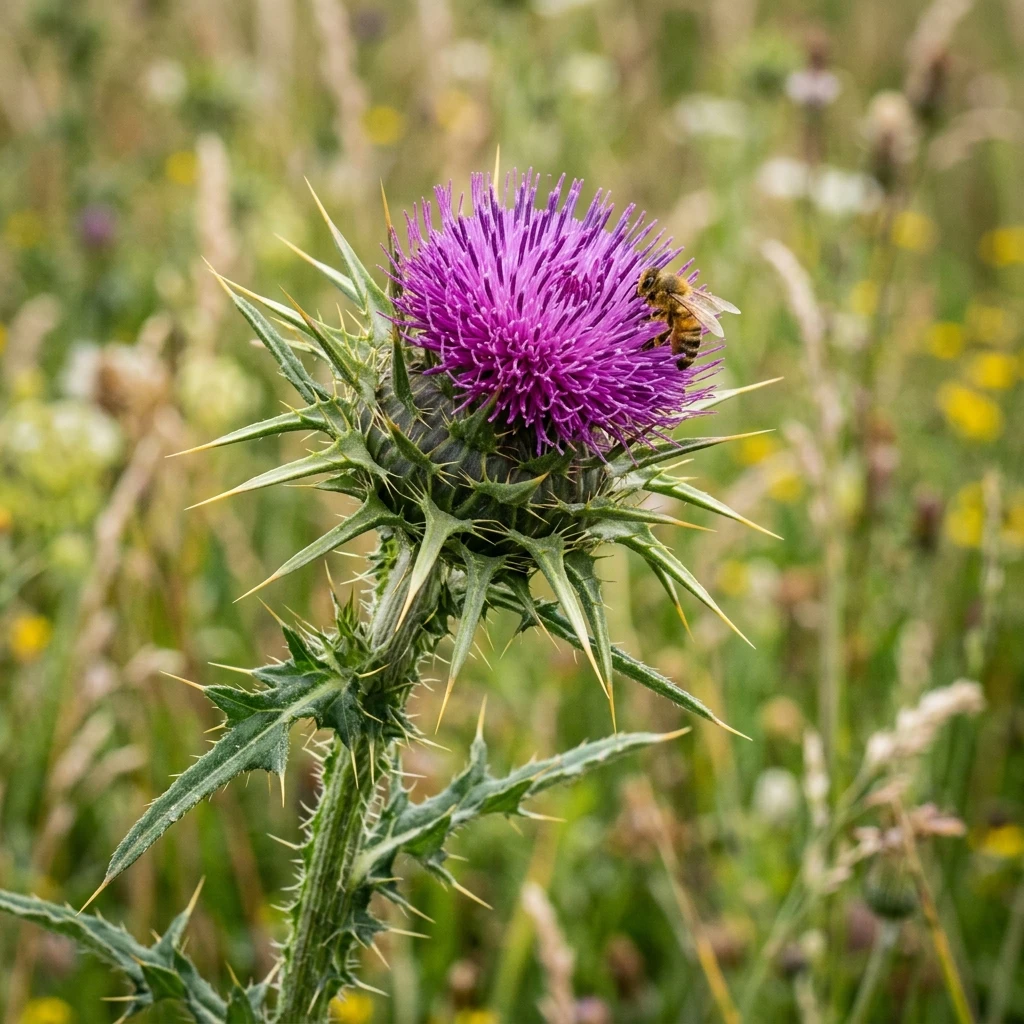
How to Identify Bull Thistle
An upright biennial with spiny-winged stems, deeply lobed leaves tipped with sharp yellow needles, and showy purple flower heads.
-
✔
Needle-Sharp Yellow Spines: The tips of all leaf lobes and the prominent vertical wings along the stems are armed with stiff, needle-sharp yellow spines.
-
✔
Showy Purple Globe Heads: Large, rounded, purple-to-pink flower heads (3 to 5 cm wide) sitting in highly spiny, green cup-like bracts.
-
✔
Deeply Lobed Prickly Leaves: Massive, dark-green leaves deeply divided into tooth-like lobes, covered in stiff prickles on top and fuzzy white hairs below.
Complete Care & Management Guide
Access highly technical, scientific management directives to control or cultivate Bull Thistle effectively.
Common Diseases & Treatment
Thistle Spine Puncture
Symptoms: Symptoms: Handling the plant bare-handed causes immediate stinging pain, localized skin swelling, and small needle wounds.
Seed Head Shattering
Symptoms: Symptoms: Purple globe heads turn dry, brown, and explode into clouds of white fluffy seeds carried by wind.
Frequently Asked Questions
Why is Bull Thistle so painful?
Every single part of the mature Bull Thistle—including the leaf margins, the stem surfaces (which have vertical wings), and the bracts wrapping the flower—is covered in exceptionally stiff, needle-sharp yellow spines that easily puncture skin and thin gloves.
Is Bull Thistle toxic to grazing pets?
No, it is chemically non-toxic. However, the sharp spines cause severe physical trauma to the mouths and tongues of cattle and horses if they try to graze near it, leading to painful sores and preventing proper feeding.
How does it spread?
Like dandelions, each seed of Bull Thistle is attached to a delicate, fluffy white parachute of fine hairs called a 'pappus'. This structure allows the seeds to float on wind drafts for miles, colonizing fresh pasture soils.
What is the best way to get rid of it?
Wear thick leather gloves. Slice the central taproot 3 inches below the soil surface using a sharp spade while the plant is still in its flat rosette stage in late spring. Bag the plant to prevent seed spread.