Bittercress Identification & Control
Hairy Bittercress, infamously known as Shotgun Weed or Popweed, is an exceptionally prolific winter annual broadleaf weed in the mustard family. Native to Europe but thoroughly naturalized globally, it is a major nuisance in home gardens, greenhouses, and lawns. It features a unique life cycle, producing a flat rosette of compound leaves in winter and shooting up upright stalks with tiny white flowers in spring, tipped with explosive seed capsules that shoot seeds up to 10 feet.





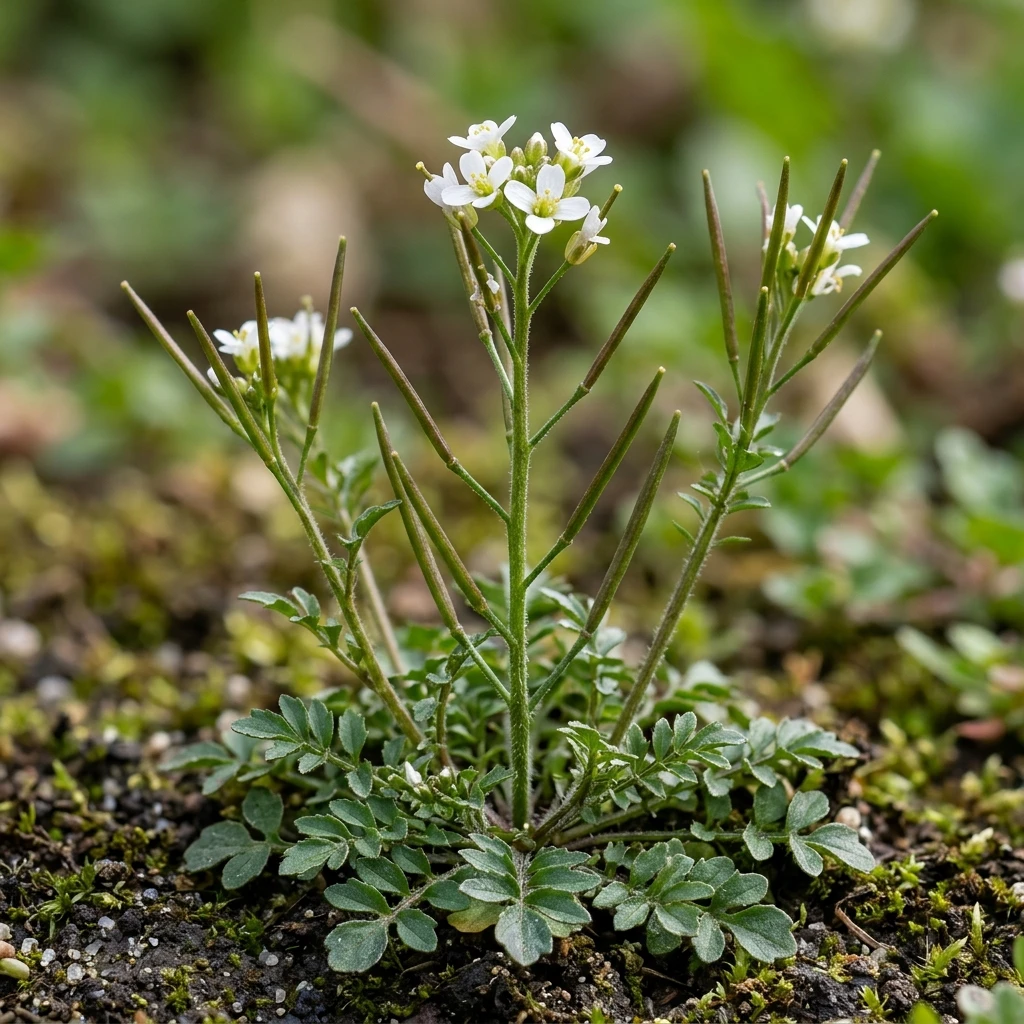
How to Identify Bittercress
A flat basal rosette of compound leaves, upright green stems with tiny white flowers, and distinctive, needle-like explosive seed capsules.
-
✔
Flat Basal Rosette: Low-growing, flat rosette of compound green leaves (5 to 10 cm wide) with rounded leaflets.
-
✔
Needle-Like Seed Capsules (Siliques): Slender, needle-like green capsules (2 cm long) that project upward at a sharp angle.
-
✔
Tiny White Flowers: Small clusters of tiny, 4-petaled white flowers (2 mm wide) blooming at stem tips in late spring.
Complete Care & Management Guide
Access highly technical, scientific management directives to control or cultivate Bittercress effectively.
Common Diseases & Treatment
Shotgun Seed Explosion
Symptoms: Symptoms: Needle-like green capsules burst violently upon light touch, flinging seeds up to 10 feet.
Downy Mildew
Symptoms: Symptoms: Pale yellow streaks appear on leaf blades, with a fuzzy white-gray fungal growth forming underneath.
Frequently Asked Questions
Why is it called 'Shotgun' Weed or 'Bittercress'?
It is named 'Shotgun' Weed because its seed capsules burst violently upon the slightest touch, flinging seeds up to 10 feet like a shotgun. 'Bittercress' comes from the peppery, slightly bitter taste of the leaves.
Are the leaves edible?
Yes! Hairy Bittercress leaves are completely edible and taste like peppery watercress. They are rich in vitamin C and are widely harvested in spring to make salads, pestos, or sandwich greens.
Is Bittercress toxic to pets?
No, Bittercress is completely non-toxic and safe for dogs and cats. In fact, it is a highly valued wild edible herb.
What is the best way to get rid of it?
Because it has a shallow fibrous root system, it is very easy to pull out by hand. Manual weeding or close mowing in mid-summer before the flower stalks open is the most effective organic control method.