Bermuda Grass Identification & Control
Bermuda Grass, widely prized as a highly durable warm-season turf grass, is simultaneously one of the most aggressive, invasive, and dreaded weeds in home flower beds, vegetable gardens, and cool-season lawns. Native to Africa but naturalized globally, it spreads with terrifying speed via a dual network of creeping horizontal runners above ground (stolons) and thick rooting stems below ground (rhizomes). It easily climbs over landscape borders, chokes out ornamental shrubs, and invades bare soil.





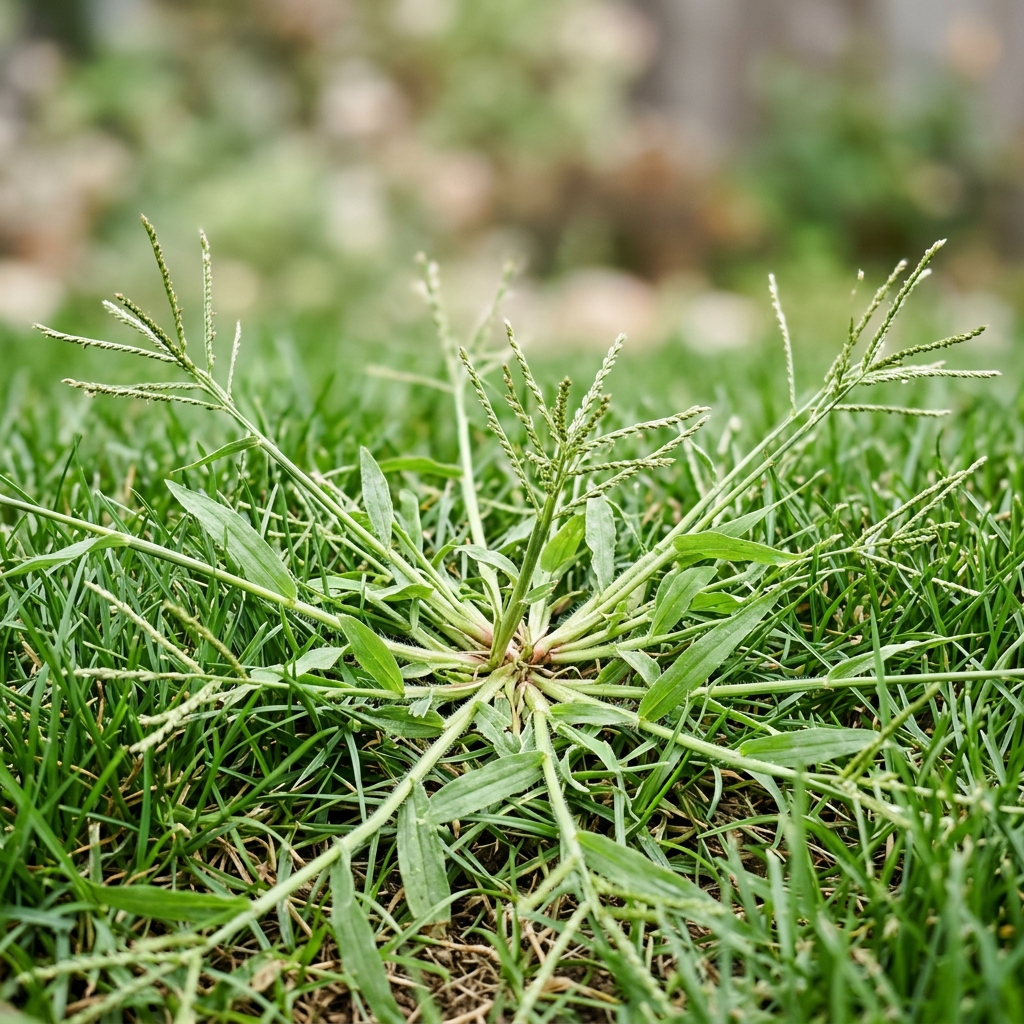
How to Identify Bermuda Grass
A low-growing, wiry perennial grass spreading via aggressive creeping stolons and rhizomes, with fine gray-green leaf blades and finger-like seed clusters.
-
✔
Creeping Stolons & Rhizomes: Spreads via tough, wiry, creeping runners above ground (stolons) and scaly, sharp-pointed stems below ground (rhizomes).
-
✔
Hairy Ligule Ring: Features a highly distinct ring of fine white hairs (ligule) at the junction where the leaf blade meets the stem sheath.
-
✔
Finger-Like Seed Head: The seed head branches into 3 to 7 slender, finger-like spikes clustered at the top of a wiry stalk, resembling a bird's foot.
Complete Care & Management Guide
Access highly technical, scientific management directives to control or cultivate Bermuda Grass effectively.
Common Diseases & Treatment
Spring Dead Spot
Symptoms: Symptoms: Circular patches of Bermuda grass fail to green up in spring, remaining straw-brown and rotting.
Stolon Invasion
Symptoms: Symptoms: Long, wiry green runners crawl over brick borders and anchor roots inside your flower garden beds.
Frequently Asked Questions
Why is Bermuda Grass considered a weed if people plant it for lawns?
Bermuda Grass makes an excellent, wear-tolerant lawn for warm climates. However, its aggressive stolons and rhizomes do not respect boundaries; they easily invade flower beds, vegetable gardens, and cool-season lawns, where they are incredibly difficult to eradicate.
How deep do Bermuda Grass roots grow?
While the majority of the fibrous roots stay in the top 6 inches of soil, its scaly underground rhizomes can drill up to 5 feet deep into the soil, allowing the plant to survive severe drought, freezes, and mechanical digging.
Can I kill Bermuda Grass by covering it with mulch?
Standard light mulching will not work because Bermuda grass has sharp stolons that can easily grow through 3 inches of mulch. To suffocate it, you must use a thick barrier like overlapping cardboard or heavy landscape fabric covered in deep mulch.
What is the best way to get Bermuda Grass out of my flower beds?
First, dig a trench and install solid, deep landscape edging (at least 8 inches deep) to block creeping rhizomes. Next, carefully dig up the existing grass in the bed, ensuring you trace and remove every single scaly white rhizome.