Bermuda Grass (Weed) Identification & Control
Bermuda Grass, botanically known as Cynodon dactylon, is an exceptionally aggressive, highly persistent warm-season perennial grass. Widely utilized as a durable turf grass in warm climates, it is simultaneously a dreaded, highly invasive weed in garden beds, ornamental borders, and cool-season lawns. Spreading relentlessly via a double-barreled network of above-ground runners (stolons) and deep underground creeping rhizomes, it forms a dense, suffocating mat. It releases allelopathic chemicals that suppress neighboring garden plants and sprouts upright seed spikes arranged in a highly distinct star-like cluster.





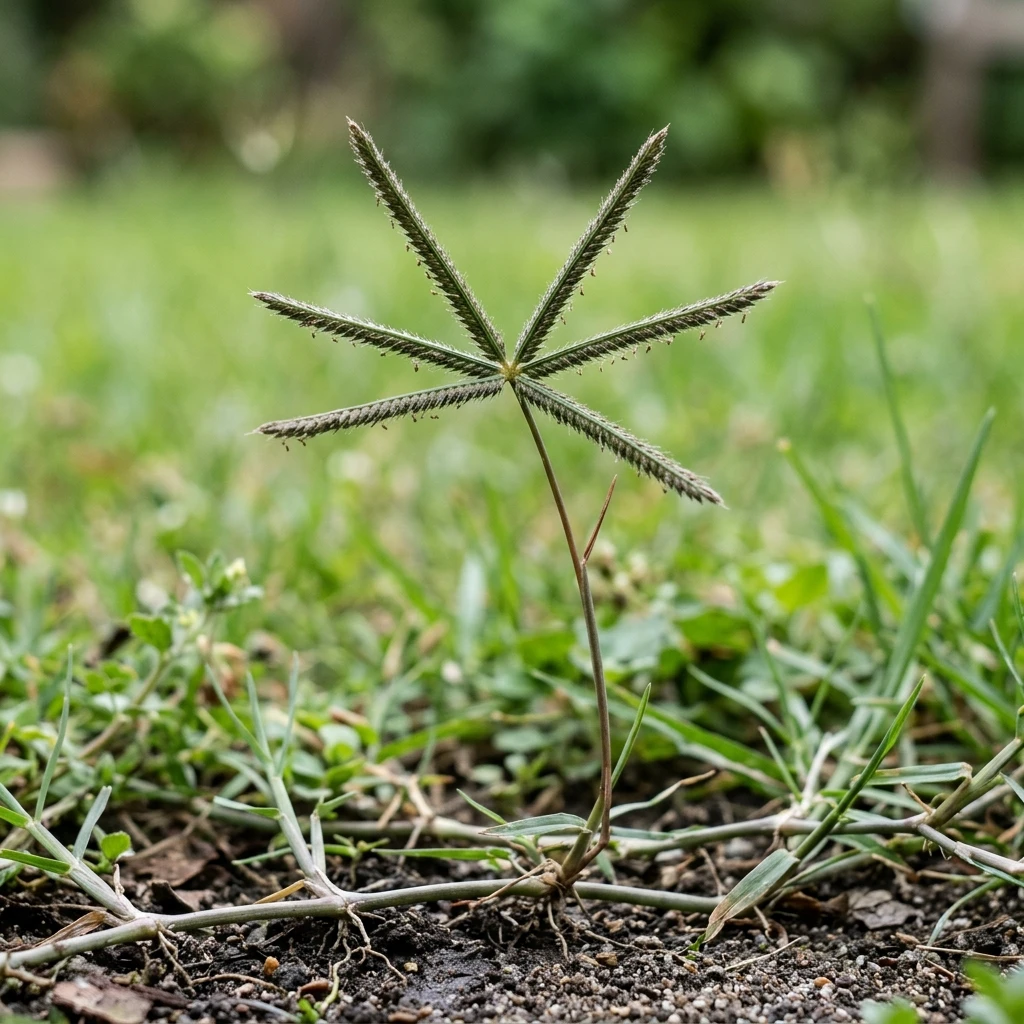
How to Identify Bermuda Grass (Weed)
A low-growing creeping perennial grass forming dense mats via stolons and rhizomes, with upright seed heads showing 3 to 7 radiating finger-like spikes.
-
✔
Creeping Double Runners: Spreads aggressively via tough, wiry above-ground stolons and deep white underground rhizomes that root at every node.
-
✔
Radiating Star Seed Spikes: Upright seed heads (growing up to 1 foot tall) consist of exactly 3 to 7 slender, finger-like spikes radiating from a single point.
-
✔
Hairy Collar Ligule: Flat gray-green leaf blades (2 to 15 cm long) feature a highly distinct ring of fine white hairs at the leaf collar (ligule).
Complete Care & Management Guide
Access highly technical, scientific management directives to control or cultivate Bermuda Grass (Weed) effectively.
Common Diseases & Treatment
Allelopathic Crop Stunting
Symptoms: Symptoms: Neighboring garden vegetables and flowers grow stunted, yellow, and wither due to root chemical suppression.
Lawn Mat Suffocation
Symptoms: Symptoms: Cool-season turf grass is completely overtaken by dense, flat green mats of creeping Bermuda grass.
Frequently Asked Questions
Why is Bermuda Grass considered a weed in gardens?
While valued for turf, it spreads relentlessly into garden beds via tough creeping runners (stolons and rhizomes), choking out flowers and vegetables and wrapping around plant bases.
Is Bermuda Grass allelopathic?
Yes. Its roots exude allelopathic chemicals into the surrounding soil, actively suppressing the seed germination and growth of neighboring ornamental and vegetable plants.
How do you identify Bermuda Grass?
Identify it by its wiry, low stolons, a highly distinct ring of fine white hairs at the leaf collar (ligule), and upright seed heads radiating exactly 3-7 finger-like spikes.
What is the best way to get rid of it?
Moisten soil and slowly pull creeping stolon chains. Dig deep to remove white creeping rhizomes, then cover beds with cardboard and 4 inches of wood mulch for a full year.