Barnyardgrass Identification & Control
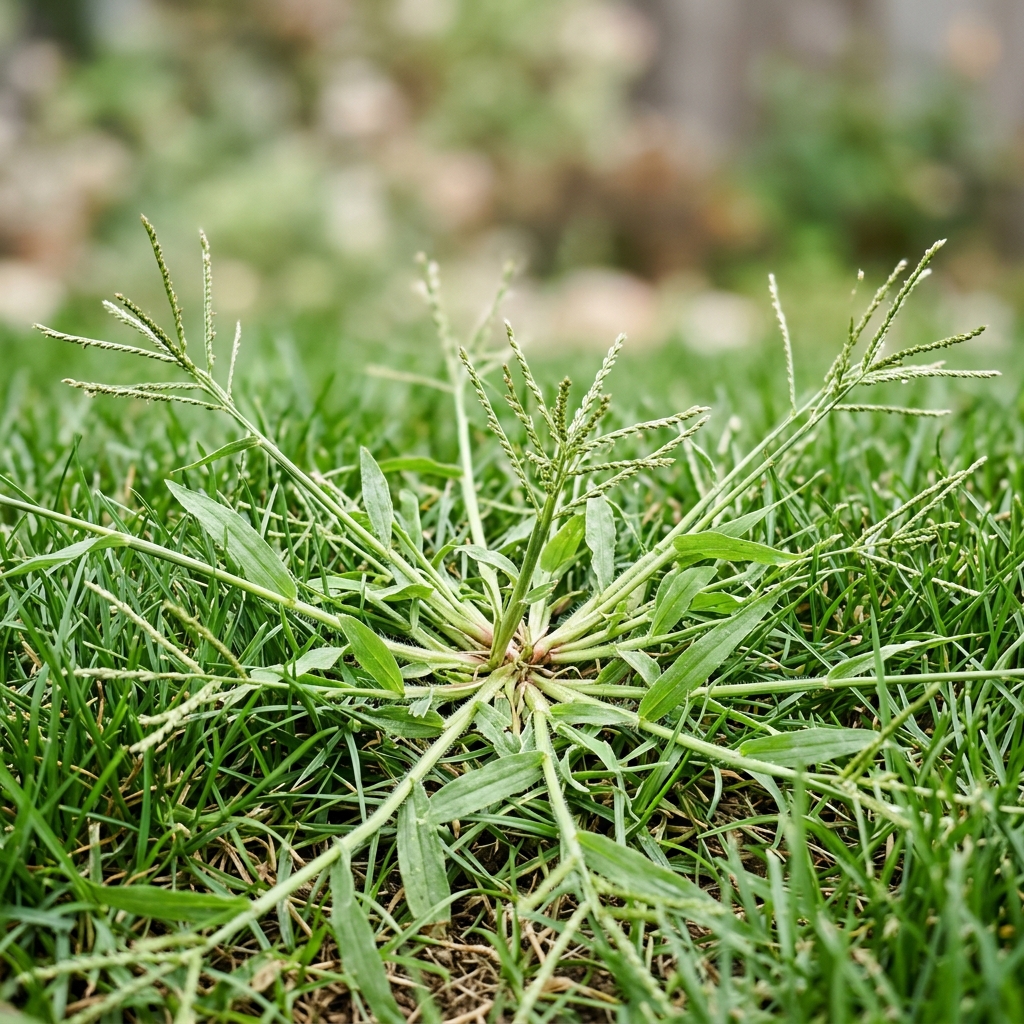
Barnyardgrass is an exceptionally aggressive, thick-stemmed summer annual grassy weed native to Eurasia but globally distributed. A major threat to agriculture and home gardens, it thrives vigorously in moist, rich, or poorly drained soils. It features a coarse, clumping growth habit with thick, flat stems that lie flat at the base before growing upright. Lacking a ligule or auricles at the leaf collar, it produces heavy, purplish, nodding seed heads packed with flat grain seeds.




How to Identify Barnyardgrass
A coarse, thick-stemmed clumping annual grass with hairless leaf blades, a completely smooth leaf collar (no ligule or auricles), and heavy, purplish nodding seed spikes.
-
✔
Smooth Leaf Collar (No Ligule): The leaf collar is completely smooth and hairless, entirely lacking a ligule (ring of hairs) or auricles, a key botanical identifier.
-
✔
Flat Purplish Stems: Stems are distinctly flattened, coarse, thick, and frequently display a deep reddish-purple color near the soil surface.
-
✔
Nodding Purplish Spikes: Heavy, branched, nodding seed heads (10 to 20 cm) that carry bristly, purplish spikelets packed with flat, hard seeds.
Complete Care & Management Guide
Access highly technical, scientific management directives to control or cultivate Barnyardgrass effectively.
Common Diseases & Treatment
Smut Infection
Symptoms: Symptoms: Seed heads turn into swollen, powdery black masses of fungal spores instead of normal grain seeds.
Wetland Invasion
Symptoms: Symptoms: Barnyardgrass rapidly colonizes low-lying, soggy lawn areas, choking out turf grass.
Frequently Asked Questions
How do I identify Barnyardgrass compared to other grassy weeds?
The absolute best way to identify Barnyardgrass is by looking at the leaf collar (where the blade wraps around the stem). It is one of the very few grassy weeds that has absolutely no ligule (hairs or membrane) and no auricles. The collar is completely smooth.
Why does Barnyardgrass grow near water and low spots?
It is highly adapted to wet and saturated soils. Its seeds germinate exceptionally well in muddy conditions, and the roots can tolerate oxygen-deprived wet clay that would rot the roots of normal lawn grasses.
Is Barnyardgrass toxic to pets or livestock?
No, it is non-toxic and is actually used as forage in some agricultural settings. However, it is a highly aggressive crop weed that will rob soil nutrients and choke out your garden vegetables.
What is the best organic way to control it?
Because it has a shallow fibrous root system, it is very easy to pull out by hand when the soil is wet. Manually weed them in early summer before they develop their heavy nodding purple seed spikes.