Annual Bluegrass Identification & Control
Annual Bluegrass, widely known in botanical circles as Poa annua, is an exceptionally invasive winter annual grassy weed. Native to Europe but thoroughly naturalized across the globe, it is a major nightmare for golf courses, athletic fields, and highly manicured home lawns. Thriving vigorously in cool, damp, shaded environments, it grows in pale-green, clumpy tufts that produce thousands of unsightly whitish seed heads, even when mowed extremely low, disrupting lawn color and texture uniformity.




How to Identify Annual Bluegrass
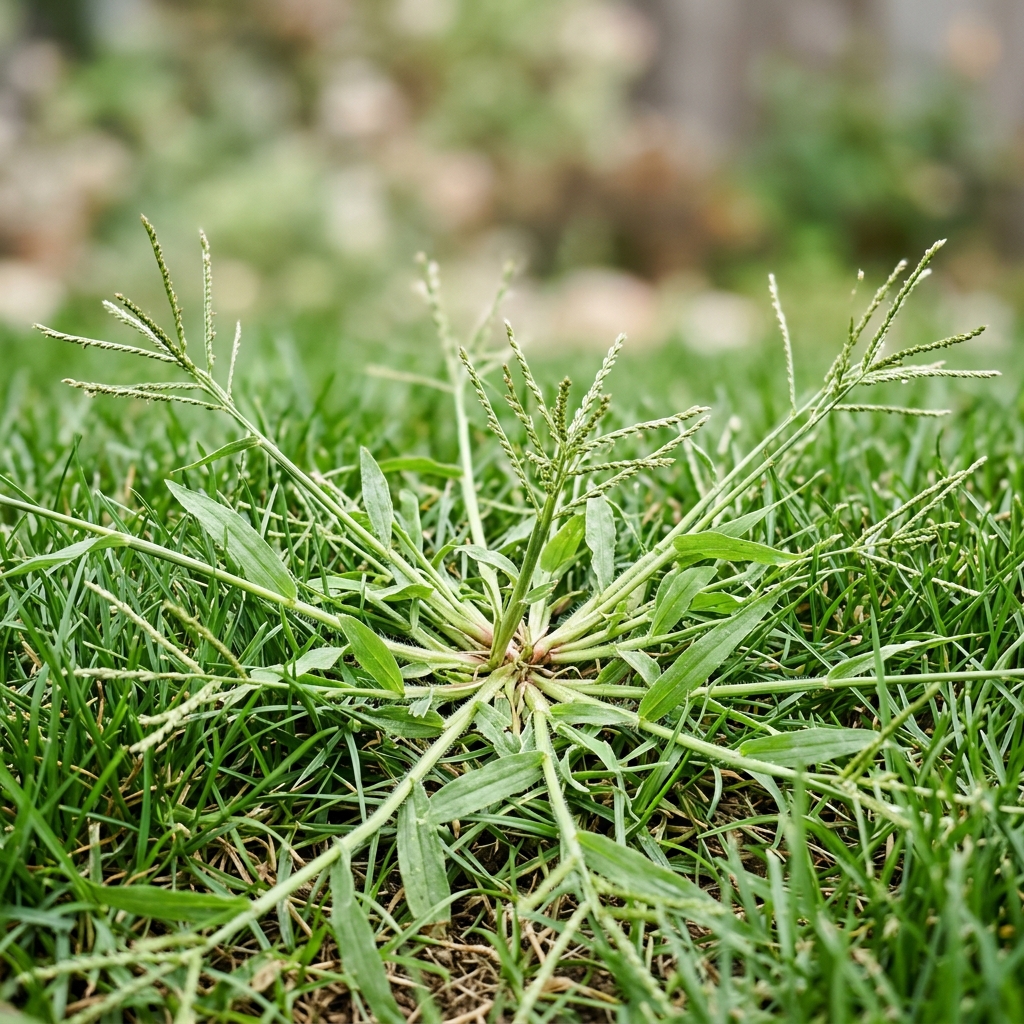
A low-growing, tufted light-green grass with keeled (boat-shaped) leaf tips, crinkled leaf blades, and dense clusters of small, whitish flower seed heads.
-
✔
Boat-Shaped Leaf Tips: The tips of the pale-green leaf blades are distinctly keeled, resembling the bow of a boat (a classic Poa characteristic).
-
✔
Light-Green Tufts: Grows in dense, clumpy tufts that are noticeably lighter in color than dark-green perennial lawn grasses.
-
✔
Whitish Seed Heads: Produces abundant, small, branched panicles carrying whitish flowers and seeds, even at mowing heights as low as 1/10 of an inch.
Complete Care & Management Guide
Access highly technical, scientific management directives to control or cultivate Annual Bluegrass effectively.
Common Diseases & Treatment
Anthracnose
Symptoms: Symptoms: Pale-green leaves turn yellow-orange, developing black elongated fruiting structures at the base of the stems.
Summer Die-Out
Symptoms: Symptoms: Poa annua clumps suddenly turn yellow, die, and rot, leaving ugly bare brown spots in the lawn during July heat.
Frequently Asked Questions
Why is Poa annua considered such a bad weed on golf courses?
Poa annua grows in pale-green tufts that disrupt the uniform dark-green color of golf courses. More importantly, its abundant white seed heads disrupt the smooth roll of golf balls on putting greens, and it dies out in hot summers, leaving bare spots.
How does boat-shaped leaf tip help identify it?
Lawn grasses look similar, but bluegrasses (Poa family) have leaf tips that do not taper to a flat point. Instead, the edges curve upward at the end to form a tiny pocket resembling the bow of a boat. You can feel this shape by running your finger along the tip.
Can Poa annua survive hot summers?
Usually no. It is a winter annual with shallow roots, so it suffers severe heat and drought stress, dying out in July and August. However, some perennial biotypes (Poa annua var. reptans) have evolved to survive in wet golf greens.
What is the best way to prevent Poa annua organically?
Keep your lawn thick and dense. Apply corn gluten meal as an organic pre-emergent in late summer (late August or early September) to block the seeds from germinating as soil temperatures drop, and mow the grass high.