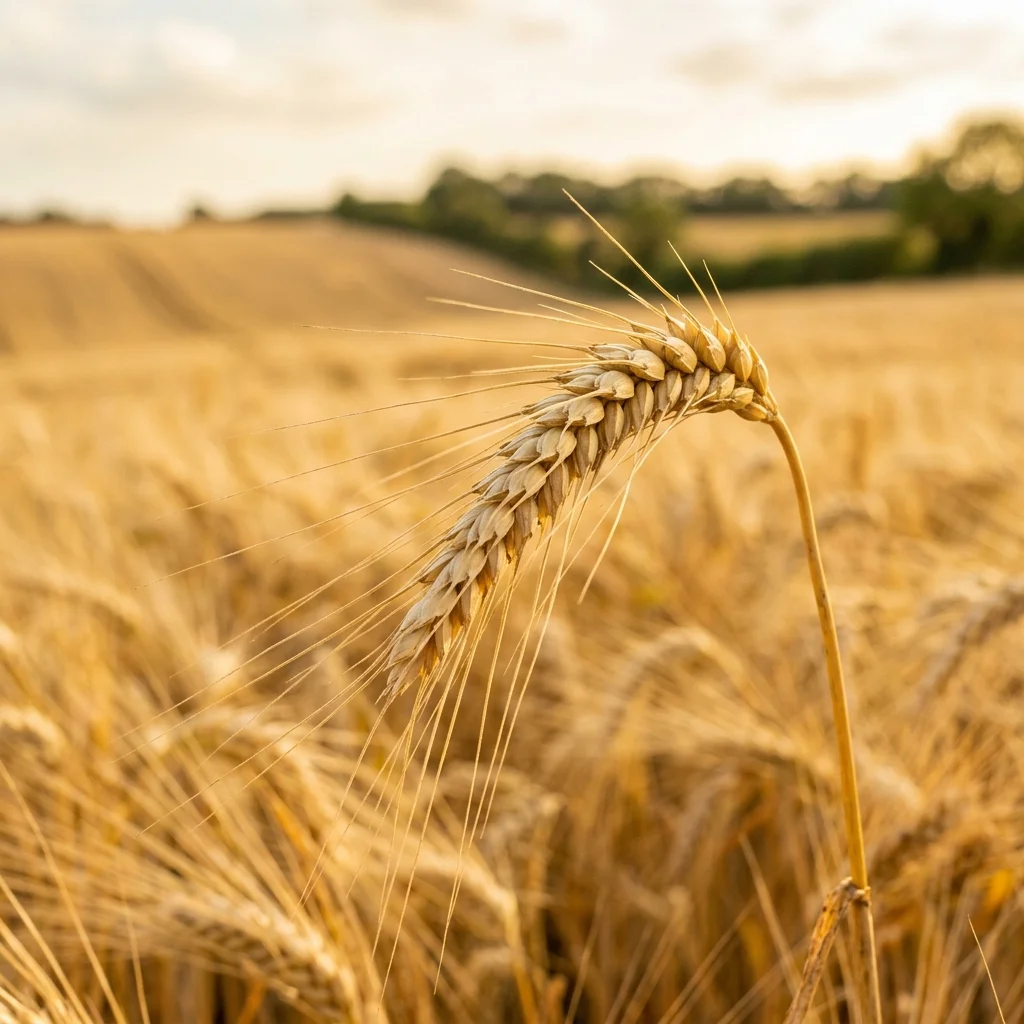
Triticum aestivum

Wheat Growing & Harvesting Guide

Wheat (Triticum aestivum), the foundational grain of global civilization, is an exceptionally rewarding cereal crop to observe. Thriving in cool, sunny weather, this adaptable grass requires precise vernalization timing (for winter wheat) and rapid tillering to yield dense, grain-packed spikes.


Sunlight Icon
Sunlight Full Sun (6+ hours)
Watering Icon
Watering Moderate / Consistent
Soil Mix Icon
Soil pH Deep, Fertile Silt Clay Loam (pH 6.0-7.0)
Temperature Icon
Target Temp 10°C - 24°C
Toxicity Warning Icon
Toxicity Pet Friendly (Non-toxic)
Botanical macro photography of Wheat (Triticum aestivum) - Plant AI care database

How to Identify Wheat

Wheat (Triticum aestivum) is a highly valued edible crop globally. Recognizing its definitive vegetative and fruit/vegetable structures is key to successful companion growing and harvesting.

  • Key Visual Features: Erect, slender, hollow annual grass stalks growing 2 to 4 feet high in dense clusters.
  • Leaf & Stems: Flat, long grayish-green blades; compact flower spikelets with upright protective awns.
  • Fruit/Edible Part: A terminal dry wheat spike packed with hard, small, golden-brown grain seeds (caryopses).
💡 Plant AI Tip: Snap a photo with Plant AI to identify garden veggies and diagnose leaf spot diseases in 1 second.

Complete Growing & Harvesting Guide

Follow our detailed scientific agricultural cultivation guide to keep your Wheat thriving and high-yielding.

Water regularly, delivering 1 inch of water weekly. Maintain moist soil during flowering; drought stresses seed count.
Pruning is unnecessary. Allow the grass stalks to grow in their natural, dense clustering formations.
Moderate nitrogen feeder. Enrich soil with balanced compost before planting. Avoid excess nitrogen late in the season to prevent lodging.
Requires absolute full sun, minimum 6 to 8 hours daily. Vital to drive grain filling and starch accumulation.
Thrives in deep, rich, moisture-retaining silt-clay loam with excellent internal drainage (pH 6.0-7.0).
Sow seeds 1.5 inches deep in autumn (winter wheat) or early spring (spring wheat), spaced 1-2 inches apart in tight rows.
Thrives in temperate conditions. Requires cold winter chilling (春化作用/vernalization below 8°C) for winter wheat to spike.
Broadcast or drill sow seeds closely (1 inch spacing) in rows 6 inches apart to create a dense canopy that smothers weeds.
Prone to aphids and Hessian flies. Control aphid vectors using biological controls like ladybugs.
Susceptible to Wheat Rust and Powdery Mildew. Water soil directly and ensure good bed airflow.
Harvest in mid-summer when the entire plant turns golden-dry, the heads bend downward, and grain kernels are hard like glass.

Is your Wheat leaves turning yellow, spotted or dying?

Protect your kitchen garden. Take a photo with Plant AI to diagnose pests and crop diseases instantly.

Diagnose My Crop

Common Diseases & Treatment

Stem Rust (Puccinia graminis)

Symptoms: Elongated, brick-red to dark brown powdery rust pustules erupt on stems and leaf sheaths, weakening stalks and causing collapse.

Action: Grow rust-resistant cultivars, eliminate nearby wild barberry bushes (alternate host), and spray copper fungicide proactively.

Powdery Mildew (Blumeria)

Symptoms: Lower leaves develop a dense white to gray powdery fungal coating, reducing photosynthesis and shriveling grains.

Action: Improve canopy ventilation, plant early-maturing varieties, and apply organic potassium bicarbonate or sulfur sprays.

Frequently Asked Questions

What is tillering in wheat growth?

Tillering is the development of lateral shoots from the crown of the young wheat plant. Each tiller is capable of producing its own seed-bearing head.

What is the difference between spring wheat and winter wheat?

Winter wheat is planted in autumn, requires winter freeze (vernalization) to flower, and harvests in summer. Spring wheat is sown in spring and harvests in autumn.

How can I test if wheat grains are ready to harvest?

Pinch a grain seed. If it is soft or milky, it is underripe. If it is rock-hard and cannot be indented with your fingernail, it is ready.

Is wheat grass safe for pet cats and dogs?

Yes! Wheat grass (sprouted young wheat shoots) is entirely non-toxic to pets. It makes a highly nutritious, enzyme-rich treat for dogs and cats.

Harvest bountiful greens. Grow healthy edibles today!

Get Started for Free