Sweet Corn Growing & Harvesting Guide
Sweet Corn (Zea mays var. saccharata), the summer gold of the home garden, is a highly rewarding crop to cultivate. Prized for its sugary, tender kernels and towering stalks, this classic wind-pollinated grass requires block planting rather than single rows to guarantee complete pollination.




How to Identify Sweet Corn
Sweet Corn (Zea mays var. saccharata) is a highly valued edible crop globally. Recognizing its definitive vegetative and fruit/vegetable structures is key to successful companion growing and harvesting.
-
✔
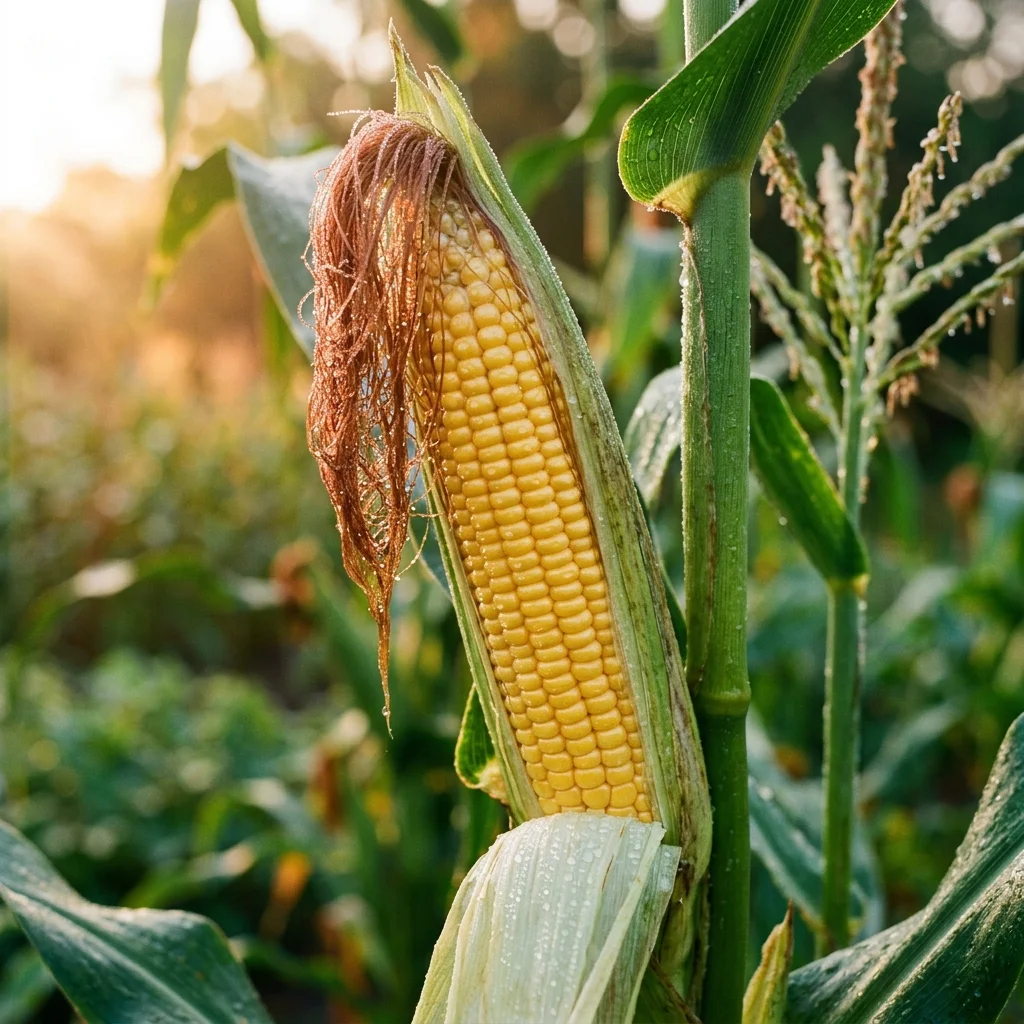
Key Visual Features: Tall, robust, erect grass stalks growing up to 8 feet high with broad leaves.
-
✔
Leaf & Stems: Feathery male tassels at the top; female ears with silky threads at leaf joints.
-
✔
Fruit/Edible Part: Large cylindrical ears packed with sweet, juicy yellow or white kernels under green husks.
Complete Growing & Harvesting Guide
Follow our detailed scientific agricultural cultivation guide to keep your Sweet Corn thriving and high-yielding.
Common Diseases & Treatment
Common Smut (Ustilago)
Symptoms: Galls develop on ears, stalks, and leaves, turning from silver-white into black powdery spore sacks.
Common Rust (Puccinia)
Symptoms: Foliage develops small, oval reddish-brown powdery pustules on both upper and lower leaf surfaces, causing early yellowing.
Frequently Asked Questions
Why are my corn ears missing kernels or half-empty?
This is due to poor pollination. Planting corn in single rows rather than blocks prevents wind from carrying pollen from tassels to silks.
What is the 'milk stage' for sweet corn?
This is the peak sweetness harvest window. When you puncture a kernel, it should release a milky liquid. Clear sap means underripe; thick paste means overripe.
Should I remove the tillers or suckers at the base of corn?
No. Removing base tillers is generally unnecessary and can actually reduce the plant's overall photosynthetic ability and root anchorage.
Is sweet corn safe for cats and dogs?
Yes! Sweet corn kernels are completely non-toxic and safe for pets. (Note: Never feed the corn cob to dogs as it is a dangerous choking hazard).