Helianthus annuus

Sunflower Seed Growing & Harvesting Guide

Sunflower Seed (Helianthus annuus), the towering golden sentinel of summer gardens, is a highly rewarding crop to cultivate. Valued for its oil-rich seeds and cheerful massive blooms, this sturdy annual demands deep loamy soils, heavy organic composting, and bird-netting care.


Sunlight Icon
Sunlight Full Sun (6+ hours)
Watering Icon
Watering Moderate / Regular
Soil Mix Icon
Soil pH Deep, Fertile, Well-Drained Loam (pH 6.0-7.5)
Temperature Icon
Target Temp 18°C - 32°C
Toxicity Warning Icon
Toxicity Pet Friendly (Non-toxic)
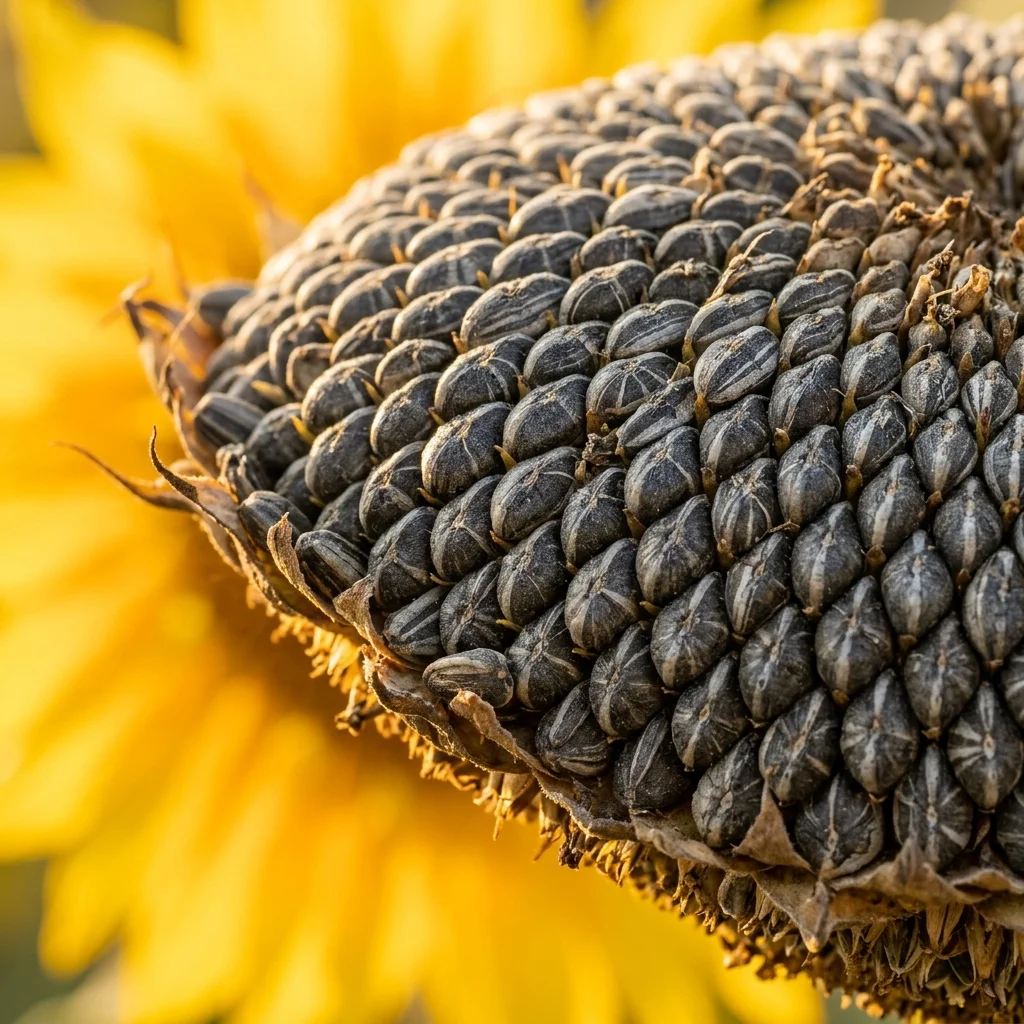
Botanical macro photography of Sunflower Seed (Helianthus annuus) - Plant AI care database

How to Identify Sunflower Seed

Sunflower Seed (Helianthus annuus) is a highly valued edible crop globally. Recognizing its definitive vegetative and fruit/vegetable structures is key to successful companion growing and harvesting.

  • Key Visual Features: Tall, thick, hairy upright annual stalk growing 6 to 12 feet tall.
  • Leaf & Stems: Large, coarse heart-shaped leaves; produces massive, flat disc-like yellow flower heads.
  • Fruit/Edible Part: Dense flat head filled with concentric rings of tear-shaped black-and-white striped seed hulls.
💡 Plant AI Tip: Snap a photo with Plant AI to identify garden veggies and diagnose leaf spot diseases in 1 second.

Complete Growing & Harvesting Guide

Follow our detailed scientific agricultural cultivation guide to keep your Sunflower Seed thriving and high-yielding.

Water deeply twice a week, delivering 1.5 inches of water during germination and flower formation. Drought-tolerant once established.
No pruning needed. Provide strong support stakes for heavy-headed giant cultivars to prevent stem lodging in high winds.
Heavy feeder. Top-dress soil with balanced organic compost in early summer. Avoid excessive nitrogen which weakens stalks.
Requires absolute full sun (6 to 8+ hours daily) to develop sturdy stems and massive seed heads.
Prefers deep, rich, well-drained loamy soil (pH 6.0-7.5) allowing its extensive deep taproot to anchor the tall plant.
Sow seeds 1 inch deep directly outdoors in late spring after all frost danger has passed.
Hardy and heat-tolerant. Best growth occurs between 18°C and 32°C; plants withstand light autumn chill but die in hard freezes.
Space tall giant varieties 18 inches apart to allow sufficient airflow and sunlight penetration between massive stalks.
Prone to sunflower moths, birds, and squirrels. Tie a breathable mesh bag or cheesecloth over mature seed heads to protect them.
Susceptible to Sclerotinia Head Rot and Powdery Mildew. Water at base level and ensure wide spacing.
Harvest when the back of the green seed head turns a soft yellow-brown, and the outer hulls feel hard and dry.

Is your Sunflower Seed leaves turning yellow, spotted or dying?

Protect your kitchen garden. Take a photo with Plant AI to diagnose pests and crop diseases instantly.

Diagnose My Crop

Common Diseases & Treatment

Sclerotinia Head Rot (Sclerotinia)

Symptoms: The back of the flower head turns soft, water-soaked, and decays, forming white cottony mold and hard black pellets.

Action: Avoid overhead watering, practice strict crop rotation, and discard infected plant structures immediately.

Rust (Puccinia)

Symptoms: Lower leaves develop small, dusty cinnamon-brown pustules on their undersides, expanding to cause leaf drying.

Action: Pick and destroy early infected leaves, avoid late-day watering, and apply organic sulfur spray at first sign.

Frequently Asked Questions

When are sunflower seeds ready to harvest?

When the back of the seed head turns from green to yellow-brown, and the seeds look plump with hard black-and-white striped hulls.

How do I protect mature sunflower heads from birds and squirrels?

Tie a breathable mesh bag, cheesecloth, or lightweight paper bag over the entire flower head once the yellow petals begin to wither.

Why are the lower leaves of my sunflower turning yellow and drying up?

This is normal aging as the plant directs energy to ripening the seed head. However, ensure it is not due to underwatering or rust infection.

Are sunflower seeds safe for pet cats and dogs?

Yes! Plain, unsalted, shelled sunflower seeds are highly nutritious and completely non-toxic for dogs and cats in moderation.

Harvest bountiful greens. Grow healthy edibles today!

Get Started for Free