Star Fruit Growing & Harvesting Guide
Star Fruit (Averrhoa carambola), the stunning five-angled beauty of tropical orchards, is an exceptionally high-value exotic crop. Prizes for its crisp, star-shaped yellow fruits and beautiful pink blossoms, this wind-sensitive tropical tree demands warm humidity and windbreak protection.





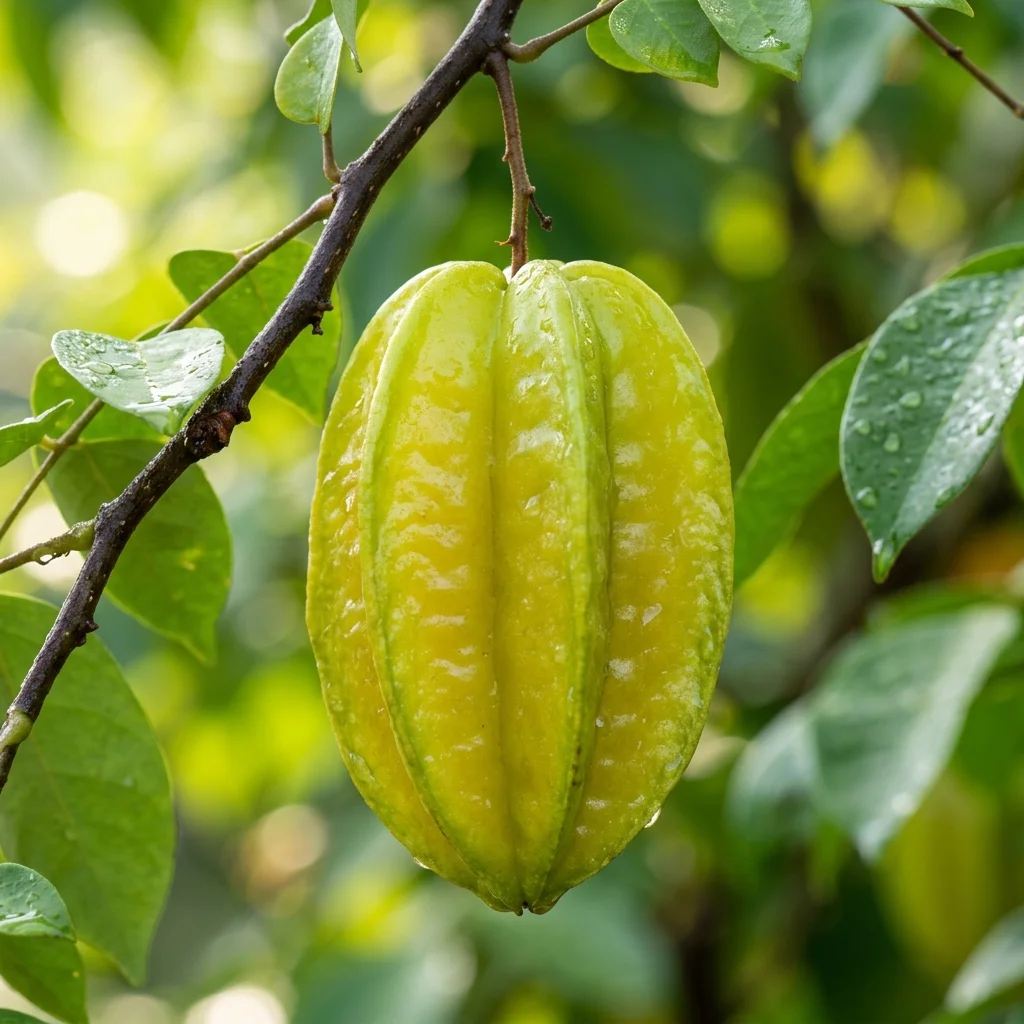
How to Identify Star Fruit
Star Fruit (Averrhoa carambola) is a highly valued edible crop globally. Recognizing its definitive vegetative and fruit/vegetable structures is key to successful companion growing and harvesting.
-
✔
Key Visual Features: Subtropical evergreen tree growing up to 30 feet with drooping branches.
-
✔
Leaf & Stems: Pinnately compound dark green leaves; dense clusters of small, fragrant lilac flowers.
-
✔
Fruit/Edible Part: Oval fruit with five deep longitudinal ribs, creating a perfect five-pointed star when sliced.
Complete Growing & Harvesting Guide
Follow our detailed scientific agricultural cultivation guide to keep your Star Fruit thriving and high-yielding.
Common Diseases & Treatment
Anthracnose (Colletotrichum)
Symptoms: Maturing fruits develop dark, sunken circular water-soaked rot spots, exuding pink slimy spores under humid rain.
Pythium Root Rot (Pythium)
Symptoms: Leaf tip yellowing, canopy dieback, and sudden wilting; root base becomes brown, mushy, and rots.
Frequently Asked Questions
Why is windbreak protection so critical for Star Fruit trees?
Star fruit trees have brittle wood and delicate flower clusters. Strong winds easily snap branches, drop flowers, and bruise the soft skin of fruits.
Why are my star fruits tasting extremely sour?
This is commonly due to harvesting fruits too early while they are still green. Star fruits must ripen fully to yellow on the tree to develop sweetness.
Can I grow Star Fruit trees from seed?
While seeds sprout easily, seedling trees take 5+ years to fruit and show unpredictable fruit quality. Plant grafted cultivars instead.
Is Star Fruit safe for pet cats and dogs?
No. Star fruit contains high concentrations of soluble calcium oxalates and caramboxin, which are highly toxic to pets, causing acute kidney failure.