Nephelium lappaceum

Rambutan Growing & Harvesting Guide

Rambutan (Nephelium lappaceum), the hairy red wonder of Southeast Asian rain forests, is a highly ornamental tropical fruit tree. Prized for its sweet, grape-like translucent arils and unique soft-spined red skin, this exotic evergreen demands high humidity, warm rain, and cluster-harvesting care.


Sunlight Icon
Sunlight Full Sun (6+ hours)
Watering Icon
Watering High / Regular
Soil Mix Icon
Soil pH Fertile, Deep, Well-Drained Sandy Clay (pH 5.5-6.5)
Temperature Icon
Target Temp 22°C - 35°C
Toxicity Warning Icon
Toxicity Pet Friendly (Non-toxic)
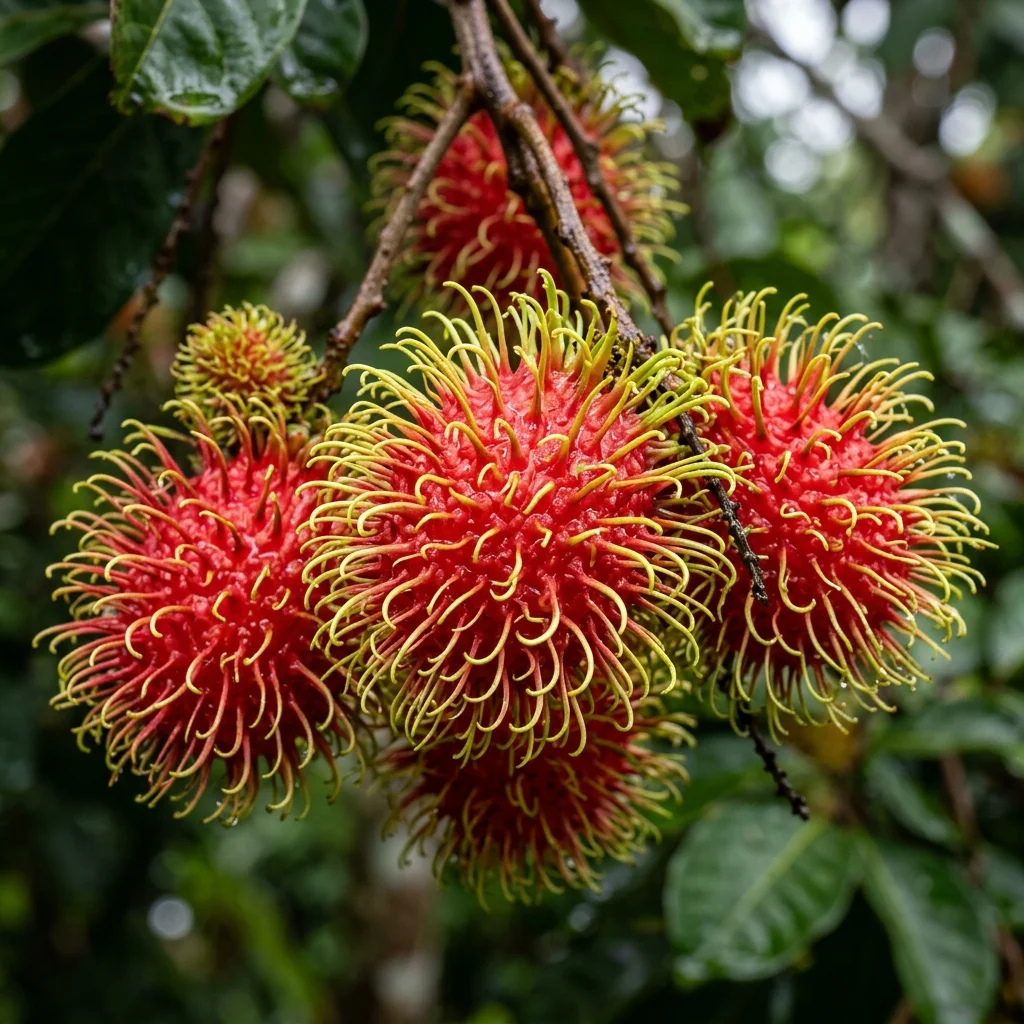
Botanical macro photography of Rambutan (Nephelium lappaceum) - Plant AI care database

How to Identify Rambutan

Rambutan (Nephelium lappaceum) is a highly valued edible crop globally. Recognizing its definitive vegetative and fruit/vegetable structures is key to successful companion growing and harvesting.

  • Key Visual Features: Medium-sized tropical evergreen tree growing up to 40 feet with a broad canopy.
  • Leaf & Stems: Pinnate compound leaves, alternate and dark green; small, petalless greenish-yellow blossoms.
  • Fruit/Edible Part: Round-oval red fruit covered in thick, soft, curly hair-like spines (spinterns).
💡 Plant AI Tip: Snap a photo with Plant AI to identify garden veggies and diagnose leaf spot diseases in 1 second.

Complete Growing & Harvesting Guide

Follow our detailed scientific agricultural cultivation guide to keep your Rambutan thriving and high-yielding.

Requires regular high moisture. Water deeply once or twice a week to mimic rainforest rainfall; avoid dry soil.
Prune crossing branches annually after harvest to open the canopy and control heights for easier fruit picking.
Apply balanced organic fruit fertilizer with high potassium and micronutrients every 3 months during fruiting years.
Thrives in full sun (6+ hours daily). Crucial for high sugar synthesis and brilliant red ripening of the hairy fruits.
Prefers deep, rich, well-draining sandy clay loam or alluvial soil with high compost content (pH 5.5-6.5).
Plant grafted cultivars to guarantee sweet female trees. Protect young saplings from harsh wind drying.
Strict tropical. Ideal temperature is 22°C to 35°C; growth halts below 18°C and freeze completely kills the tree.
Space trees 18 to 22 feet apart. Plant in humid, warm zones with wind protection to maintain atmospheric moisture.
Prone to mealybugs, fruit borers, and birds. Wrap maturing fruit clusters in protective mesh sleeves.
Susceptible to Anthracnose and Powdery Mildew. Water the soil directly; do not wet canopy leaves.
Harvest when fruits turn a brilliant red-orange with green-tipped soft spines, cutting the entire cluster stem.

Is your Rambutan leaves turning yellow, spotted or dying?

Protect your kitchen garden. Take a photo with Plant AI to diagnose pests and crop diseases instantly.

Diagnose My Crop

Common Diseases & Treatment

Rambutan Powdery Mildew (Oidium)

Symptoms: Young developing fruit clusters and leaf tips develop a dusty white fungal coating, causing fruits to rot and drop.

Action: Improve canopy ventilation, rake fallen plant debris, and apply preventative organic sulfur or copper sprays.

Stem Canker (Dolabra)

Symptoms: Bark develops rough, swollen corky cankers with dark cracks along branches, causing branch dieback and reduced yield.

Action: Prune infected limbs 10 inches below caked bark, sterilize pruning tools, and apply protective tree sealant.

Frequently Asked Questions

Why are the soft spines on my rambutan turning black and dry?

This is due to low humidity or post-harvest drying. Rambutan fruits lose moisture rapidly through their soft spines; harvest in clusters to delay drying.

Can I grow rambutan from grocery store seeds?

Seeds lose viability within days and often produce male trees (which bear no fruit). Plant grafted cultivars for guaranteed fruit yield.

What is the post-harvest storage life of rambutan?

Fresh rambutans have a short shelf life. Store in a plastic bag in the refrigerator (8-10°C) to keep them fresh for 7 to 10 days.

Are rambutans safe for dogs and cats?

The translucent sweet grape-like fruit pulp is completely safe and non-toxic to pets. (Note: Remove the leathery spiky rind and the single hard seed).

Harvest bountiful greens. Grow healthy edibles today!

Get Started for Free