Pumpkin Seed Growing & Harvesting Guide
Pumpkin Seed (Cucurbita), the dark green powerhouse of organic homesteads, is an exceptionally high-value seed crop to grow. Prized for its highly nutritious kernels, this scrambling annual vine demands expansive spacing, heavy-duty manure feeding, and proactive mildew protection.




How to Identify Pumpkin Seed
Pumpkin Seed (Cucurbita) is a highly valued edible crop globally. Recognizing its definitive vegetative and fruit/vegetable structures is key to successful companion growing and harvesting.
-
✔
Key Visual Features: Sprawling, climbing annual vine with thick prickled stems and large fuzzy lobed leaves.
-
✔
Leaf & Stems: Large yellow-orange unisexual blossoms; produces massive round ribbed orange fruits.
-
✔
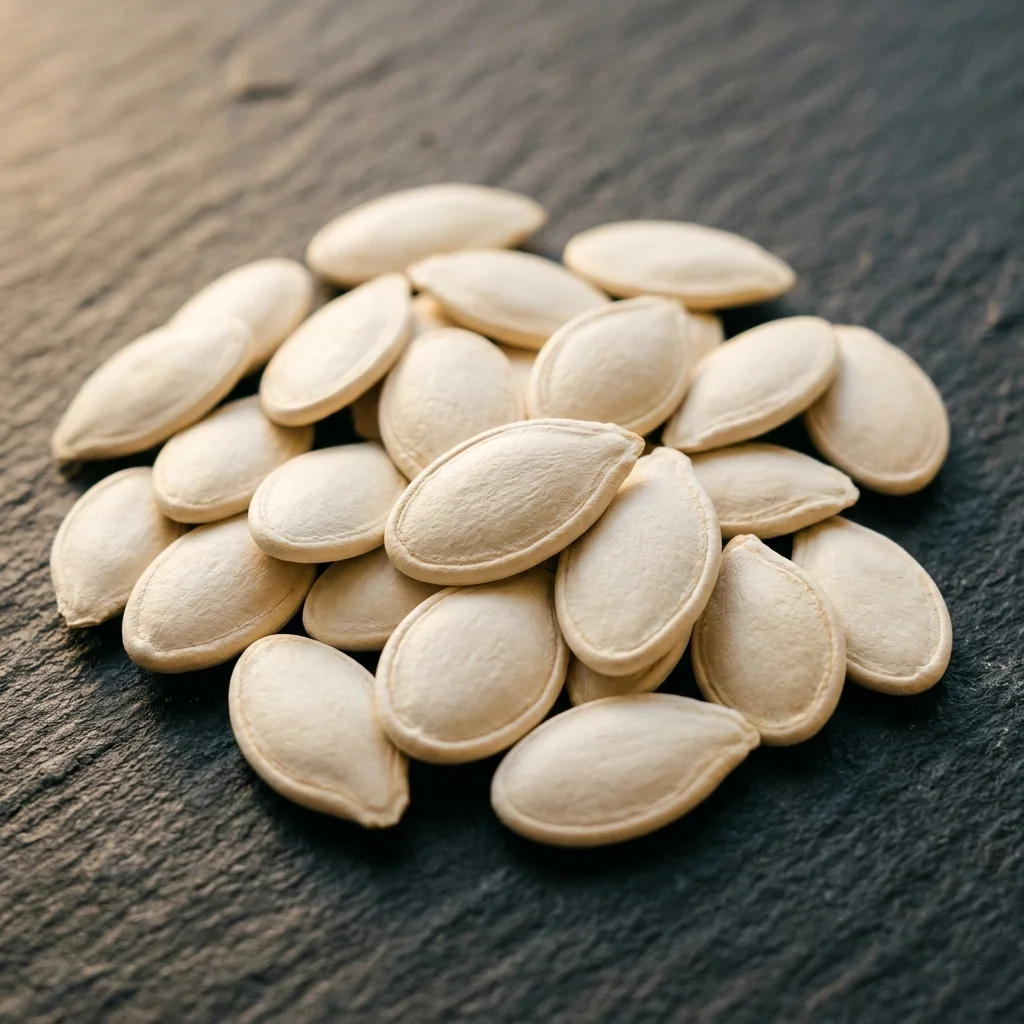
Fruit/Edible Part: Flat, oval, cream-white seed hulls containing a nutrient-dense, dark green seed kernel inside.
Complete Growing & Harvesting Guide
Follow our detailed scientific agricultural cultivation guide to keep your Pumpkin Seed thriving and high-yielding.
Common Diseases & Treatment
Powdery Mildew (Podosphaera)
Symptoms: Leaves and stems develop a dusty white fungal coating, leading to early leaf shriveling and reduced seed fill.
Squash Vine Borer (Melittia)
Symptoms: Vines wilt suddenly; green stems develop small entry holes near the soil line oozing sawdust-like frass.
Frequently Asked Questions
Can I eat seeds from any pumpkin cultivar?
Yes. While seeds from all pumpkins are edible, hulless cultivars (like 'Lady Godiva' or 'Kakai') are grown specifically for shell-free green seeds.
How do I prepare fresh pumpkin seeds for roasting?
Scoop seeds out of the pumpkin pulp, rinse them thoroughly in cold water to remove stringy flesh, boil in salted water for 10 minutes, and bake dry.
Why are my pumpkin flowers falling off without producing fruit?
The first flowers are always male, designed to attract bees, and will fall off. Female flowers (with a tiny pumpkin bulb at the base) appear next.
Are pumpkin seeds safe for dogs and cats?
Yes! Plain, unsalted, raw or roasted pumpkin seeds are highly beneficial for pets, containing natural compounds that act as organic dewormers.