Pomegranate Growing & Harvesting Guide
Pomegranate (Punica granatum) is the ancient, highly ornamental crown jewel of the hot summer garden. Celebrated for its thick leathery rinds and sweet, antioxidant-rich ruby arils, this extremely resilient shrub thrives in arid climates.





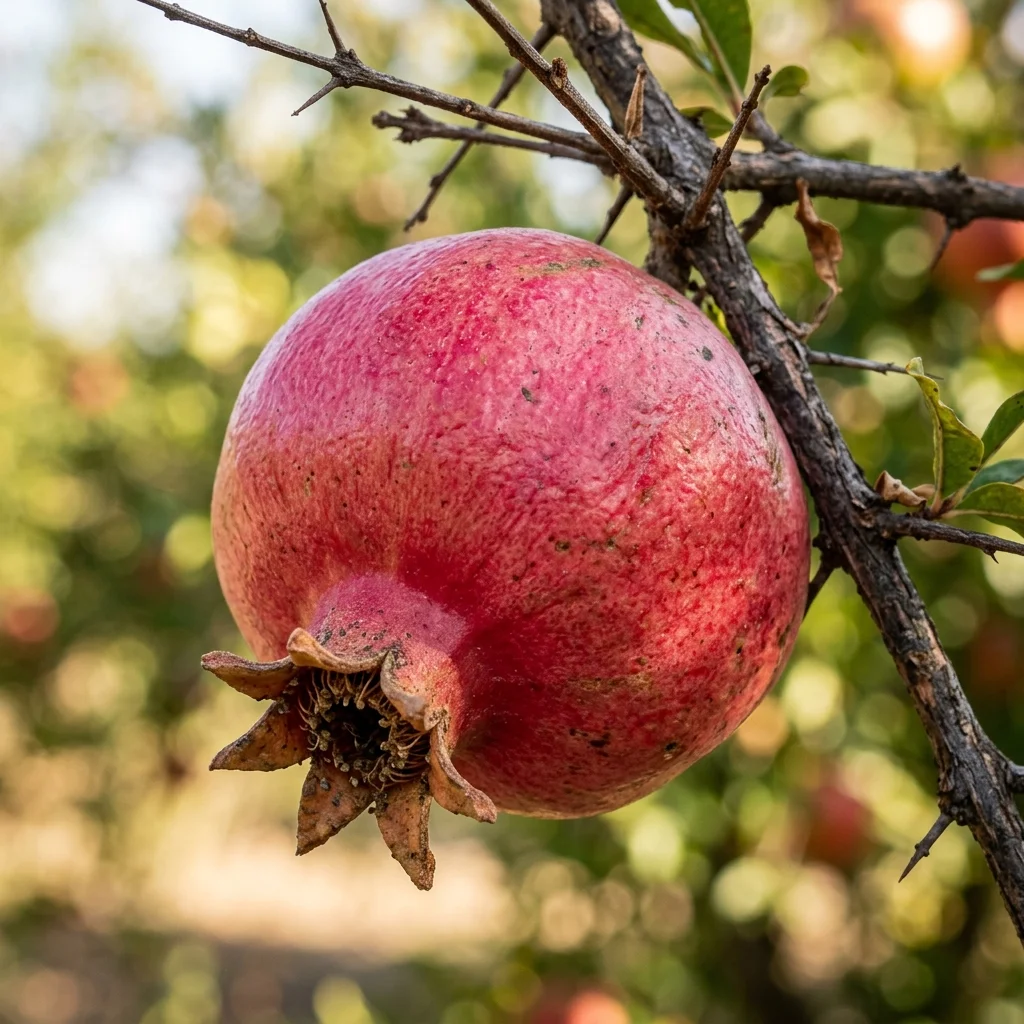
How to Identify Pomegranate
Pomegranate (Punica granatum) is a highly valued edible crop globally. Recognizing its definitive vegetative and fruit/vegetable structures is key to successful companion growing and harvesting.
-
✔
Key Visual Features: Woody deciduous large shrubs or small trees with slightly thorny twig branches.
-
✔
Leaf & Stems: Glossy, narrow oblong green leaves; spectacular bright orange-red spring flowers.
-
✔
Fruit/Edible Part: Large, globose leathery pink-red rinds with crown-like calyx, packed with red juicy arils.
Complete Growing & Harvesting Guide
Follow our detailed scientific agricultural cultivation guide to keep your Pomegranate thriving and high-yielding.
Common Diseases & Treatment
Cercospora Leaf Spot
Symptoms: Leaves develop small dark brown circular spots, turning yellow and falling prematurely. Fruit rinds show black spots.
Fruit Splitting (Physiological)
Symptoms: Maturing pomegranates crack wide open on the tree, exposing the red arils to rotting and pests.
Frequently Asked Questions
Why are my pomegranates splitting open on the branch?
Splitting is caused by uneven watering (heavy rain after drought). The arils swell faster than the leathery rind. Keep soil evenly damp.
How many years does it take for a pomegranate to fruit?
Young pomegranate shrubs usually start bearing fruit 2-3 years after planting, with full production starting in year 5.
Can I grow pomegranates indoors or in pots?
Yes! Choose dwarf varieties (like 'Nana') and grow them in 10-gallon containers placed on bright sunny balconies.
Are pomegranates safe for dogs and cats?
Yes. Pomegranate arils are non-toxic to pets. However, the thick leathery rind and white pith are highly indigestible and can cause stomach upset.