Parsnip Growing & Harvesting Guide
Parsnip (Pastinaca sativa), the sweet white treasure of winter roots, is a highly rewarding biennial crop. PRIZED for its intensely sweet, nutty root flavor and outstanding winter hardiness, this slow-growing taproot requires deep sandy loam and severe winter frost to sweeten.




How to Identify Parsnip
Parsnip (Pastinaca sativa) is a highly valued edible crop globally. Recognizing its definitive vegetative and fruit/vegetable structures is key to successful companion growing and harvesting.
-
✔
Key Visual Features: Rosette of large, pinnately compound, dark green celery-like leaves.
-
✔
Leaf & Stems: Stems are ribbed and grooved; produces flat yellow umbel blossoms in the second year.
-
✔
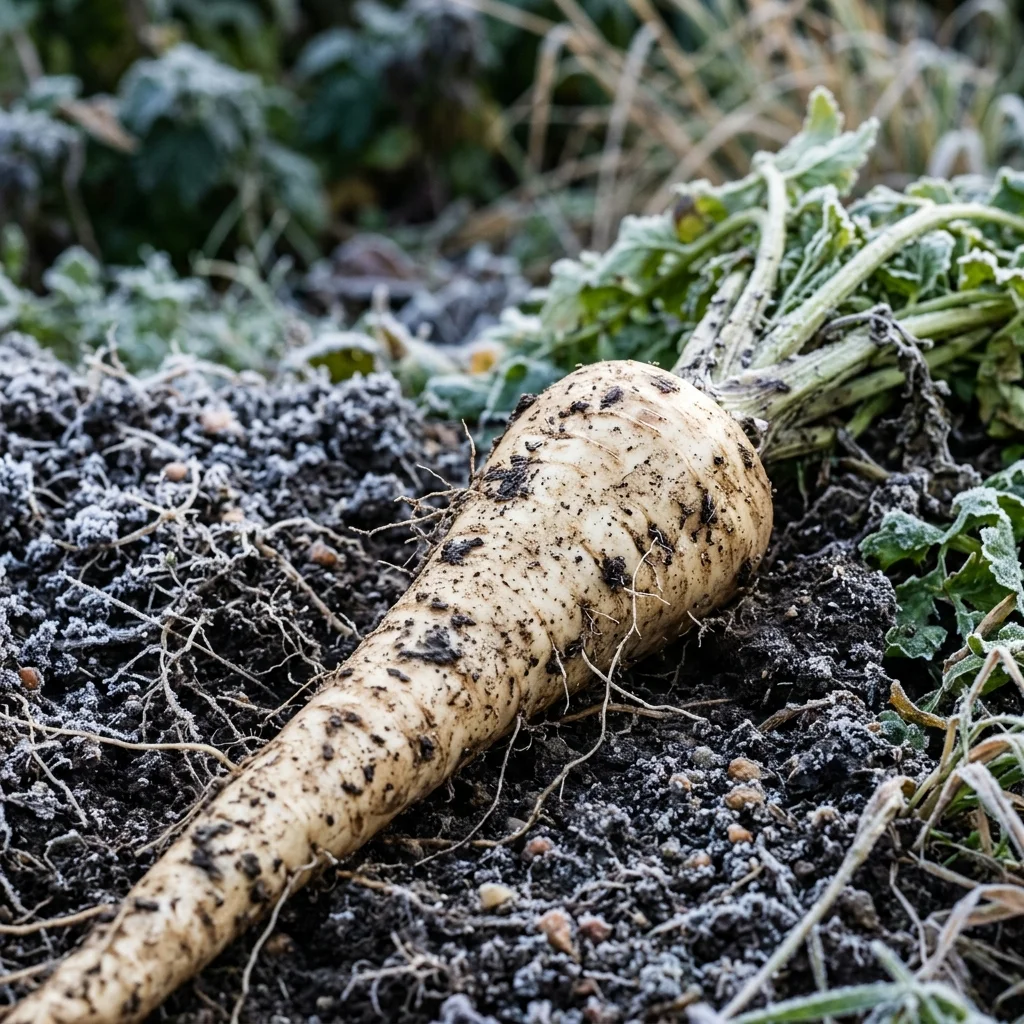
Fruit/Edible Part: A long, tapering, creamy-white fleshy taproot with a sweet, aromatic earthy scent.
Complete Growing & Harvesting Guide
Follow our detailed scientific agricultural cultivation guide to keep your Parsnip thriving and high-yielding.
Common Diseases & Treatment
Parsnip Canker (Itersonilia)
Symptoms: The shoulders of the creamy-white root develop dry, reddish-brown to black rotting cracks, ruinous to storage quality.
Cercospora Leaf Spot (Cercospora)
Symptoms: Foliage developments small, circular brown spots with ash-gray centers, causing severe leaf drying in wet, humid summers.
Frequently Asked Questions
Why are my parsnips tasting woody or flavorless?
Woodiness is caused by harvesting too early in warm weather. Parsnips must experience winter frost to trigger starch-to-sugar conversion.
Why do parsnip seeds take so long to germinate?
Parsnip seeds contain natural inhibitors and take 3 weeks to sprout. Keep soil continuously moist; never let it dry out during germination.
Are parsnip leaves safe to touch?
Caution: Parsnip foliage contains furanocoumarins. Contact with leaf sap followed by sunlight exposure causes phytophotodermatitis (skin blistering). Wear gloves.
Is parsnip safe for pet cats and dogs?
Yes! Fully cooked, plain parsnip is completely safe and non-toxic for dogs and cats, offering rich vitamin C, potassium, and healthy fiber.