Onion Growing & Harvesting Guide
Onion (Allium cepa) is the sweet, layered superstar of the traditional home garden. Treasured for its versatile bulbs, this essential kitchen crop demands careful day-length sensitivity selection and highly fertile, loose sandy loam beds to swell into prize-winning bulbs.




How to Identify Onion
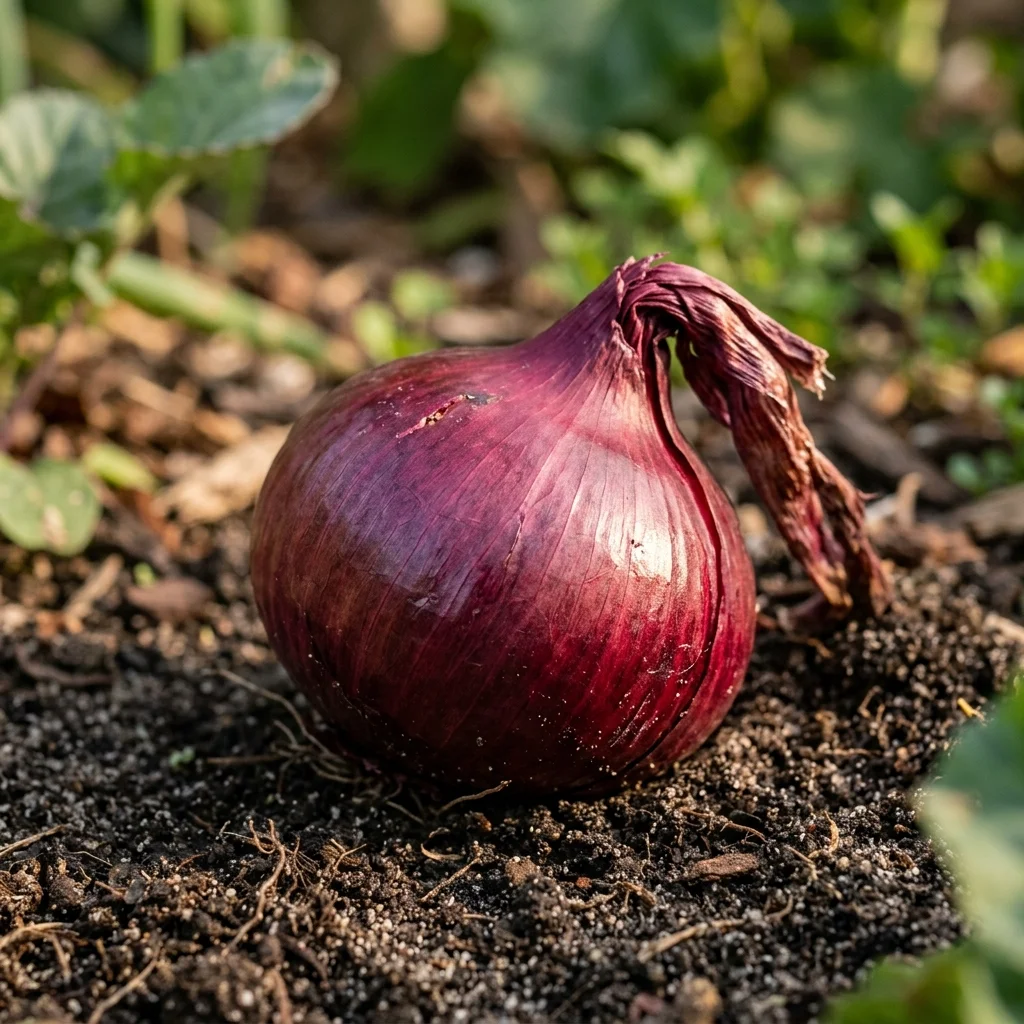
Onion (Allium cepa) is a highly valued edible crop globally. Recognizing its definitive vegetative and fruit/vegetable structures is key to successful companion growing and harvesting.
-
✔
Key Visual Features: Low-growing herbaceous plants with hollow, cylindrical erect green leaves.
-
✔
Leaf & Stems: Thin, waxy tubular leaves; a rounded flower umbel producing tiny white blossoms in the second year.
-
✔
Fruit/Edible Part: A single layered, spherical or flat bulb wrapped in dry, papery yellow, red, or white skins.
Complete Growing & Harvesting Guide
Follow our detailed scientific agricultural cultivation guide to keep your Onion thriving and high-yielding.
Common Diseases & Treatment
Purple Blotch (Alternaria)
Symptoms: Small, water-soaked spots on leaves expand into large purple-brown lesions with concentric rings, causing leaf dieback.
Onion Maggot Infestation
Symptoms: Seedlings turn yellow, wilt, and pull out easily to reveal tiny white worms tunneling inside the decomposing bulb base.
Frequently Asked Questions
Why are my onions sending up flower stalks so early?
This is 'bolting', triggered by sudden temperature fluctuations or planting sets that were too large. Cut stalks off immediately.
What is the difference between long-day and short-day onions?
Long-day onions require 14-16 hours of light to swell (best for North); short-day onions require 10-12 hours (best for South).
How do I dry and cure harvested onions for winter storage?
Lay harvested onions in a warm, dry, shaded breezeway for 2-3 weeks until the outer skins turn papery and necks feel bone-dry.
Are onion leaves toxic to household dogs?
Yes. All onions contain thiosulfates which cause oxidative damage to red blood cells, leading to severe hemolytic anemia in pets.