Nectarine Growing & Harvesting Guide
Nectarine (Prunus persica var. nucipersica) is the sleek, fuzz-free royalty of the stone fruit orchard. Prized for its incredibly sweet, aromatically complex smooth fruits, this compact deciduous tree thrives in sunny climates.




How to Identify Nectarine
Nectarine (Prunus persica var. nucipersica) is a highly valued edible crop globally. Recognizing its definitive vegetative and fruit/vegetable structures is key to successful companion growing and harvesting.
-
✔
Key Visual Features: Deciduous small trees with spreading vase-shaped branch habits and dark bark.
-
✔
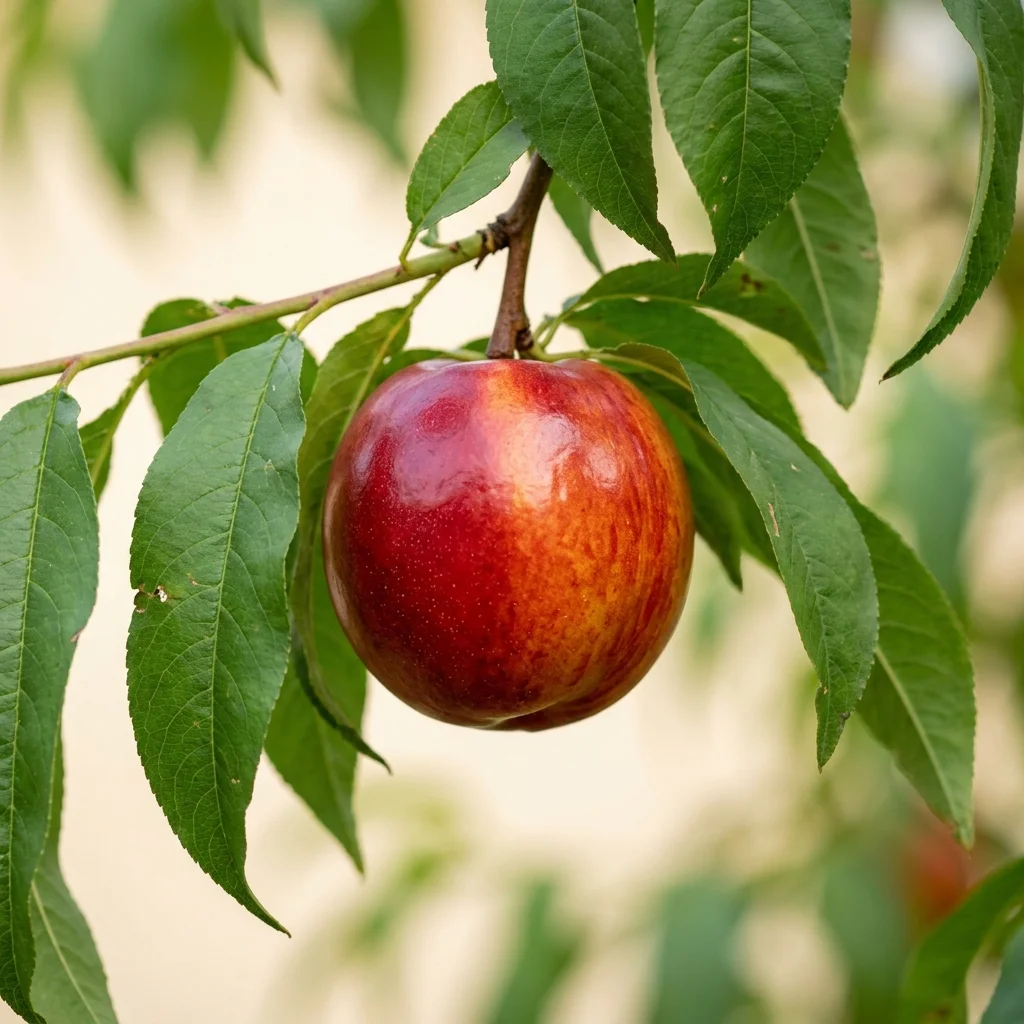
Leaf & Stems: Long lanceolate green leaves with finely serrated margins; beautiful pink blossoms.
-
✔
Fruit/Edible Part: Smooth, completely fuzz-free glossy drupes with red-yellow skin and sweet stone pit pulp.
Complete Growing & Harvesting Guide
Follow our detailed scientific agricultural cultivation guide to keep your Nectarine thriving and high-yielding.
Common Diseases & Treatment
Peach Leaf Curl (Fungal)
Symptoms: Emerging spring leaves turn thick, puckered, blistered, and reddish-purple, dropping off prematurely.
Brown Rot (Fungal)
Symptoms: Ripening fruits show circular decaying spots that rapidly develop concentric fuzzy tan fungal rings.
Frequently Asked Questions
Why do my nectarines have split skins?
Nectarines lack protective fuzz, making them highly vulnerable to splitting during heavy summer rains. Water consistently.
Are nectarines and peaches the same tree?
Nectarines are the exact same species as peaches, differing only by a single recessive gene that makes their skin smooth.
Can I grow a nectarine tree in a pot?
Yes! Choose dwarf varieties (like Garden Beauty) and grow them in 15-gallon pots with plenty of drain holes and compost-rich soil.
Are nectarine pits toxic to dogs?
Yes. Nectarine pits contain amygdalin, which breaks down into cyanide if chewed. Pits also pose a physical obstruction risk.