Loquat Growing & Harvesting Guide
Loquat (Eriobotrya japonica), the luscious golden plum of spring orchards, is a highly prized subtropical evergreen tree. Prized for its sweet, juicy fruits and fragrant winter blossoms, this highly resilient species demands winter frost protection and fruit-thinning care to yield heavy fruits.





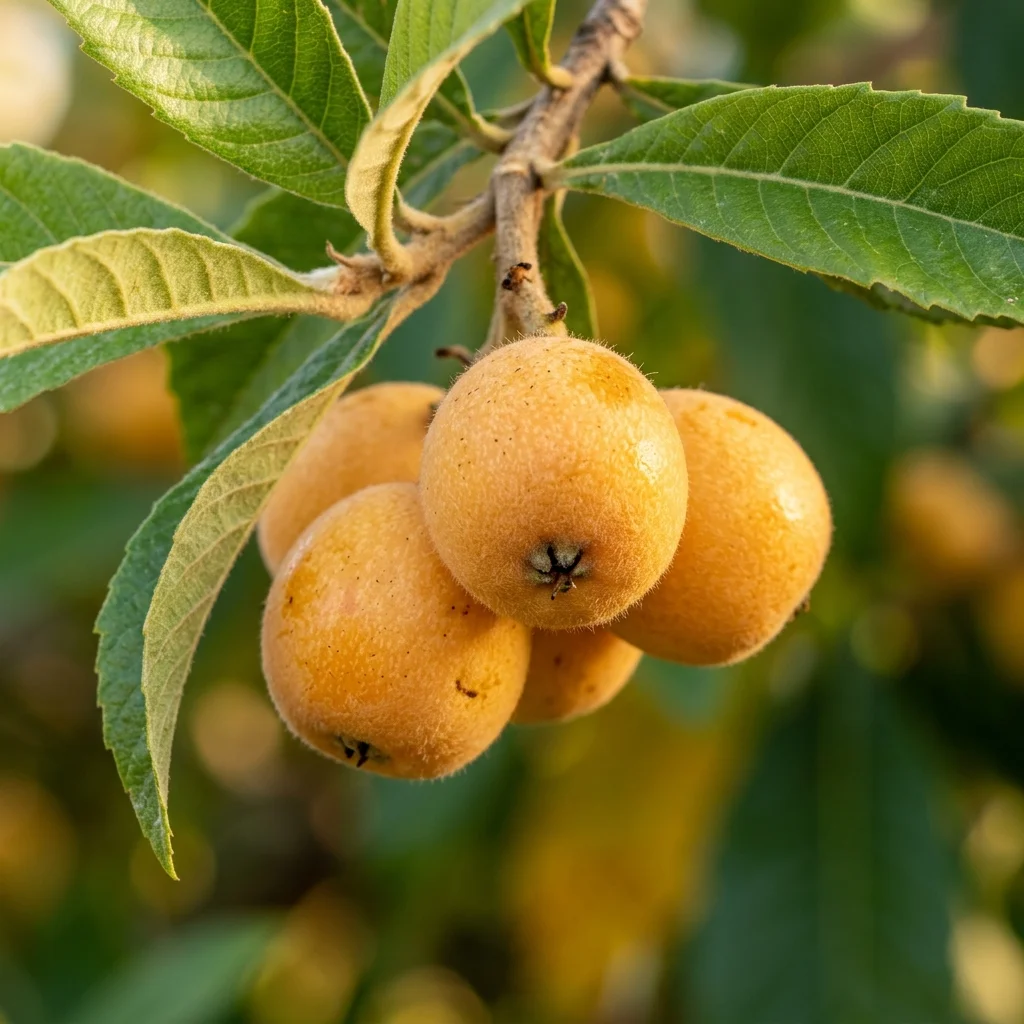
How to Identify Loquat
Loquat (Eriobotrya japonica) is a highly valued edible crop globally. Recognizing its definitive vegetative and fruit/vegetable structures is key to successful companion growing and harvesting.
-
✔
Key Visual Features: Small, handsome evergreen tree growing 15 to 25 feet with a rounded crown.
-
✔
Leaf & Stems: Large, thick, leathery dark green leaves with deeply textured prominent veins.
-
✔
Fruit/Edible Part: Clusters of small, round or pear-shaped golden-yellow fruits covered in fine peach fuzz.
Complete Growing & Harvesting Guide
Follow our detailed scientific agricultural cultivation guide to keep your Loquat thriving and high-yielding.
Common Diseases & Treatment
Fire Blight (Erwinia)
Symptoms: Blossoms and leaves turn black, shrivel, and look scorched by fire; twigs die back rapidly and ooze sticky fluid.
Loquat Scab (Spilocaea)
Symptoms: Maturing fruits and leaves develop dark brown to black corky scabby spots, rendering fruits inedible and defoliating trees.
Frequently Asked Questions
Why is my loquat tree fruiting only tiny, seed-heavy fruits?
This is due to overcrowding. You must thin the winter flower clusters by 50% to force the tree's energy into sizing the remaining fruits.
What is the unique flowering cycle of loquats?
Loquats have a reverse cycle: they flower in late autumn/winter (filling the garden with vanilla scent) and ripen fruit in early spring.
Can I grow loquat trees from grocery store seeds?
Yes, seeds grow rapidly. However, seedling trees take 8-10 years to fruit and the fruit is often sour or small. Plant grafted cultivars instead.
Are loquats safe for dogs and cats?
The fruit pulp is safe and non-toxic. However, loquat seeds (pit kernels) contain toxic cyanogenic glycosides which are highly poisonous to pets.