Allium ampeloprasum var. porrum

Leek Growing & Harvesting Guide

Leek (Allium ampeloprasum var. porrum) is the majestic, long-season giant of the home vegetable bed. Prized for its exceptionally sweet, mild white shafts and fan-like blue-green leaves, this highly frost-hardy allium requires deep trenching and hilling to blanch its succulent stems.


Sunlight Icon
Sunlight Full Sun (6+ hours)
Watering Icon
Watering Deep / Regular
Soil Mix Icon
Soil pH Rich, Moisture-Retentive (pH 6.0-6.8)
Temperature Icon
Target Temp 8°C - 24°C
Toxicity Warning Icon
Toxicity Toxic to Pets (Allium content)
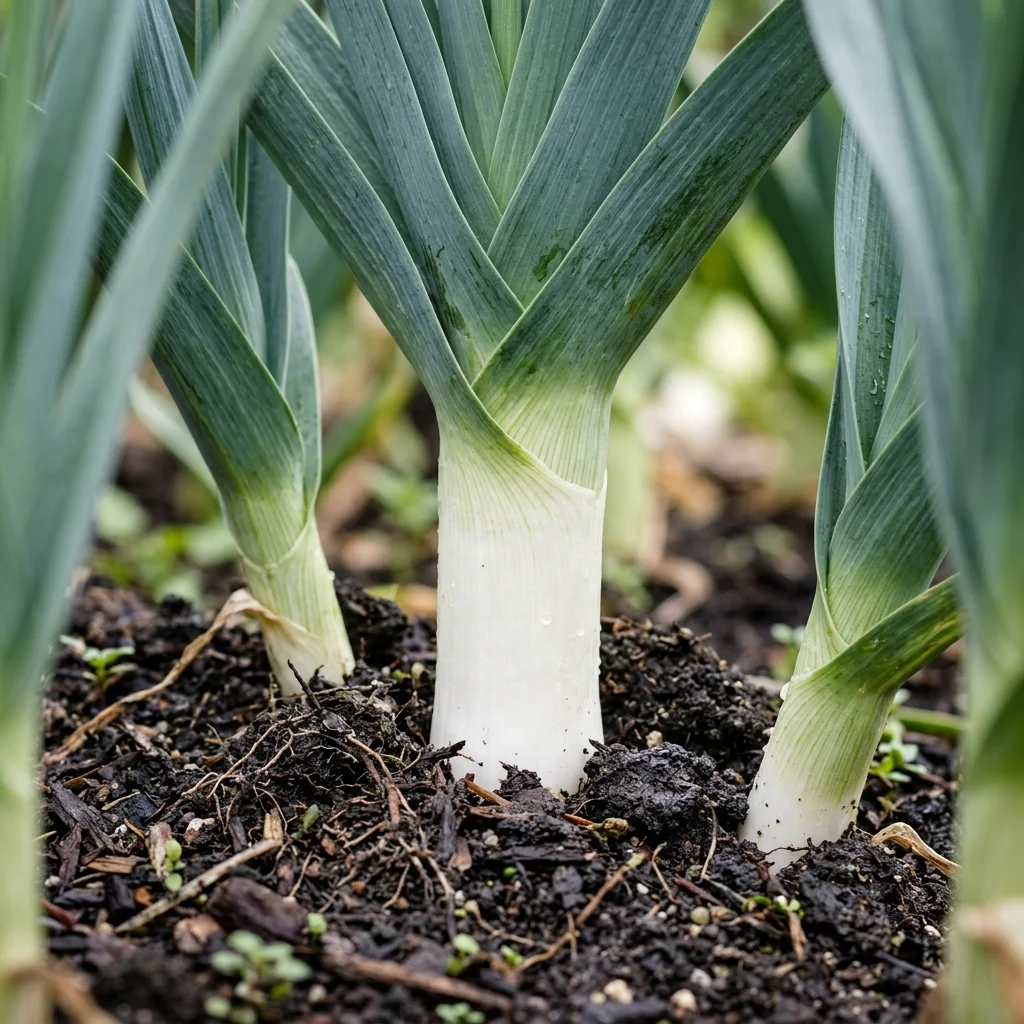
Botanical macro photography of Leek (Allium ampeloprasum var. porrum) - Plant AI care database

How to Identify Leek

Leek (Allium ampeloprasum var. porrum) is a highly valued edible crop globally. Recognizing its definitive vegetative and fruit/vegetable structures is key to successful companion growing and harvesting.

  • Key Visual Features: Tall, upright, robust herbaceous plants forming a thick layered cylindrical shaft.
  • Leaf & Stems: Broad, flat, fan-like dark green leaves arranged in a distinct V-shape overlaying the stem.
  • Fruit/Edible Part: A thick, long, white blanched underground stem with a mild, sweet, non-bulbous garlic-onion flavor.
💡 Plant AI Tip: Snap a photo with Plant AI to identify garden veggies and diagnose leaf spot diseases in 1 second.

Complete Growing & Harvesting Guide

Follow our detailed scientific agricultural cultivation guide to keep your Leek thriving and high-yielding.

Water deeply once a week, receiving 1 to 1.5 inches of water. Leeks have shallow roots and require consistently moist soil.
Prune away dead lower foliage. Trim leaf tips slightly at transplanting to reduce water loss and encourage stalk sizing.
Heavy feeder. Apply balanced organic compost and nitrogen-rich fish emulsion every 4 weeks during the long summer growth.
Requires full sun, demanding 6+ hours of direct light daily. Crucial for producing thick, heavy succulent stalks.
Needs deep, stone-free sandy loam rich in organic compost (pH 6.0-6.8) with high moisture-retention capacity.
Plant in deep 6-8 inch trenches or holes in spring. As the stem grows, gradually hill up soil around the stalk to blanch it.
Thrives in cool temperate climates. Extremely frost-hardy; mature winter leeks survive freezing temperatures down to -10°C.
Space plants 6 inches apart in rows spaced 12-18 inches apart. Wide spacing is vital for broad stalk expansion.
Prone to leek moths, thrips, and onion maggots. Use physical floating row covers proactively from spring transplanting.
Susceptible to Leek Rust and White Rot. Practice 4-year crop rotation and ensure excellent soil drainage.
Harvest when shafts reach 1-2 inches in diameter and stalks feel firm. Dig gently with a garden fork to avoid snapping.

Is your Leek leaves turning yellow, spotted or dying?

Protect your kitchen garden. Take a photo with Plant AI to diagnose pests and crop diseases instantly.

Diagnose My Crop

Common Diseases & Treatment

Leek Rust (Puccinia)

Symptoms: Leaves develop hundreds of tiny, raised, bright orange rust-like pustules, causing leaves to yellow and wither early.

Action: Ensure wide spacing for wind movement, remove infected leaves, avoid overhead watering, and spray copper fungicide.

White Rot (Sclerotium)

Symptoms: Foliage turns yellow and dies back, and root base develops a dense white fluffy fungal growth with black poppy-seed galls.

Action: No chemical cure exists. Practice strict 4-year crop rotation, sterilize tools, and discard infected stalks immediately.

Frequently Asked Questions

Why are my leek stems so short and green?

Leeks must be blanched to produce long white stems. Plant them in deep holes or trenches, and hill up soil around them as they grow.

How long does it take to grow leeks from seed?

Leeks require a very long growing season, taking 100 to 140 days from seeding to reach harvest-ready mature size.

Can I leave leeks in the garden during winter?

Yes! Leeks are extremely cold-hardy and can be left in the frozen winter garden, harvesting them as needed until spring.

Is green leek leaf safe for house cats?

No. Leeks are highly toxic to cats and dogs, containing thiosulfates that trigger red blood cell destruction and hemolytic anemia.

Harvest bountiful greens. Grow healthy edibles today!

Get Started for Free