Green Onion Growing & Harvesting Guide
Green Onion (Allium fistulosum), also known as scallion or bunching onion, is the fast-growing, perpetual favorite of the kitchen garden. Prized for its mild, crisp hollow green stalks and white bases, this hardy allium offers continuous harvest throughout the year.




How to Identify Green Onion
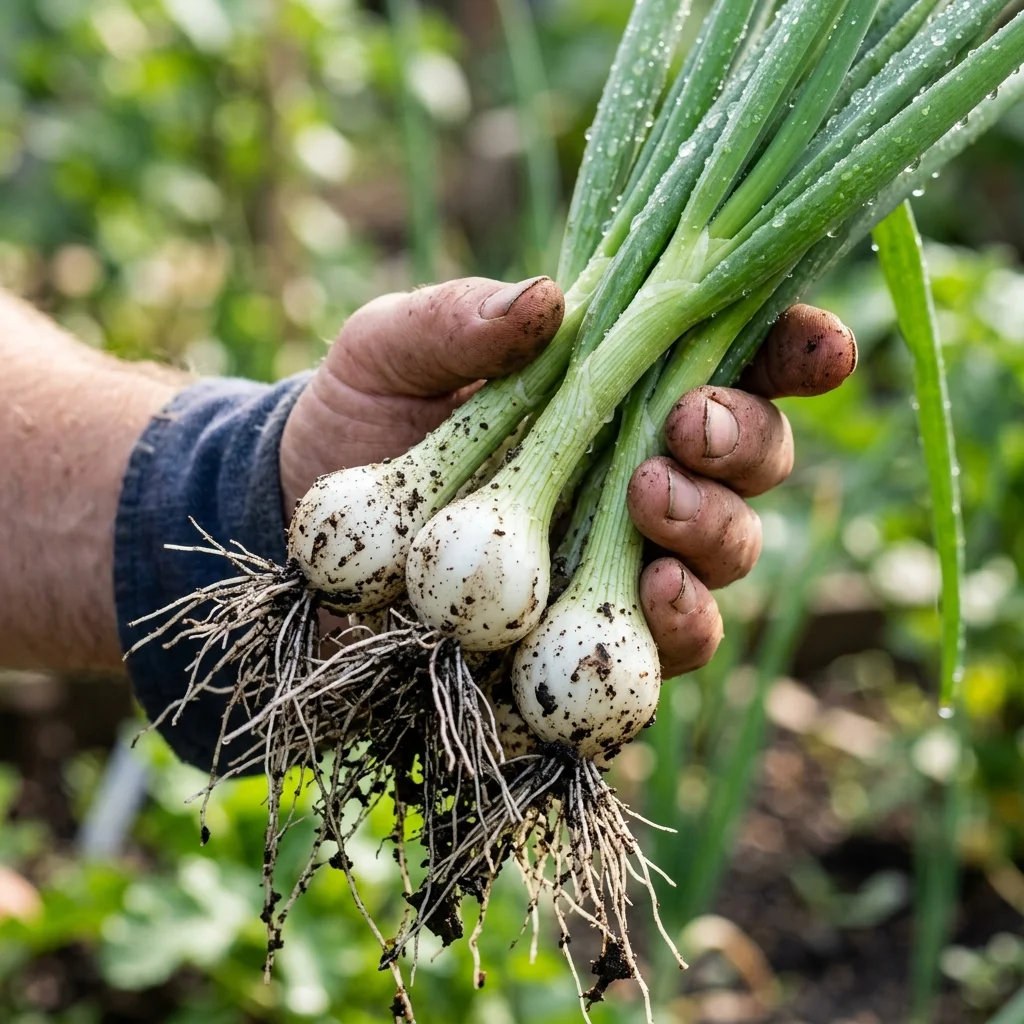
Green Onion (Allium fistulosum) is a highly valued edible crop globally. Recognizing its definitive vegetative and fruit/vegetable structures is key to successful companion growing and harvesting.
-
✔
Key Visual Features: Low-growing, clump-forming annuals or perennials with hollow cylindrical leaves.
-
✔
Leaf & Stems: Tubular, crisp emerald-green leaves; slender non-bulbous white bases growing in tight clusters.
-
✔
Fruit/Edible Part: Mild, crisp hollow stalks with tender white roots, harvested green and fresh.
Complete Growing & Harvesting Guide
Follow our detailed scientific agricultural cultivation guide to keep your Green Onion thriving and high-yielding.
Common Diseases & Treatment
Purple Blotch (Alternaria)
Symptoms: Small, water-soaked spots on leaves expand into large purple-brown lesions with concentric rings, causing leaf dieback.
Onion Thrips Infestation
Symptoms: Hollow green leaves develop tiny silver-gray streaks and dry brown blotches caused by thrips scraping leaf skin.
Frequently Asked Questions
How many times can I harvest green onions before they die?
You can harvest scallions 3 to 4 times! Cut them 2 inches above the soil line, and they will rapidly regrow new green shoots.
Can I grow green onions from store-bought scallion bottoms?
Yes! Plant store-bought scallion white bases with roots attached into moist potting soil, and they will sprout fresh greens in 7 days.
Do green onions survive freezing cold winters?
Yes! Allium fistulosum is extremely cold-hardy, surviving freezing winter temperatures down to -10°C and regrowing in spring.
Are green scallion leaves safe for cats?
No. Green onions are highly toxic to cats and dogs, containing thiosulfates that trigger red blood cell destruction and hemolytic anemia.