Eggplant Growing & Harvesting Guide
Eggplant (Solanum melongena), also known as Aubergine, is the majestic, heavy-yielding beauty of the summer garden. Prized for its large, glossy, deep purple pear-shaped fruits, this bushy, heat-loving nightshade brings tropical elegance and rich culinary versatility.





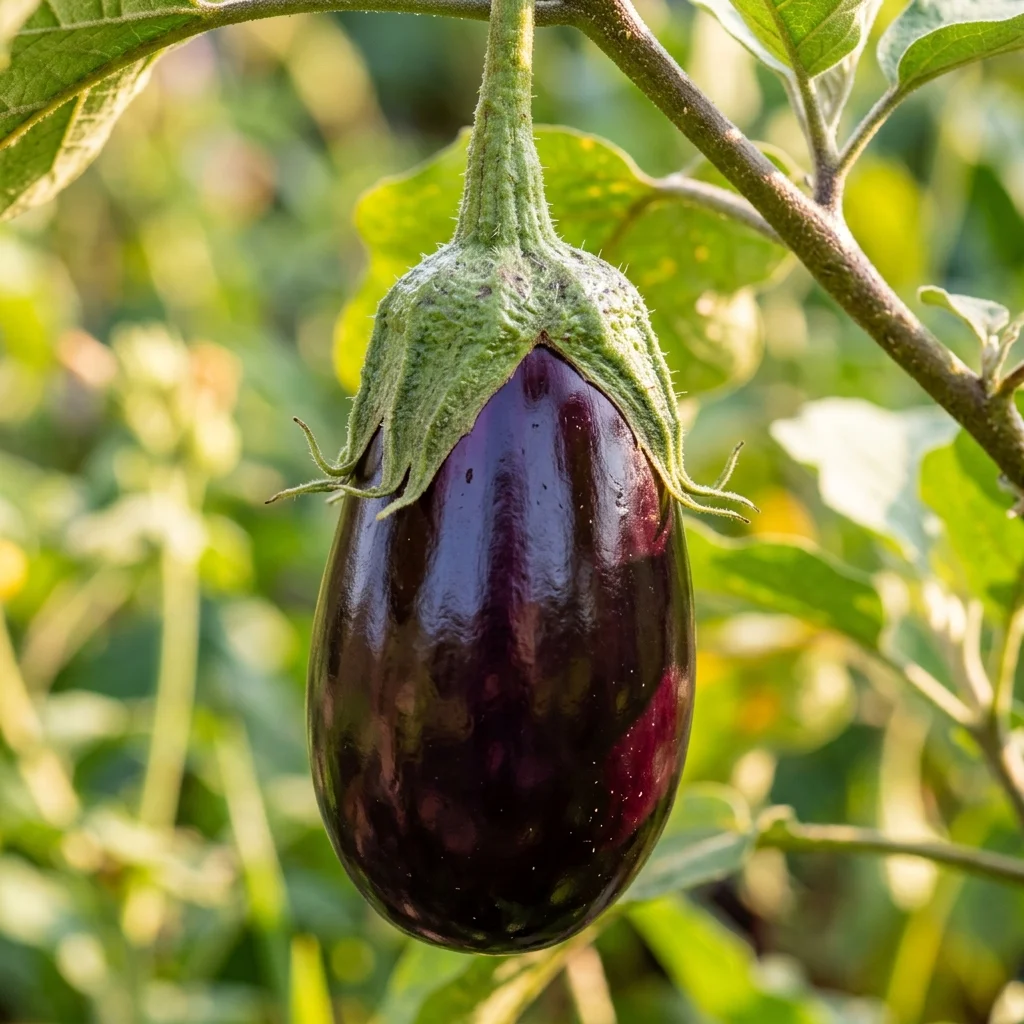
How to Identify Eggplant
Eggplant (Solanum melongena) is a highly valued edible crop globally. Recognizing its definitive vegetative and fruit/vegetable structures is key to successful companion growing and harvesting.
-
✔
Key Visual Features: Sturdy, bushy upright plants (2-4 feet tall) with large, velvety grey-green leaves.
-
✔
Leaf & Stems: Stems and leaf calyxes often carry sharp, defensive purple spines; star-like purple flowers.
-
✔
Fruit/Edible Part: Large, heavy, teardrop-shaped berries with smooth, mirror-like deep purple skin.
Complete Growing & Harvesting Guide
Follow our detailed scientific agricultural cultivation guide to keep your Eggplant thriving and high-yielding.
Common Diseases & Treatment
Verticillium Wilt
Symptoms: Lower leaves turn yellow and wilt on one side of the plant, spreading upwards and turning stems dark inside.
Flea Beetle Damage
Symptoms: Dozens of tiny, round 'shotholes' are chewed through leaf surfaces, severely weakening young seedlings.
Frequently Asked Questions
Why is my eggplant fruit turning dull and bitter?
Dull skin is a clear sign of overripeness. Harvest eggplants while they are still highly glossy and have white, tender flesh inside.
Do eggplants need support stakes?
Yes. Eggplant branches are brittle, and a heavy load of large purple fruits will easily snap stems if not staked or caged early.
Why are my eggplant flowers dropping without growing fruit?
Usually caused by extreme heat (above 35°C), low humidity, or lack of bees. Gently shake the plant to facilitate self-pollination.
Are eggplant leaves safe for dogs?
No. The leaves, stems, and green calyx of Solanum melongena contain solanine and are highly toxic to dogs and cats.