Durian Growing & Harvesting Guide
Durian (Durio zibethinus), the colossal and highly controversial 'King of Fruits' of Southeast Asia, is a legendary tropical tree. Renowned for its rich, custard-like garlic-sweet flesh and formidable spiky husk, this giant evergreen demands warm tropical climates, deep clay-loam, and net-drop harvesting.





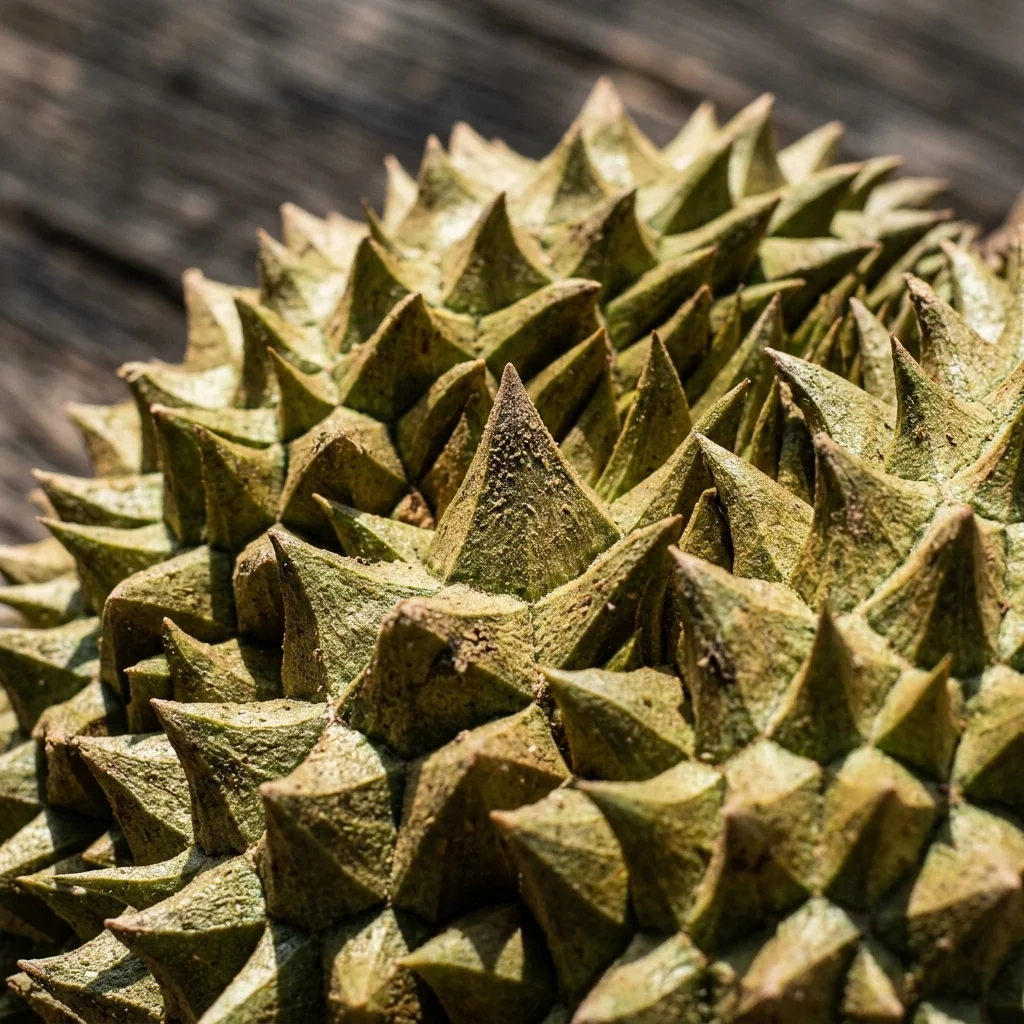
How to Identify Durian
Durian (Durio zibethinus) is a highly valued edible crop globally. Recognizing its definitive vegetative and fruit/vegetable structures is key to successful companion growing and harvesting.
-
✔
Key Visual Features: Huge tropical forest tree growing up to 80 feet with a tall straight trunk.
-
✔
Leaf & Stems: Oblong, glossy green leaves with copper-colored scales on the undersides; massive flower clusters.
-
✔
Fruit/Edible Part: Large, oval olive-green fruit covered in thick, sharp, woody pyramid-shaped spikes.
Complete Growing & Harvesting Guide
Follow our detailed scientific agricultural cultivation guide to keep your Durian thriving and high-yielding.
Common Diseases & Treatment
Patch Canker (Phytophthora palmivora)
Symptoms: Tree bark cracks and bleeds a dark reddish-brown sticky sap; leaves turn yellow, shrivel, and branches die back.
Durian Fruit Rot (Phytophthora)
Symptoms: Developing spiky fruits develop large, fuzzy brown rot patches between the spikes, leading to early sour rotting fruit drop.
Frequently Asked Questions
Why is durian harvested only when it falls naturally?
True, premium durian flavor is only achieved when the fruit ripens fully on the tree and drops naturally. Cutting early yields firm, starch-heavy pulp.
What causes the unique, intense aroma of durian?
The aroma is caused by volatile sulfur compounds (giving a custard-onion-garlic scent) combined with esters (giving fruitiness).
How can I protect my durian tree from Phytophthora patch canker?
Phytophthora is the durian's worst enemy. Plant in raised beds with sharp drainage, avoid clay waterlogging, and keep bark dry.
Is durian pulp safe for pet cats and dogs?
Yes! The soft custard-like pulp of durian is non-toxic to pets. (Note: Due to high fat, sugar, and sulfur content, feed only in tiny amounts).