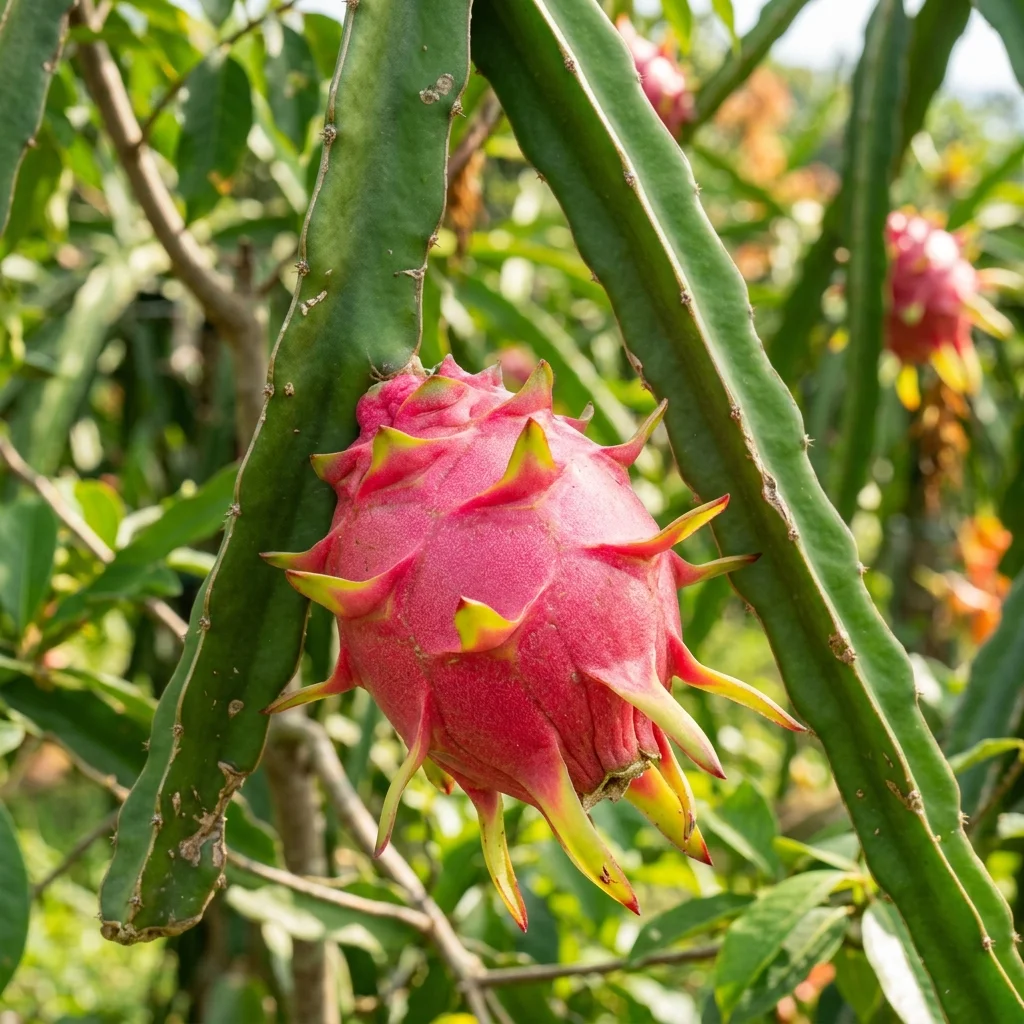
Selenicereus undatus

Dragon Fruit Growing & Harvesting Guide

Dragon Fruit (Selenicereus undatus) is the sculptural climbing marvel of the dry subtropical garden. Famous for its highly exotic, scaly bright pink fruits and spectacular night-blooming blossoms, this fast-growing climbing cactus yields abundant sweet, white-fleshed fruit under heat.


Sunlight Icon
Sunlight Full Sun (6+ hours)
Watering Icon
Watering Low / Moderate
Soil Mix Icon
Soil pH Sandy/Rich Loam (pH 6.0-7.0)
Temperature Icon
Target Temp 18°C - 40°C
Toxicity Warning Icon
Toxicity Pet Friendly (Non-toxic)
Botanical macro photography of Dragon Fruit (Selenicereus undatus) - Plant AI care database

How to Identify Dragon Fruit

Dragon Fruit (Selenicereus undatus) is a highly valued edible crop globally. Recognizing its definitive vegetative and fruit/vegetable structures is key to successful companion growing and harvesting.

  • Key Visual Features: Climbing, hemi-epiphytic cacti with thick, fleshy three-angled green stems.
  • Leaf & Stems: Wavy, spiny segment joints producing aerial roots; massive nocturnal yellow-white flowers.
  • Fruit/Edible Part: Large, oval bright pink or yellow berries covered in green leaf-like bracts (scales) with sweet black-seeded pulp.
💡 Plant AI Tip: Snap a photo with Plant AI to identify garden veggies and diagnose leaf spot diseases in 1 second.

Complete Growing & Harvesting Guide

Follow our detailed scientific agricultural cultivation guide to keep your Dragon Fruit thriving and high-yielding.

Water moderately once every 7-10 days. Stems store abundant water. Ensure soil dries fully between waterings to prevent stem rot.
Prune annually in late winter. Cut away weak lower lateral branches to force growth onto the main trunk and top fruiting canopy.
Apply balanced organic fruit fertilizer containing well-rotted manure and potash once every 2 months during spring and summer.
Thrives in bright full sun. Requires 6+ hours of direct sunlight. Protect young stem segment joints from extreme sun scald.
Requires fast-draining sandy loam rich in organic compost (pH 6.0-7.0). Highly sensitive to soggy heavy clay.
Plant stem cuttings in spring next to a robust support pole. Secure climbing stems to trellis as they produce aerial roots.
Thrives in warm, dry climates. Highly sensitive to frost; protect stems if night temperatures drop below 0°C.
Space trellis support posts 8-10 feet apart to allow full canopy expansion of the hanging cactus arms.
Watch for scale insects, mealybugs, and birds. Apply organic neem oil spray and protect ripening fruits with fine bird netting.
Susceptible to Stem Canker and Soft Rot. Avoid overwatering and prune to maintain excellent internal airflow.
Harvest when fruits turn completely bright pink and the leaf-like green scales begin to wither slightly. Cut clean at base.

Is your Dragon Fruit leaves turning yellow, spotted or dying?

Protect your kitchen garden. Take a photo with Plant AI to diagnose pests and crop diseases instantly.

Diagnose My Crop

Common Diseases & Treatment

Stem Canker (Neoscytalidium)

Symptoms: Stems show small, circular, orange-yellow spots that expand into large brown, corky lesions, weakening the segment joint.

Action: Prune and destroy infected stems immediately, avoid overhead watering, and spray organic copper proactive bactericide.

Bacterial Soft Rot

Symptoms: Stem segments turn pale green, become soft, watery, and rot rapidly with a foul decomposed smell in wet weather.

Action: Improve soil drainage, reduce watering, remove infected segments with sterilized blades, and treat wounds with sulfur dust.

Frequently Asked Questions

Why is my dragon fruit not flowering?

Inadequate sunlight, lack of support trellis, or nitrogen over-fertilization are common causes. Dragon fruits must reach a heavy canopy weight before blooming.

Does dragon fruit require cross-pollination?

Many varieties are self-fertile, but hand-pollinating at night using a soft brush helps increase fruit size and yield.

How fast does a dragon fruit cactus grow?

Very fast! Stems can grow 1-2 inches per day in summer, and cuttings will start producing fruit within 12 to 18 months.

Are dragon fruit stems safe for dogs?

Yes. Unlike many desert cacti, dragon fruit stems and fruits are completely non-toxic and pet-safe according to ASPCA guidelines.

Harvest bountiful greens. Grow healthy edibles today!

Get Started for Free