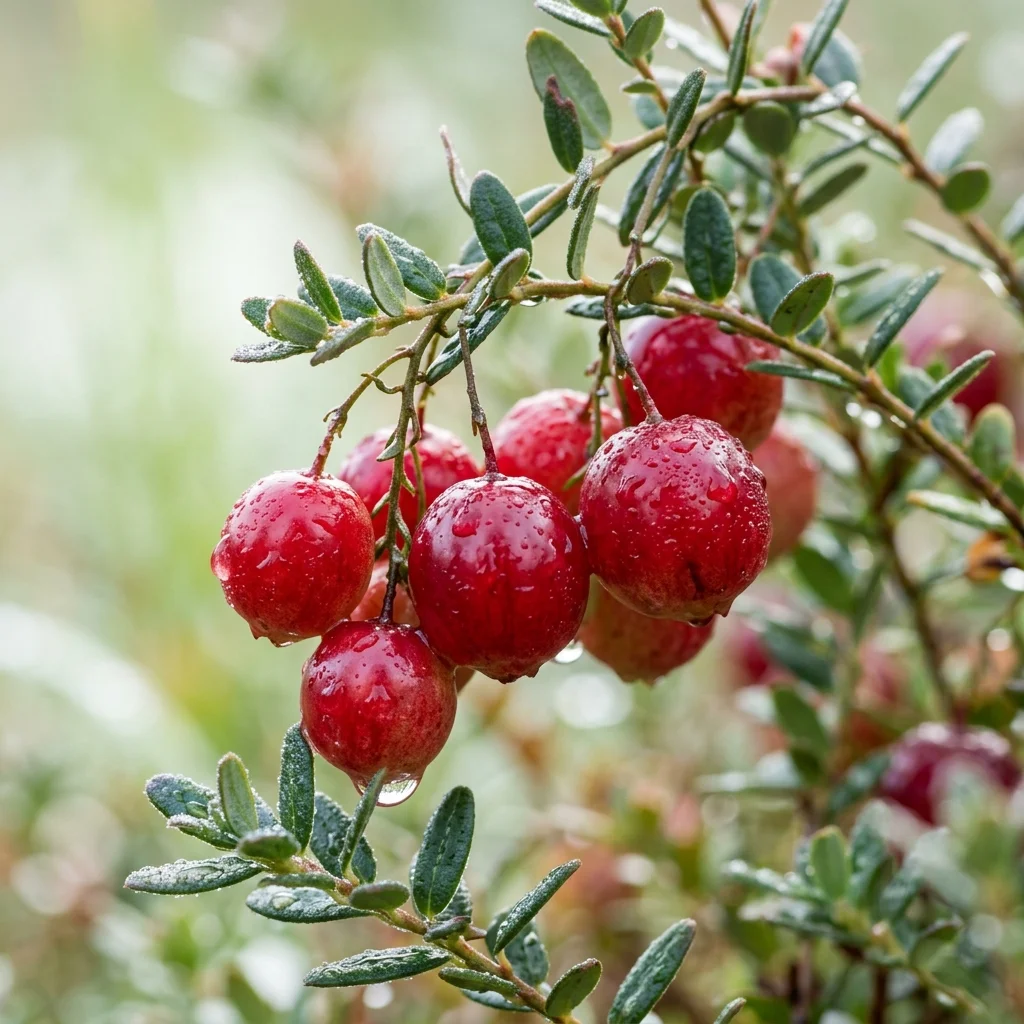
Vaccinium macrocarpon

Cranberry Growing & Harvesting Guide

Cranberry (Vaccinium macrocarpon) is the high-energy, antioxidant-rich jewel of the wetland garden. Celebrated for its bright red, tart globose fruits and sprawling evergreen habits, this highly specialized plant brings unique interest to acidic garden beds.


Sunlight Icon
Sunlight Full Sun (6-8 hours)
Watering Icon
Watering Deep / High Demand
Soil Mix Icon
Soil pH Sandy Peat/Very Acidic (pH 4.0-5.0)
Temperature Icon
Target Temp -30°C - 30°C
Toxicity Warning Icon
Toxicity Pet Friendly
Botanical macro photography of Cranberry (Vaccinium macrocarpon) - Plant AI care database

How to Identify Cranberry

Cranberry (Vaccinium macrocarpon) is a highly valued edible crop globally. Recognizing its definitive vegetative and fruit/vegetable structures is key to successful companion growing and harvesting.

  • Key Visual Features: Low-growing, trailing evergreen woody vine mats sprawling across boggy soils.
  • Leaf & Stems: Small, narrow oblong green leaves turning bronze in winter; small nodding pink flowers.
  • Fruit/Edible Part: Round, tart red berries with 4 hollow air chambers, turning from green to bright crimson.
💡 Plant AI Tip: Snap a photo with Plant AI to identify garden veggies and diagnose leaf spot diseases in 1 second.

Complete Growing & Harvesting Guide

Follow our detailed scientific agricultural cultivation guide to keep your Cranberry thriving and high-yielding.

Irrigate deeply, providing 1-2 inches of water weekly. Cranberries demand high soil moisture and must never dry out.
Prune in late winter. Focus on removing low root runners and dead leaves to promote upright fruiting stems.
Apply acid-specific organic fertilizer in early spring. Avoid nitrogen excess which causes leaf sprawl.
Requires 6-8 hours of direct daily sunlight. Essential for flower production and sweetening the acidic pulp.
Deep peat moss mixed with clean river sand. Extremely acid soil is mandatory (pH 4.0-5.0).
Plant rooted cuttings in spring. Cover with a 1-inch layer of clean sand to suppress weeds and root runners.
Extremely cold-hardy down to -30°C. Protect delicate spring flowers from frost snaps.
Space rooted cuttings 12-18 inches apart. They will quickly sprawl into a dense green mat.
Prone to cranberry fruitworms, weevils, and scale. Spray organic insecticidal soap under leaves.
Susceptible to Botrytis Rot and Leaf Spot. Avoid overhead watering to keep foliage dry.
Harvest cranberries in autumn when they turn completely bright crimson-red and bounce on hard surfaces.

Is your Cranberry leaves turning yellow, spotted or dying?

Protect your kitchen garden. Take a photo with Plant AI to diagnose pests and crop diseases instantly.

Diagnose My Crop

Common Diseases & Treatment

Botrytis Rot (Gray Mold)

Symptoms: Foliage and ripening cranberries develop fuzzy gray mold coating, causing fruit shriveling and decay.

Action: Improve canopy spacing, prune dead leaves, avoid overhead watering, and spray copper fungicide.

Leaf Spot (Cercospora)

Symptoms: Leaves develop small dark circular spots, turning yellow and falling prematurely, reducing vine vigor.

Action: Improve spacing for airflow, rake fallen leaves, and spray copper fungicide in early spring.

Frequently Asked Questions

Do I need to flood my garden to grow cranberries?

No! In commercial farming, flooding is only used for easy wet-harvesting and winter protection. In gardens, grow them in normal moist peat beds.

How long does it take for cranberries to bear fruit?

Rooted cranberry cuttings usually start producing small crops 2-3 years after planting, with full mat yield in year 5.

What is the best soil pH for cranberries?

Cranberries require extremely acid soil (pH 4.0-5.0). Grow them in raised peat beds or large pots using pure sphagnum peat moss.

Are cranberries safe for dogs to eat?

Yes! Cranberries are non-toxic and highly beneficial for a dog's urinary tract. Feed them raw or cooked without added sugar.

Harvest bountiful greens. Grow healthy edibles today!

Get Started for Free