Coconut Growing & Harvesting Guide
Coconut (Cocos nucifera), the classic symbol of the tropical coastline, is a magnificent palm prized for its highly versatile fruits. Treasured for its sweet water, rich white kernel, and architectural feathery leaves, this sun-drenched palm thrives on sandy soil and high warmth.




How to Identify Coconut
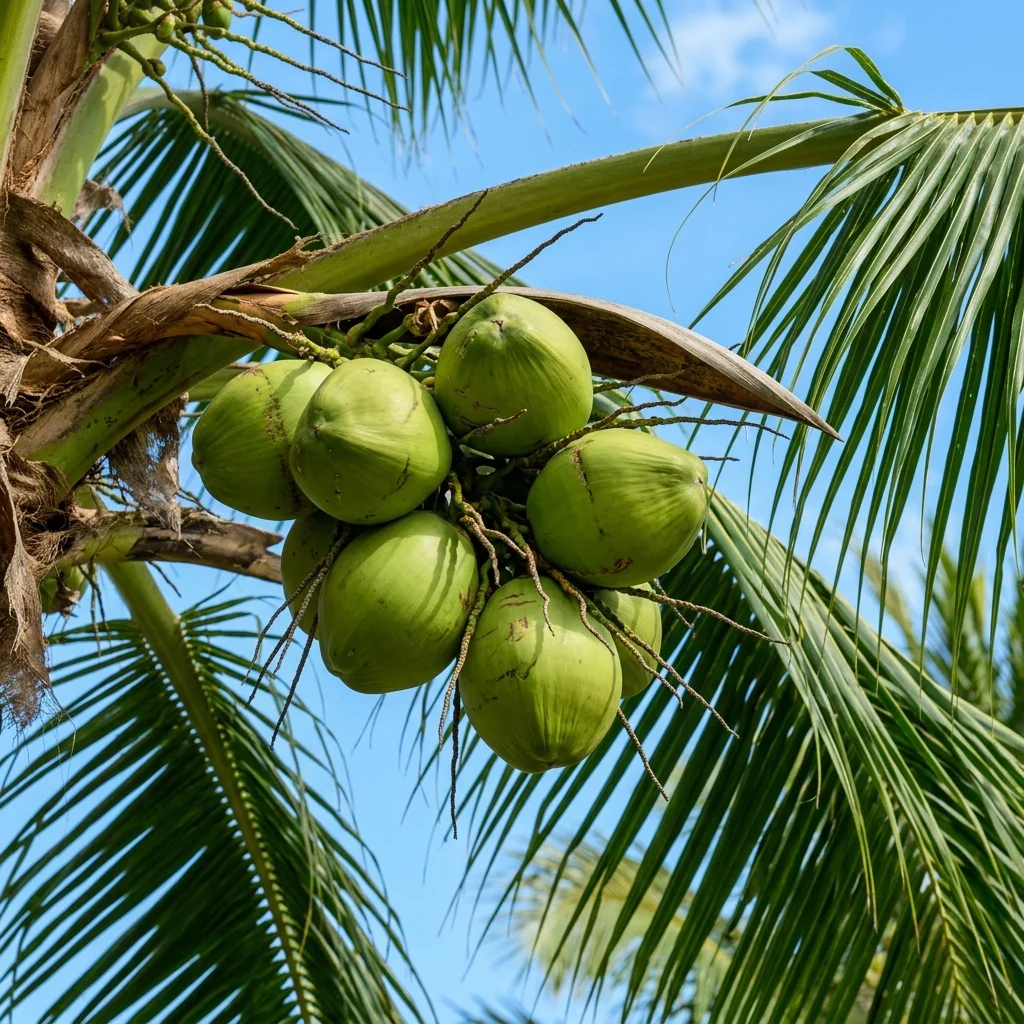
Coconut (Cocos nucifera) is a highly valued edible crop globally. Recognizing its definitive vegetative and fruit/vegetable structures is key to successful companion growing and harvesting.
-
✔
Key Visual Features: Tall, slender, slightly curved trunks with distinctive rings left by old leaves.
-
✔
Leaf & Stems: Very large, feathery pinnate leaves clustered in a crown at the top; fragrant cream flowers on large branches.
-
✔
Fruit/Edible Part: Large, oval or round drupes with a thick fibrous husk enclosing a hard woody shell filled with sweet water and white kernel.
Complete Growing & Harvesting Guide
Follow our detailed scientific agricultural cultivation guide to keep your Coconut thriving and high-yielding.
Common Diseases & Treatment
Lethal Yellowing (Phytoplasma)
Symptoms: Immature coconuts drop early, flower stalks blacken, lower leaves turn bright yellow and wilt rapidly, leading to crown collapse.
Bud Rot (Phytophthora)
Symptoms: Youngest central leaves turn pale green, wilt, and rot at the base, leading to complete crown collapse and palm death.
Frequently Asked Questions
How long does it take for a coconut sprout to grow?
Coconuts sprouts can take 3 to 6 months to emerge when kept in warm, moist sandy beds under full sun.
How many years does coconut palm take to fruit?
Dwarf varieties can start bearing fruit within 4 to 5 years, while tall varieties take 8 to 10 years after planting.
Can I grow coconut palm indoors?
Coconuts make beautiful house plants for 1-2 years, but eventually decline indoors due to inadequate light intensity and humidity.
Is coconut water safe for household pets?
Yes. Fresh coconut water and ripe kernels are completely non-toxic and pet-safe in small quantities according to ASPCA guidelines.