Celeriac Growing & Harvesting Guide
Celeriac (Apium graveolens var. rapaceum), the earthy gnarled treasure of winter root cellars, is a highly rewarding crop. Prized for its massive, celery-flavored bulbous root crown and outstanding storage durability, this slow-growing biennial demands long seasons, fertile beds, and lower leaf pruning.




How to Identify Celeriac
Celeriac (Apium graveolens var. rapaceum) is a highly valued edible crop globally. Recognizing its definitive vegetative and fruit/vegetable structures is key to successful companion growing and harvesting.
-
✔
Key Visual Features: Low-growing rosette of dark green compound leaves resembling celery stalks.
-
✔
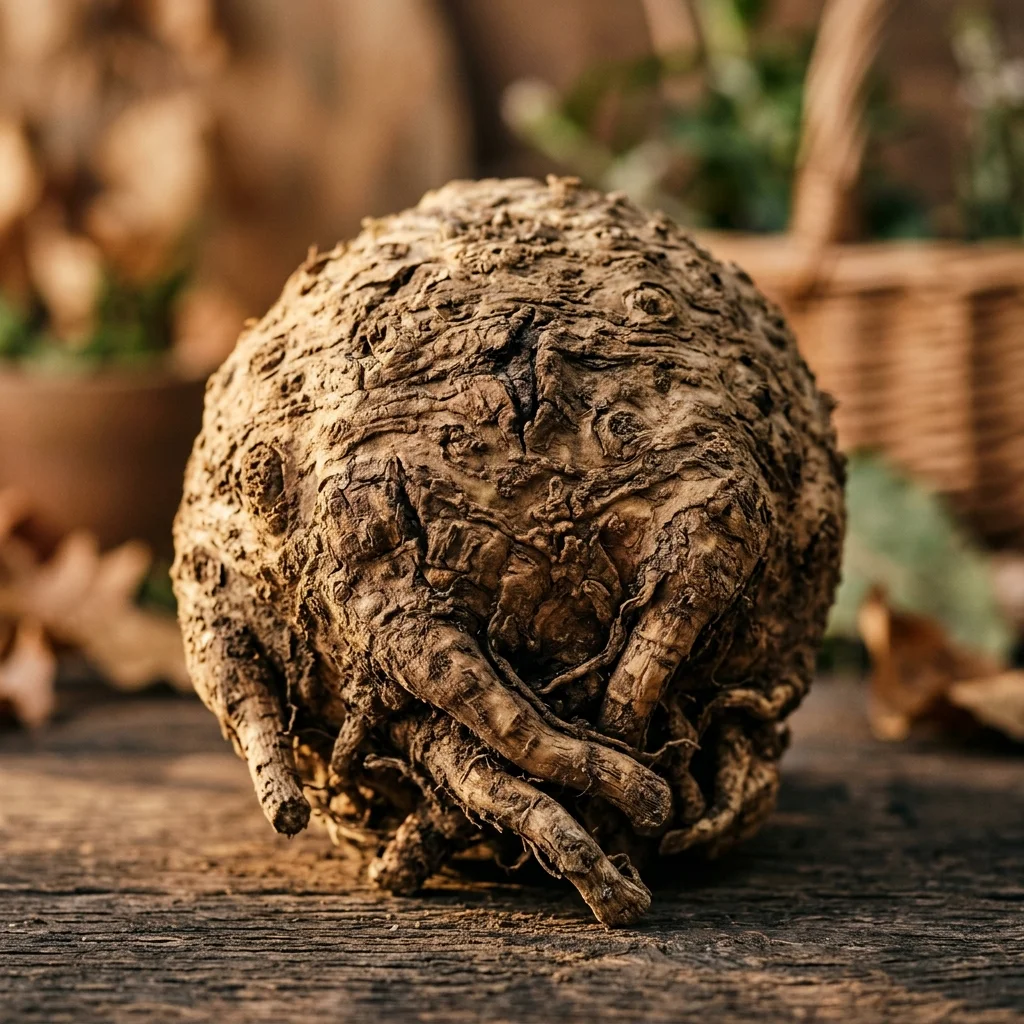
Leaf & Stems: A thick, swollen, woody hypocotyl forming a rough gnarled crown at the soil surface.
-
✔
Fruit/Edible Part: A large, globular, rough brown bulbous root crown with a dense white fleshy celery-flavored interior.
Complete Growing & Harvesting Guide
Follow our detailed scientific agricultural cultivation guide to keep your Celeriac thriving and high-yielding.
Common Diseases & Treatment
Septoria Late Blight (Septoria)
Symptoms: Foliage developments numerous small, circular brown spots with tiny black dots (fruiting bodies), causing leaf yellowing and rot.
Root Scab (Streptomyces)
Symptoms: The gnarled outer skin of the swollen root bulb develops dry, corky, dark brown scabby lesions, degrading look and storage.
Frequently Asked Questions
Why is my celeriac bulb remaining small and woody?
Celeriac requires a long 200-day season with high moisture and heavy feeding. Dry soil, nitrogen deficiency, or overcrowding stops bulb expansion.
Should I cut the lower leaves of celeriac?
Yes! As celeriac grows, prune away the outer, lower drooping leaves. This exposes the top crown of the bulb, triggering wider growth.
How do I peel and prepare gnarled celeriac for cooking?
Cut off top leaves and root base, then use a sharp chef's knife to slice away the rough, gnarled brown skin, exposing the white interior.
Is celeriac safe for dogs and cats to eat?
Yes! Plain, cooked celeriac is completely safe and non-toxic for dogs and cats, offering a healthy celery-flavored source of dietary fiber.