Brassica oleracea var. botrytis

Cauliflower Growing & Harvesting Guide

Cauliflower (Brassica oleracea var. botrytis) is the elegant, cloud-like marvel of the cool-season vegetable patch. Treasured for its dense, pristine white flower curd and sweet, delicate brassica flavor, this high-yield crop requires careful sun-shielding and consistent fertility.


Sunlight Icon
Sunlight Full Sun (6+ hours)
Watering Icon
Watering Deep / Regular
Soil Mix Icon
Soil pH Rich, Fast-Draining (pH 6.0-7.0)
Temperature Icon
Target Temp 15°C - 20°C
Toxicity Warning Icon
Toxicity Pet Friendly (Non-toxic)
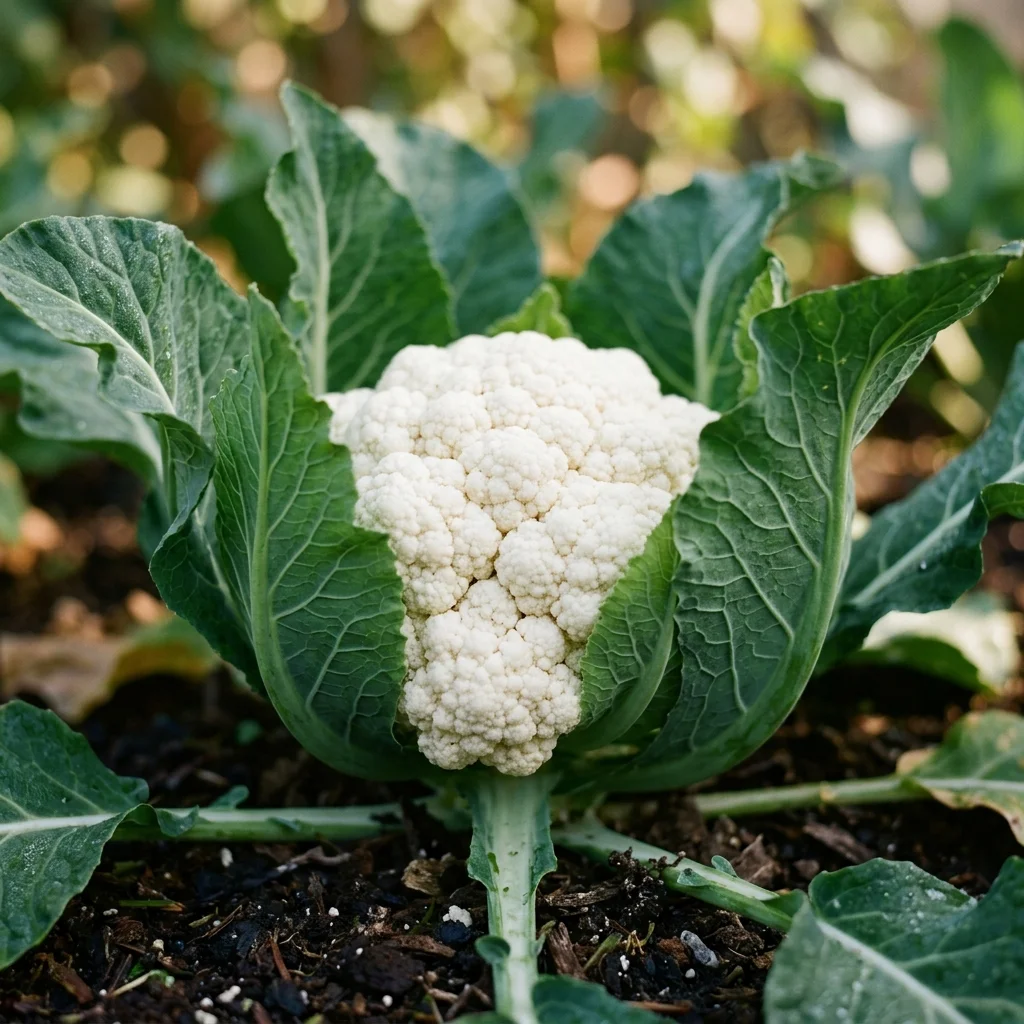
Botanical macro photography of Cauliflower (Brassica oleracea var. botrytis) - Plant AI care database

How to Identify Cauliflower

Cauliflower (Brassica oleracea var. botrytis) is a highly valued edible crop globally. Recognizing its definitive vegetative and fruit/vegetable structures is key to successful companion growing and harvesting.

  • Key Visual Features: Large, upright herbaceous plants with massive, elongated, wavy dark green leaves.
  • Leaf & Stems: A single compact, cloud-like central curd wrapped and protected by massive outer leaves.
  • Fruit/Edible Part: Prismatic, dense white composite flower curd made of hundreds of tiny, undeveloped bud clusters.
💡 Plant AI Tip: Snap a photo with Plant AI to identify garden veggies and diagnose leaf spot diseases in 1 second.

Complete Growing & Harvesting Guide

Follow our detailed scientific agricultural cultivation guide to keep your Cauliflower thriving and high-yielding.

Water deeply once a week. The plant has a high transpiration rate and requires soil that remains consistently moist but never soggy.
Prune only the yellowing or diseased lowest foliage. Perform 'blanching' by tying the large outer leaves together over the curd when it reaches 2-3 inches.
Heavy feeder. Apply balanced organic compost high in nitrogen and potassium once every 3-4 weeks. Extremely sensitive to boron deficiency.
Requires full sun, demanding 6+ hours of direct light daily. However, shade the developing curd from direct noon sun to keep it white.
Needs deep, fast-draining sandy loam rich in organic compost (pH 6.0-7.0). highly sensitive to compacted soil.
Sow indoors 6 weeks before last frost. Transplant outdoors once soil is workable. Keep roots fully intact during transplanting.
Thrives in narrow cool climates. Ideal temperature range is 15°C-20°C. High heat causes curds to become loose, leafy, and bitter.
Space plants 18-24 inches apart. Ample spacing is vital for broad leaf expansion and keeping curds well-ventilated.
Prone to cabbage loopers, aphids, and flea beetles. Apply organic neem oil spray or physical row covers proactively.
Susceptible to Black Rot and Clubroot. Practice 4-year crop rotation and ensure excellent soil drainage.
Harvest when the curd is compact, firm, 6-8 inches wide, and completely white. Cut stem clean below protective inner leaves.

Is your Cauliflower leaves turning yellow, spotted or dying?

Protect your kitchen garden. Take a photo with Plant AI to diagnose pests and crop diseases instantly.

Diagnose My Crop

Common Diseases & Treatment

Black Rot (Bacterial)

Symptoms: Leaves show distinct yellow V-shaped lesions on edges, with leaf veins turning black, leading to rapid stem decay.

Action: Purchase certified pathogen-free seeds, avoid overhead watering, and spray organic copper proactively in wet seasons.

Hollow Stem (Boron Deficiency)

Symptoms: Central stem develops a hollow, dark brown, corky cavity, and curds turn brown and bitter.

Action: Apply organic seaweed fertilizer or borax-based micronutrient spray proactively at the first sign of rapid leaf growth.

Frequently Asked Questions

Why is my cauliflower curd turning yellow or purple?

Direct sun exposure causes curds to develop natural pigments (yellow or purple). Tie the large outer leaves over the curd to 'blanch' it.

How long does it take for cauliflower to harvest?

It takes about 50 to 80 days from transplanting to harvest, depending on the cultivar and cool climate stability.

Can I grow cauliflowers in large patio containers?

Yes! Grow in a 5-gallon pot filled with premium potting soil, provide full sun, and ensure consistent deep watering.

Is cooked cauliflower safe for pet cats?

Yes. Cauliflower is completely non-toxic and pet-safe in small quantities. Avoid adding salt, butter, or garlic when serving.

Harvest bountiful greens. Grow healthy edibles today!

Get Started for Free