Daucus carota subsp. sativus

Carrot Growing & Harvesting Guide

Carrot (Daucus carota subsp. sativus) is the crunchy, sweet crown jewel of the home root bed. Prized for its deeply colored, high-sugar orange taproots and delicate feathery leaves, this cool-season crop requires loose, stone-free sandy soils to grow straight, sweet, and split-free roots.


Sunlight Icon
Sunlight Full Sun (6+ hours)
Watering Icon
Watering Deep / Regular
Soil Mix Icon
Soil pH Loose, Sandy Loam (pH 6.0-6.8)
Temperature Icon
Target Temp 12°C - 24°C
Toxicity Warning Icon
Toxicity Pet Friendly (Non-toxic)
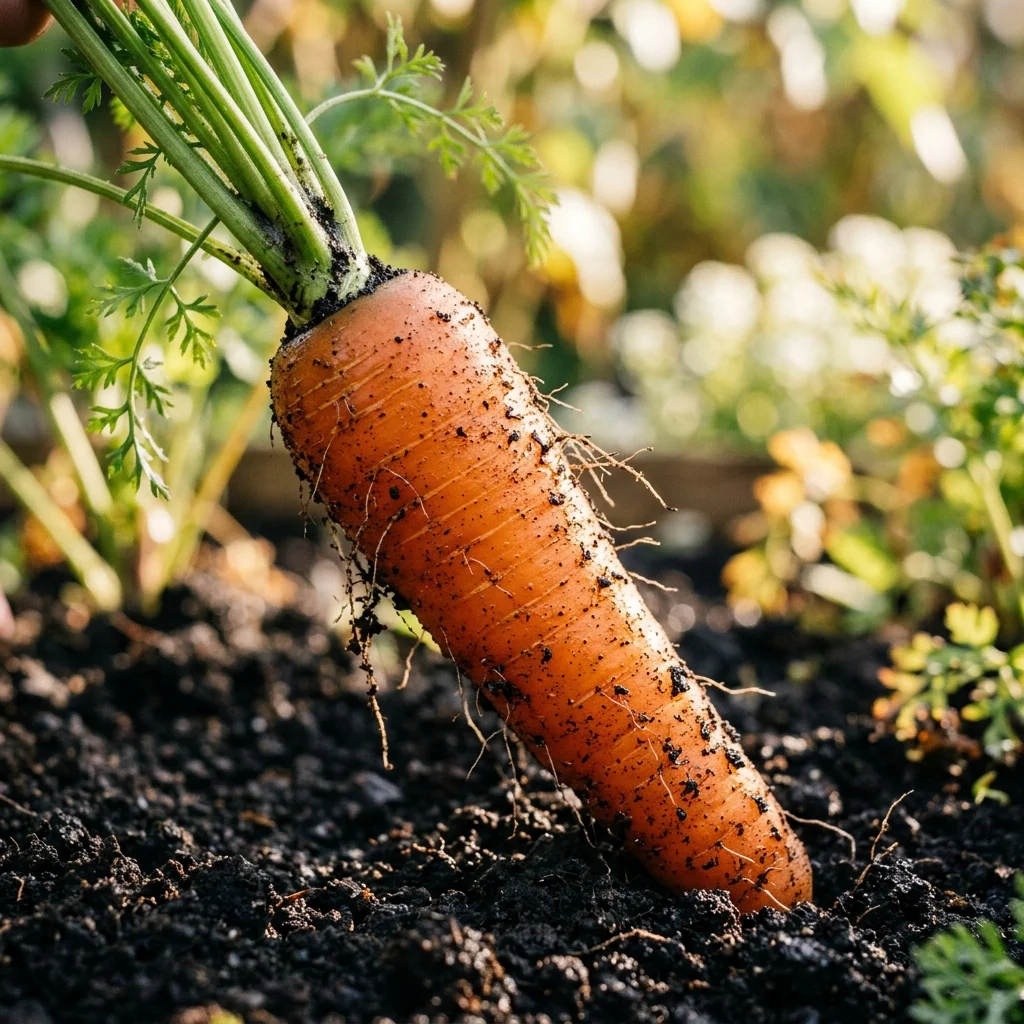
Botanical macro photography of Carrot (Daucus carota subsp. sativus) - Plant AI care database

How to Identify Carrot

Carrot (Daucus carota subsp. sativus) is a highly valued edible crop globally. Recognizing its definitive vegetative and fruit/vegetable structures is key to successful companion growing and harvesting.

  • Key Visual Features: Low-growing rosettes of highly delicate, feathery green compound leaves.
  • Leaf & Stems: Highly divided bipinnate feathery green leaves; slender green stems developing from a taproot.
  • Fruit/Edible Part: A single elongated, cylindrical or tapered orange or yellow sweet taproot, highly crisp.
💡 Plant AI Tip: Snap a photo with Plant AI to identify garden veggies and diagnose leaf spot diseases in 1 second.

Complete Growing & Harvesting Guide

Follow our detailed scientific agricultural cultivation guide to keep your Carrot thriving and high-yielding.

Water deeply once a week, receiving 1 to 1.5 inches of water. Maintain exceptionally consistent soil moisture to prevent root cracking.
Prune away dead outer foliage. Thin young carrot seedlings diligently when they reach 2 inches tall to ensure proper root room.
Avoid high-nitrogen fertilizers which cause root branching (forking). Apply phosphorus-potassium organic food instead.
Requires full sun, demanding 6+ hours of direct light daily. Shaded locations result in weak foliar growth and thin roots.
Demands extremely loose, deep, stone-free sandy loam (pH 6.0-6.8). Any stones or hard clay will cause roots to fork and bend.
Sow seeds directly outdoors in early spring. Plant seeds very shallow (1/4 inch) in moist, fine soil. Cover with burlap to retain moisture.
Thrives in cool temperate climates. Ideal temperature range is 12°C-24°C. Freezing temperatures sweeten root sugars.
Thin carrots to 3 inches apart. Crowded plants fail to swell and produce thin, tangled, unharvestable roots.
Prone to carrot rust flies, woodlice, and nematodes. Apply organic row covers immediately after planting.
Susceptible to Cavity Spot and Leaf Blight. Avoid overwatering and practice strict 4-year crop rotation.
Harvest when carrot crowns reach 1/2 to 1 inch in diameter at the soil line. Pull gently after wetting soil to prevent snapping.

Is your Carrot leaves turning yellow, spotted or dying?

Protect your kitchen garden. Take a photo with Plant AI to diagnose pests and crop diseases instantly.

Diagnose My Crop

Common Diseases & Treatment

Carrot Rust Fly Infestation

Symptoms: Leaves turn yellow-red, and taproots develop winding, rusty-brown tunnels chewed by small white larvae, ruining the root.

Action: Install fine mesh floating row covers proactively, harvest before late summer generation, and rotate crops annually.

Cavity Spot (Pythium)

Symptoms: Taproots develop small, oval, sunken, dark brown horizontal cavities that become entry points for soil rot.

Action: Improve soil drainage, avoid high-nitrogen fertilizers, apply agricultural lime, and avoid wet heavy soils.

Frequently Asked Questions

Why are my carrots growing multiple branched roots?

This is 'forking', caused by planting in stony or heavy clay soils, using fresh manure, or damaging the taproot during transplanting.

How do I make my carrot seeds germinate faster?

Carrot seeds germinate slowly. Keep soil consistently moist by covering the seedbed with a damp burlap sack or board for 7-10 days.

Does frost improve the sweetness of carrots?

Yes! Light winter frosts trigger the plant to convert starches into sugars as a natural antifreeze, producing exceptionally sweet roots.

Are carrot tops (green leaves) safe for dogs?

Yes. Carrot roots and feathery green leaves are completely non-toxic and pet-safe. They are high in vitamins and fiber.

Harvest bountiful greens. Grow healthy edibles today!

Get Started for Free