Brassica oleracea var. capitata

Cabbage Growing & Harvesting Guide

Cabbage (Brassica oleracea var. capitata) is the robust, leafy workhorse of the traditional kitchen garden. Prized for its massive, tightly packed rosettes of sweet, crisp green leaves, this extremely hardy cool-season crop rewards the grower with long-lasting harvests and deep nutrition.


Sunlight Icon
Sunlight Full Sun (6+ hours)
Watering Icon
Watering Deep / Consistent
Soil Mix Icon
Soil pH Rich, Moisture-Retentive (pH 6.0-6.8)
Temperature Icon
Target Temp 12°C - 20°C
Toxicity Warning Icon
Toxicity Pet Friendly (Non-toxic)
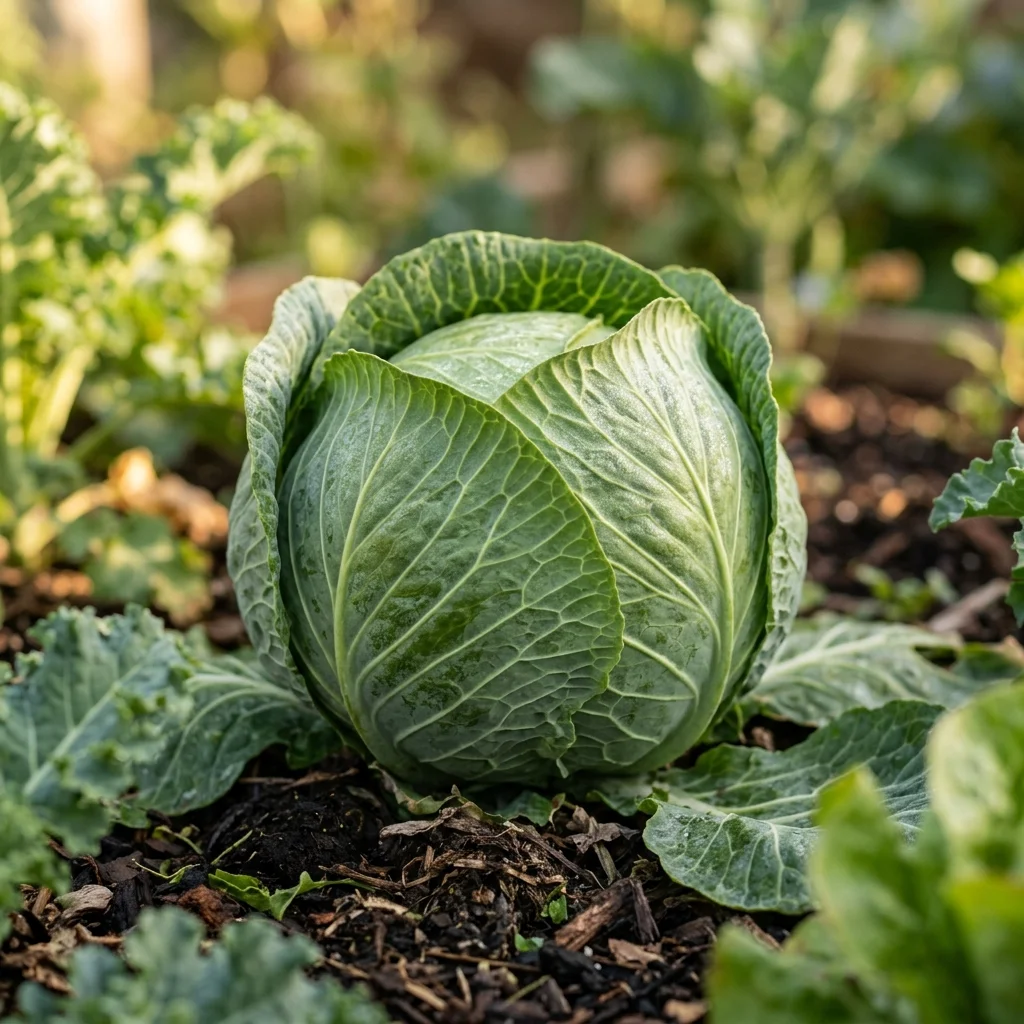
Botanical macro photography of Cabbage (Brassica oleracea var. capitata) - Plant AI care database

How to Identify Cabbage

Cabbage (Brassica oleracea var. capitata) is a highly valued edible crop globally. Recognizing its definitive vegetative and fruit/vegetable structures is key to successful companion growing and harvesting.

  • Key Visual Features: Low-growing, compact herbaceous plants forming a dense, heavy round rosette head.
  • Leaf & Stems: Thick, smooth, wavy blue-green leaves with prominent ribs, covered in a natural powdery wax.
  • Fruit/Edible Part: A tightly packed globular or oval head of succulent green or purple leaves, highly crisp and sweet.
💡 Plant AI Tip: Snap a photo with Plant AI to identify garden veggies and diagnose leaf spot diseases in 1 second.

Complete Growing & Harvesting Guide

Follow our detailed scientific agricultural cultivation guide to keep your Cabbage thriving and high-yielding.

Requires consistent deep watering, receiving 1 to 1.5 inches of water per week. Fluctuations in moisture cause developing heads to split.
Prune away only completely dead lower leaves that rest on damp soil to prevent fungal infections and slug hiding spots.
Heavy feeder. Apply nitrogen-rich organic fertilizer or well-rotted manure during the initial leaf-growth phase.
Requires full sun, demanding 6+ hours of direct light daily. Shaded locations result in loose, leafy, non-heading plants.
Thrives in fertile, fast-draining sandy loam rich in organic compost (pH 6.0-6.8) with high moisture-retention capacity.
Sow seeds indoors 6-8 weeks before last frost. Transplant outdoors 4 weeks later, burying seedlings deep up to first leaf.
Thrives in cool climates. Ideal temperature range is 12°C-20°C. Highly frost-tolerant; light frost improves leaf sweetness.
Space plants 12-18 inches apart. Crowded plants fail to form tight central heads and are highly prone to pest infestations.
Prone to cabbage moths, aphids, flea beetles, and slugs. Use physical row covers and apply organic neem oil spray.
Susceptible to Clubroot, Black Rot, and Fusarium Yellows. Practice 4-year crop rotation and maintain excellent soil hygiene.
Harvest when the head feels rock-solid and firm to squeeze. Cut at the base with a sharp knife, leaving a few outer leaves for protection.

Is your Cabbage leaves turning yellow, spotted or dying?

Protect your kitchen garden. Take a photo with Plant AI to diagnose pests and crop diseases instantly.

Diagnose My Crop

Common Diseases & Treatment

Head Splitting (Physiological)

Symptoms: The tight central leaf head splits open vertically in late summer, exposing the interior and causing rapid rot.

Action: Maintain consistent soil moisture, avoid heavy nitrogen feeding near harvest, and prune root roots slightly if heavy rain is forecast.

Clubroot (Fungal)

Symptoms: Foliage wilts on hot days, turns yellow-red, and roots show massive, distorted, club-like galls that choke nutrient flow.

Action: Raise soil pH above 7.2 using agricultural lime, practice strict 4-year brassica crop rotation, and discard infected roots.

Frequently Asked Questions

Why are there tiny holes chewed all over my cabbage leaves?

Cabbage worms or flea beetles are the culprits. Hand-pick worms, apply organic BT proactively, and install physical mesh row covers.

Can I grow cabbage in the fall garden?

Yes! Cabbages are highly cold-hardy. Start seeds in mid-summer for transplanting in late summer, harvesting sweet heads after fall frosts.

How do I prevent my cabbage heads from splitting?

Maintain exceptionally consistent watering. If heavy rain is forecast near harvest, twist the plant half a turn to break some roots and limit water uptake.

Is green cabbage leaf safe for dogs?

Yes. Cabbage leaves are completely non-toxic and pet-safe. Serve in moderation as it can cause mild gas in pets.

Harvest bountiful greens. Grow healthy edibles today!

Get Started for Free