Rubus fruticosus

Blackberry Growing & Harvesting Guide

Blackberry (Rubus fruticosus) is the robust, high-yielding powerhouse of the summer fruit garden. Highly prized for its glossy, deep purple-black aggregate fruits and rapid growth habit, this hardy bramble is a sweet summer essential.


Sunlight Icon
Sunlight Full Sun (6-8 hours)
Watering Icon
Watering Moderate / Regular
Soil Mix Icon
Soil pH Rich, Loamy Soil (pH 5.5-6.5)
Temperature Icon
Target Temp 15°C - 28°C
Toxicity Warning Icon
Toxicity Pet Friendly (Fruits)
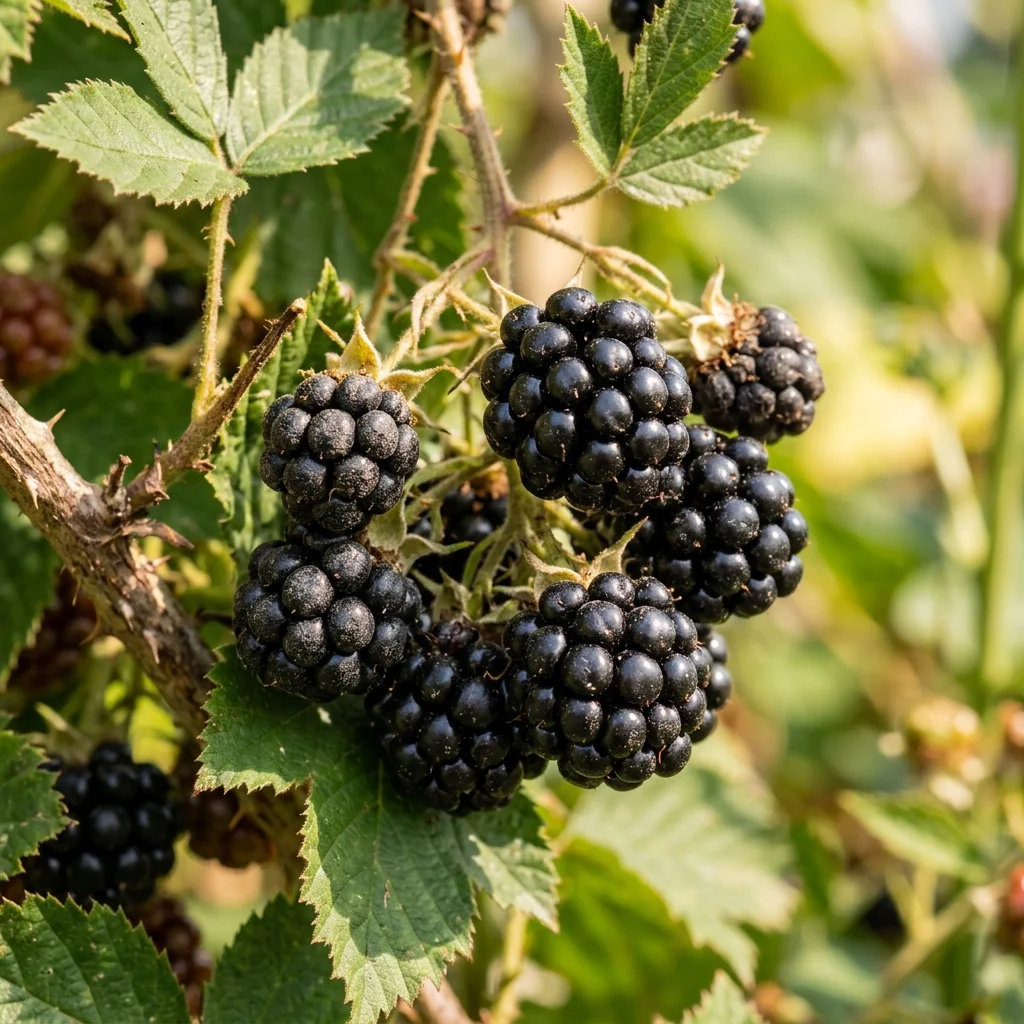
Botanical macro photography of Blackberry (Rubus fruticosus) - Plant AI care database

How to Identify Blackberry

Blackberry (Rubus fruticosus) is a highly valued edible crop globally. Recognizing its definitive vegetative and fruit/vegetable structures is key to successful companion growing and harvesting.

  • Key Visual Features: Robust, arching, or trailing woody biennial canes (brambles) carrying sharp, hooked thorns.
  • Leaf & Stems: Palmate compound dark green leaves with 3 to 5 serrated leaflets; clusters of white-pink blossoms.
  • Fruit/Edible Part: Glossy, aggregate black fruits that retain the soft white solid core (torus) inside when harvested.
💡 Plant AI Tip: Snap a photo with Plant AI to identify garden veggies and diagnose leaf spot diseases in 1 second.

Complete Growing & Harvesting Guide

Follow our detailed scientific agricultural cultivation guide to keep your Blackberry thriving and high-yielding.

Provide 1-1.5 inches of water weekly. Ensure consistent moisture during fruit set to prevent bitter, dry berries.
Prune trailing canes yearly. Cut spent fruited canes to the soil in autumn. Support long canes on wire trellises.
Topdress heavily with aged compost or organic vegetable fertilizer in early spring as new canes emerge.
Demands full, hot, direct sunlight (6-8 hours daily). Shade significantly reduces berry sugars and yield.
Rich, fertile, deeply organic loam with outstanding drainage. Avoid planting in soils prone to standing water.
Plant bare-root trailing or erect cultivars in early spring. Space them 3-4 feet apart near supportive wire fencing.
broadly hardy. Prefers warm growing seasons (15°C-28°C); requires winter chill hours to trigger spring blooming.
Space erect varieties 3 feet apart; space trailing varieties 4-6 feet apart along a sturdy trellis system.
Prone to raspberry crown borers, Japanese beetles, and birds. Netting is highly recommended during ripening.
Susceptible to Anthracnose (fungal) and Rosette (Double Blossom) disease. Prune to ensure high air circulation.
Harvest when berries are fully plump, deep matte-black, and pull away easily. Shiny black berries are still sour.

Is your Blackberry leaves turning yellow, spotted or dying?

Protect your kitchen garden. Take a photo with Plant AI to diagnose pests and crop diseases instantly.

Diagnose My Crop

Common Diseases & Treatment

Anthracnose (Fungal)

Symptoms: Leaves and canes develop small, purple-bordered grey spots, causing canes to split and fruit to dry.

Action: Prune out infected canes immediately, maintain excellent cane spacing, and spray with lime-sulfur early.

Double Blossom

Symptoms: Spring flower buds distort, producing double pink petals and leafy clusters, leading to zero fruit formation.

Action: Prune out infected 'witches'-brooms' stems before buds open, and choose resistant thornless cultivars.

Frequently Asked Questions

Why are my blackberries bitter and dry?

Harvesting too early is the main cause. Blackberries should be matte black and soft; shiny black berries are still acidic.

Should I grow thornless blackberries?

Highly recommended! Thornless cultivars (like 'Triple Crown') are much easier to prune, trellis, and harvest without injuries.

Do blackberries produce fruit in their first year?

Standard varieties fruit only on 2nd-year canes (floricanes). Primocane varieties can produce a light crop on 1st-year canes.

Are blackberry thorns dangerous to pets?

Yes. Hooked thorns can easily scratch dog or cat eyes and skin. Plant thornless cultivars to ensure a pet-safe garden.

Harvest bountiful greens. Grow healthy edibles today!

Get Started for Free