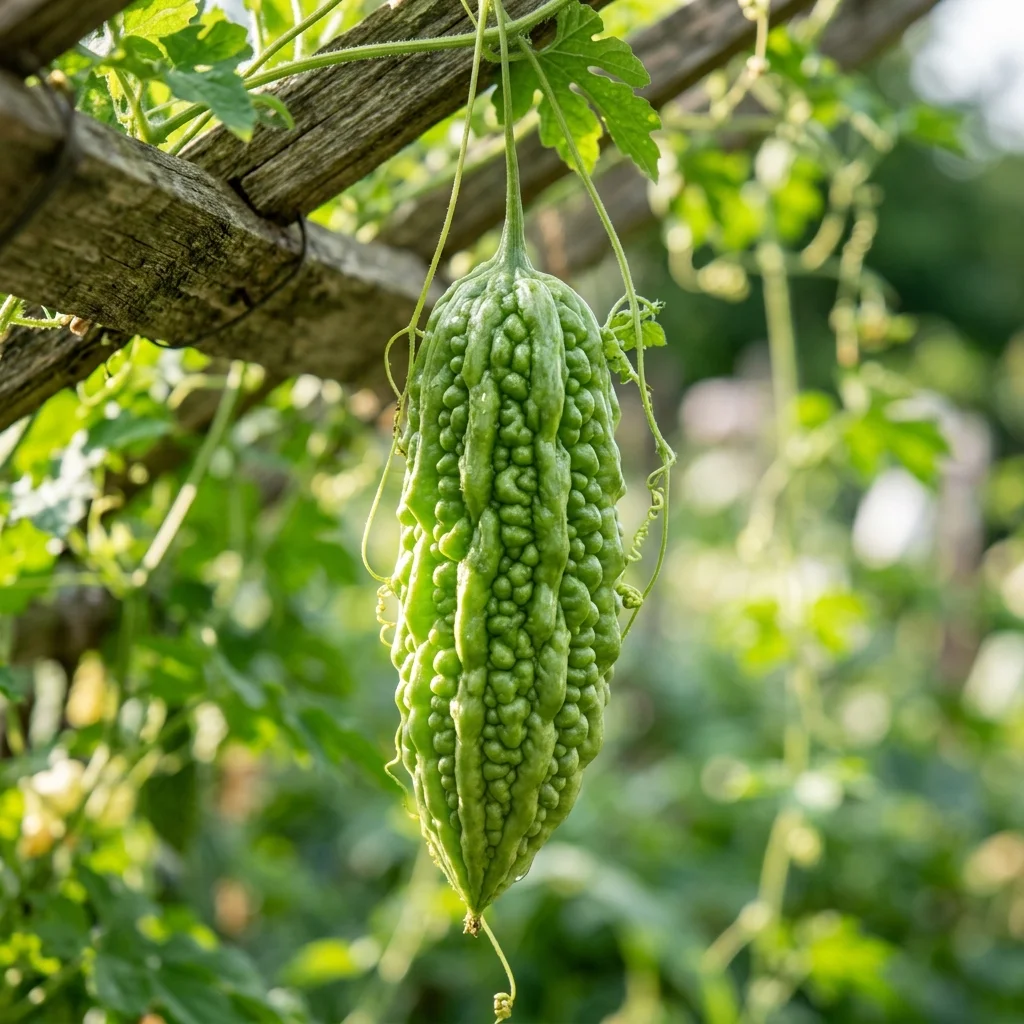
Momordica charantia

Bitter Melon Growing & Harvesting Guide

Bitter Melon (Momordica charantia), the medicinal green wonder of tropical gardens, is a highly rewarding climbing vine. PRIZED for its unique warty, bitter fruits and blood-sugar balancing qualities, this tropical annual demands high humidity, vertical trellising, and pest-bagging protection.


Sunlight Icon
Sunlight Full Sun (6+ hours)
Watering Icon
Watering High / Consistent
Soil Mix Icon
Soil pH Rich, Loamy, Well-Drained (pH 6.0-6.7)
Temperature Icon
Target Temp 22°C - 38°C
Toxicity Warning Icon
Toxicity Toxic to Pets (Ripe fruit & seeds)
Botanical macro photography of Bitter Melon (Momordica charantia) - Plant AI care database

How to Identify Bitter Melon

Bitter Melon (Momordica charantia) is a highly valued edible crop globally. Recognizing its definitive vegetative and fruit/vegetable structures is key to successful companion growing and harvesting.

  • Key Visual Features: Slender climbing herbaceous vine with deeply cut, palmately lobed green leaves.
  • Leaf & Stems: Thin, coiled tendrils; solitary pale yellow male and female blossoms.
  • Fruit/Edible Part: Elongated, warty-skinned green fruit turning orange-yellow when ripe, containing red-coated seeds.
💡 Plant AI Tip: Snap a photo with Plant AI to identify garden veggies and diagnose leaf spot diseases in 1 second.

Complete Growing & Harvesting Guide

Follow our detailed scientific agricultural cultivation guide to keep your Bitter Melon thriving and high-yielding.

Requires consistent watering, maintaining damp but not soggy soil. Drought stress stunts vine and causes fruit split.
Prune secondary lateral shoots up to 3 feet from the base to encourage vertical main vine climbing and top fruiting.
Apply balanced organic fertilizer monthly. Top-dress with high-potassium seaweed extract once flowering begins.
Demands absolute full sun, requiring 6+ hours of intense direct sunlight to fuel tropical vine growth and fruiting.
Thrives in rich, deeply worked sandy loam rich in organic matter with excellent drainage (pH 6.0-6.7).
Pre-soak seeds in warm water for 24 hours to break hard shell. Sow seeds 0.5 inch deep once soil is 20°C.
Extreme heat lover. Thrives between 22°C and 38°C; plant stops growing and will die if temperature drops below 12°C.
Space plants 18 inches apart. Strong overhead trellis or vertical mesh netting is mandatory to keep heavy fruits suspended.
Prone to melon fruit flies. Bag individual young fruits in breathable paper or mesh sleeves immediately after pollination.
Susceptible to Downy Mildew and Fusarium Wilt. Water base directly; avoid wet leaves under tropical humidity.
Harvest fruits when they are firm, bright green, and fully sized (about 5-8 inches), before they turn orange and split.

Is your Bitter Melon leaves turning yellow, spotted or dying?

Protect your kitchen garden. Take a photo with Plant AI to diagnose pests and crop diseases instantly.

Diagnose My Crop

Common Diseases & Treatment

Fusarium Wilt (Fusarium)

Symptoms: Vines wilt suddenly, starting from lower leaves and moving up; the vascular bundle inside the cut stem shows brown staining.

Action: No cure. Practice strict crop rotation, plant in sterile or compost-rich soil, and remove wilted plants immediately.

Downy Mildew (Pseudoperonospora)

Symptoms: Yellow, angular spots appear on leaf upper surfaces, matching purple-gray fuzzy mold growth underneath in humid conditions.

Action: Apply proactive organic copper sprays, maximize spacing for wind movement, and prune lower dense foliage.

Frequently Asked Questions

Why did my bitter melon fruits turn bright orange and split open?

This indicates overripeness. Bitter melons ripen rapidly; mature fruits turn orange, the flesh softens, and they split to reveal red seeds.

How can I reduce the extreme bitterness of bitter melon for cooking?

Slice the green fruit, remove seeds and pith, sprinkle with salt, let sit for 15 minutes, then squeeze and rinse with cold water.

Why are my baby bitter melons turning yellow and falling off?

This is usually caused by melon fly stings laying eggs inside the baby fruit, or a complete failure of pollination by local bees.

Is bitter melon safe for dogs and cats to eat?

No. While underripe green flesh is mildly toxic, the seeds and bright orange ripe pulp contain toxic saponins, causing pet vomiting and diarrhea.

Harvest bountiful greens. Grow healthy edibles today!

Get Started for Free